AI Governance Series | Article 10 of 20
Governing Intelligence Before It Governs You
Summary: Policies establish expectations and governance manages decisions, but neither proves they are working. That is the role of assurance. This article explains why independent validation is the missing layer in many AI governance programs and how assurance provides boards with confidence that controls, risk management, and oversight are functioning as designed. It distinguishes governance from assurance, explores the importance of independence, and shows how evidence-based assurance strengthens accountability, improves governance, and demonstrates responsible AI oversight to regulators, customers, insurers, and investors.
Many organizations believe their AI governance program is complete once they have policies, oversight committees, risk assessments, and executive reporting.
It isn’t.
There is one question every board should ask:
How do we know any of it is actually working?
That question introduces the missing layer in many AI governance programs:
Assurance.
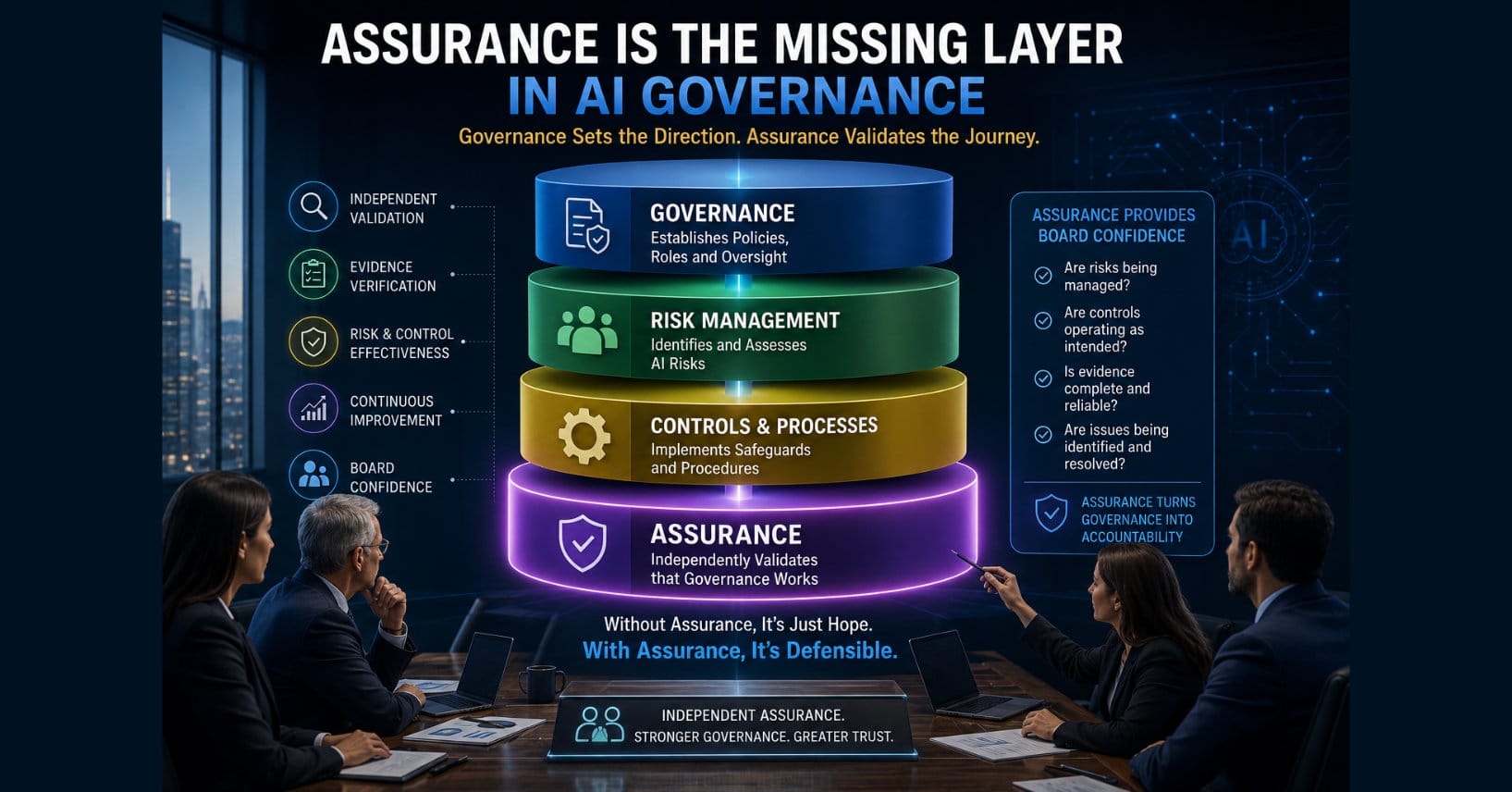
Governance establishes expectations.
Assurance independently verifies those expectations are being met.
Without assurance, governance depends largely on trust.
Governance Answers “What”
Assurance Answers “How Do We Know?”
An organization may report that:
- Every high-risk AI system completed a risk assessment.
- All required approvals were obtained.
- Controls were implemented.
- Policies were followed.
- Employees completed AI training.
Those statements describe governance activities.
Assurance asks a different set of questions.
Can those statements be verified?
Where is the evidence?
Was the evidence independently reviewed?
Can someone outside the process reach the same conclusion?
Boards should never confuse reported compliance with verified compliance.
Independence Matters
Effective assurance requires independence from the activities being evaluated.
The individuals responsible for deploying an AI system should not be the sole people determining whether governance requirements were satisfied.
Likewise, executives responsible for AI strategy should not be the only source of assurance that governance controls are operating effectively.
Independent validation provides credibility.
Whether performed by internal audit, enterprise risk, compliance, quality assurance, or qualified third parties, assurance should be objective enough that directors can rely on its conclusions.
Independence builds confidence.
Assurance Is More Than Audit
Many directors hear the word “assurance” and immediately think of annual audits.
Audits are important.
They are not the entire assurance function.
AI assurance can include:
- Independent control testing
- Validation of risk assessments
- Policy compliance reviews
- Model governance reviews
- Third-party assessments
- Regulatory readiness assessments
- Evidence quality reviews
- Continuous monitoring
These activities provide confidence throughout the governance lifecycle—not simply after problems emerge.
Trust Needs Evidence
Management may confidently report that governance processes are functioning well.
Directors should appreciate the confidence.
They should still request evidence.
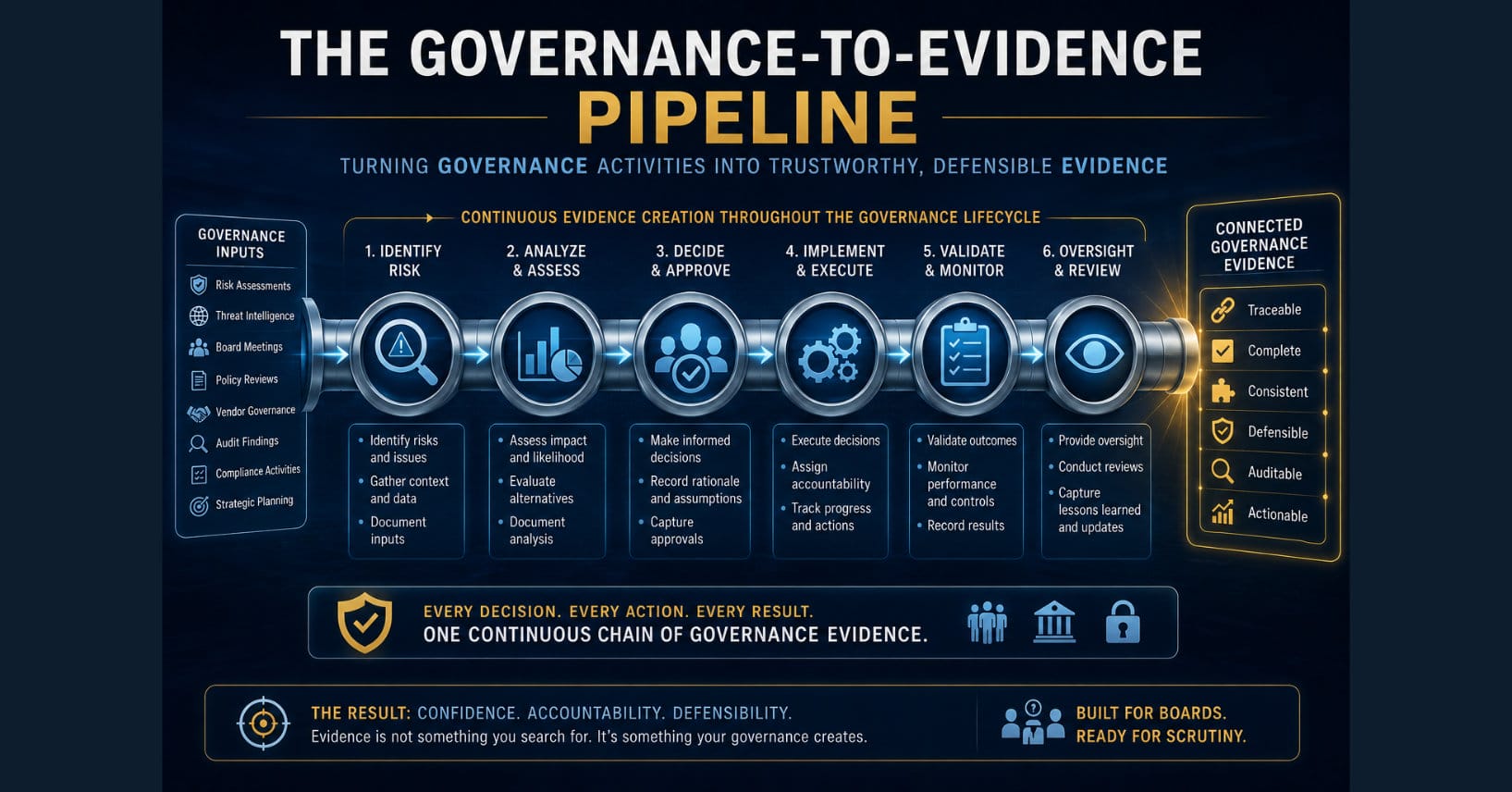
Evidence may include:
- Completed risk assessments
- Approval records
- Governance committee minutes
- Control testing results
- Exception reports
- Third-party assessment findings
- Monitoring reports
- Corrective action tracking
Assurance connects governance claims to verifiable evidence.
That connection transforms confidence into defensible oversight.
Assurance Finds Weaknesses Before Regulators Do
One of assurance’s greatest values is identifying weaknesses while they remain manageable.
An assurance review may discover:
- Risk assessments completed incorrectly
- Missing executive approvals
- Ineffective monitoring
- Untested controls
- Inconsistent policy application
- Incomplete documentation
- Third-party oversight gaps
Finding these issues internally is a sign that governance is working—not failing.
Organizations improve because assurance identifies opportunities before regulators, auditors, customers, or litigants do.
Assurance Strengthens Governance
Some executives fear assurance because they believe it exists to find fault.
Effective assurance has a different purpose.
It improves governance.
When weaknesses are identified, organizations can:
- Clarify ownership
- Improve processes
- Strengthen controls
- Enhance reporting
- Reduce enterprise risk
- Increase board confidence
Assurance creates a continuous improvement cycle.
Every review makes governance stronger.
Boards Should Ask Different Questions
Rather than asking,
“Do we have AI governance?”
Boards should ask:
Who independently validates our governance program?
How often are our AI controls tested?
What findings were identified during the last assurance review?
Have corrective actions been completed?
Can management demonstrate those improvements with evidence?
Those questions move governance from intention to verification.
Assurance Builds Trust
Stakeholders increasingly expect organizations to demonstrate—not merely claim—that AI is governed responsibly.
Customers want confidence.
Regulators want evidence.
Insurers want measurable controls.
Investors want accountability.
Boards need independent assurance that governance operates as designed.
Trust grows when claims are verified.
Boardroom Takeaway
Policies establish expectations. Governance manages decisions. Assurance independently verifies that governance is functioning as intended. Without assurance, boards rely on confidence. With assurance, they rely on evidence.
Coming Next
When AI Makes a Bad Decision, Who Answers for It?
Every AI incident eventually raises the same question: Who was accountable? The next article explores incident governance, decision ownership, and why accountability must be established long before AI makes its first mistake.