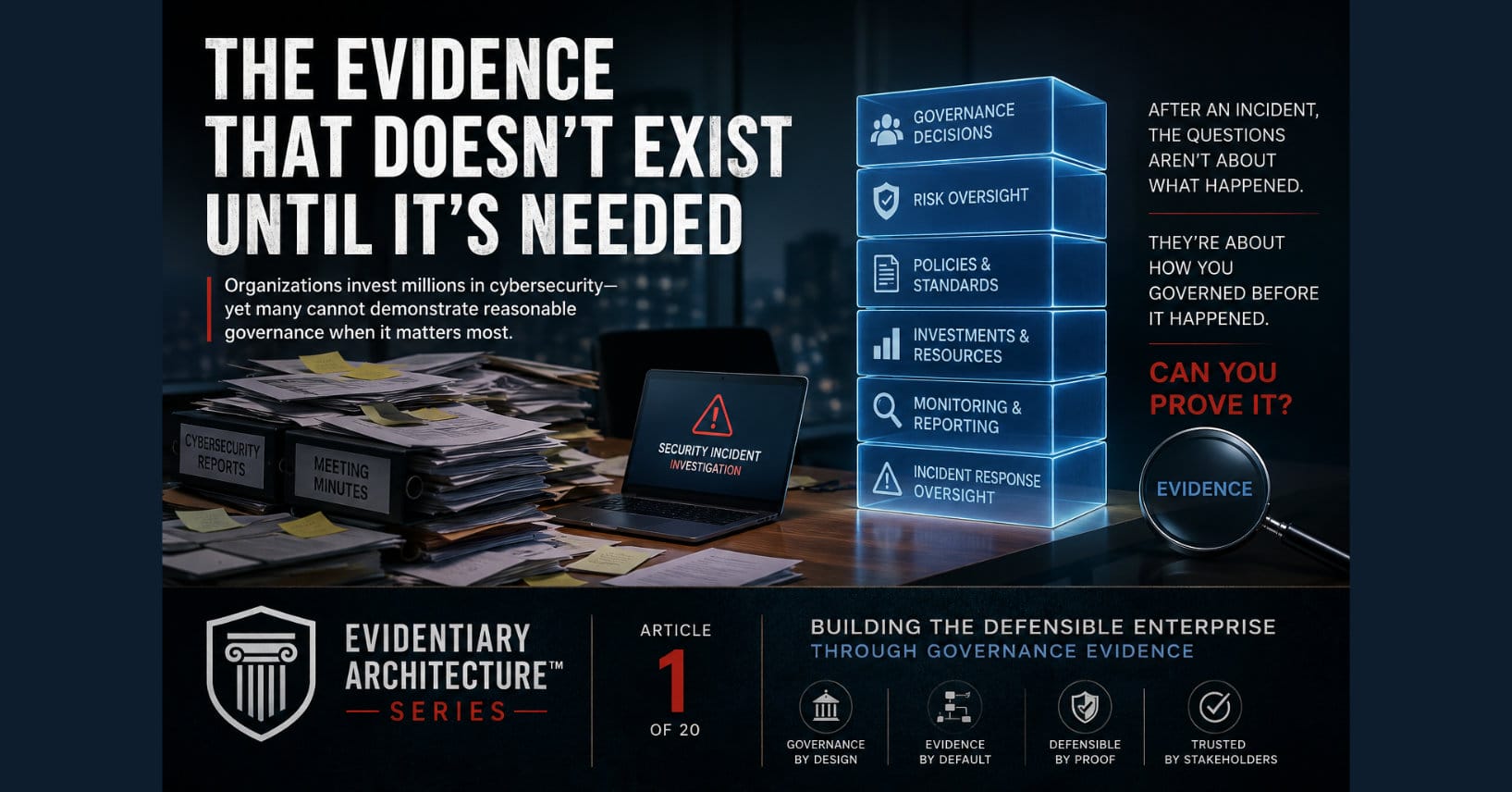

Cybersecurity oversight is not proven by intention.
It is proven by record.
After a cyber incident, regulators, insurers, and litigators do not ask what directors were thinking.
They review the minutes.
That reality makes one question critically important:
What should actually appear in board minutes after a cyber discussion?
Not technical detail.
Not operational noise.
But enough structure to demonstrate informed oversight.
Here is what strong governance documentation typically reflects:
- That cyber risk was discussed as an enterprise issue — not merely an IT update
- That material risks or scenarios were reviewed
- That directors asked substantive questions
- That escalation thresholds or incident posture were addressed
- That resource decisions or follow-up actions were identified
- That management reporting cadence was acknowledged
Minutes do not need to capture every word spoken.
They should reflect:
Engagement.
Recognition of material risk.
Deliberation.
Decision-making.
Silence in minutes can create the appearance of silence in oversight.
Overly vague language can undermine otherwise serious discussions.
The goal is not legal theater.
The goal is accurate documentation of governance activity.
Directors should periodically review how cyber discussions are recorded and ask:
If this document were examined after a breach, would it demonstrate reasonable diligence?
Documentation is not bureaucracy.
It is protection.
#BoardGovernance #CyberRisk #FiduciaryDuty #DirectorResponsibility #EnterpriseRisk