The first 24 hours after a significant cyber incident are operationally chaotic.
Systems are isolated.
Forensics begin.
Legal counsel is contacted.
Communications teams prepare statements.
In that moment, the board’s role is not technical.
It is structural.
Directors are not there to manage containment.
They are there to ensure consequence is governed.
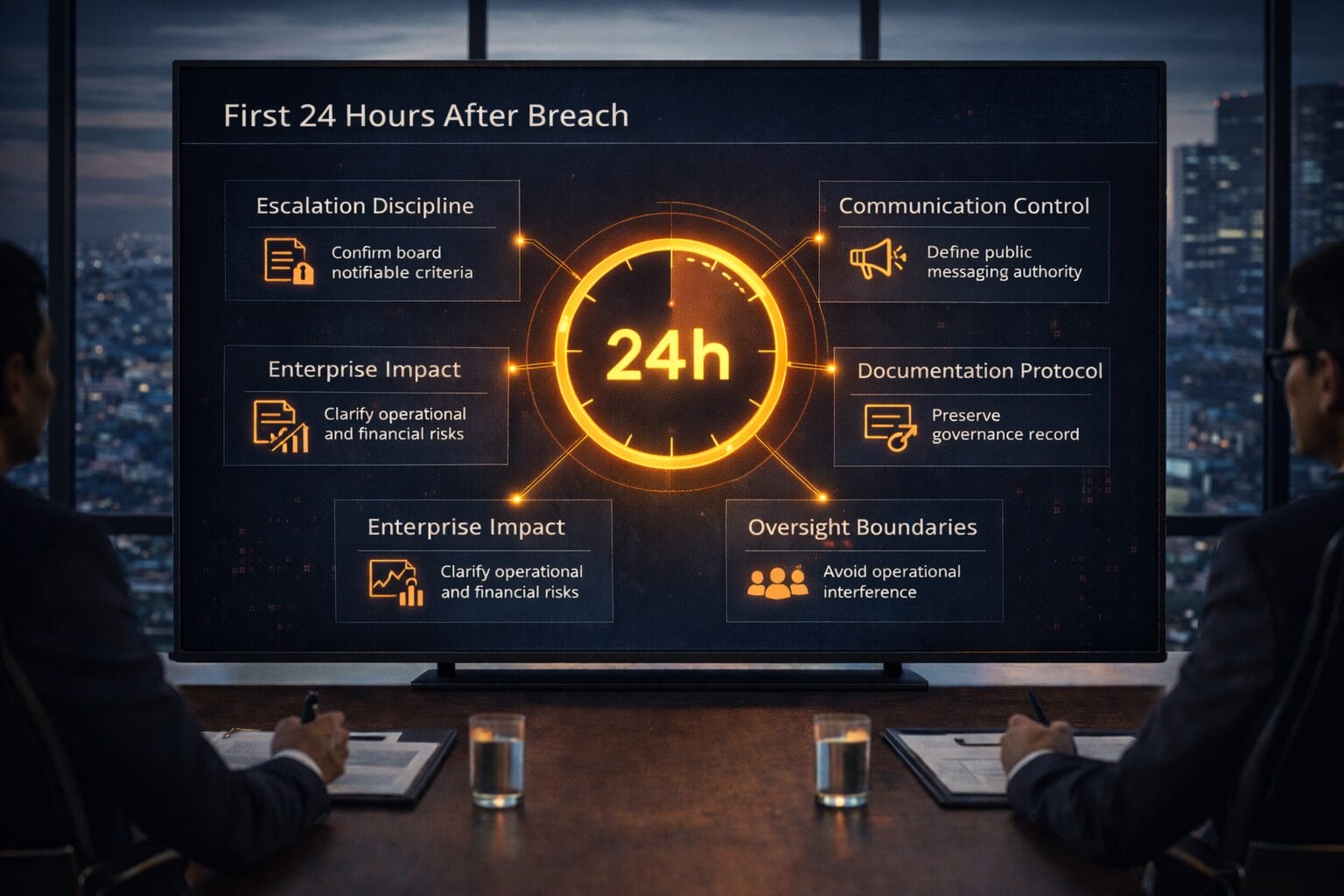
Here is what must happen at the governance level in the first 24 hours:
1. Confirm Escalation Discipline
- When was the board notified?
- Does the event meet predefined board-notifiable criteria?
- Has outside counsel been engaged?
This is where prior structure either works — or fails.
2. Clarify Enterprise Impact
Boards should immediately seek clarity on:
- Operational disruption
- Financial exposure
- Data sensitivity involved
- Regulatory notification implications
- Insurance activation requirements
Early clarity shapes responsible decision-making.
3. Establish Communication Control
Directors must ensure:
- Public messaging authority is defined
- Regulatory notifications are coordinated
- Investor, donor, or stakeholder communications are aligned
- No premature statements are released
Improvised communication creates secondary risk.
4. Confirm Documentation Protocol
In crisis, documentation is often neglected.
It should not be.
Minutes should reflect:
- Timing of notification
- Information presented
- Questions asked
- Strategic decisions taken
Governance defensibility begins on day one.
5. Maintain Oversight Boundaries
The board must avoid operational interference.
Oversight means:
- Asking disciplined questions
- Ensuring adequate resources
- Monitoring enterprise impact
- Documenting engagement
It does not mean directing firewall adjustments or forensic strategy.
Role clarity preserves effectiveness.
The first 24 hours are not about perfection.
They are about structure under pressure.
Boards cannot prevent every breach.
They can prevent governance chaos.
Prepared institutions demonstrate discipline immediately.
Reactive institutions reveal structural gaps.
In crisis, governance architecture either supports stability —
—or exposes weakness.

#BoardGovernance #CyberRisk #IncidentResponse #FiduciaryDuty #EnterpriseRisk