Why Vendor Dependency Has Become a Board-Level Exposure
Boards understand concentration risk.
Overreliance on a single revenue source.
Dependence on a major customer.
Exposure to a dominant supplier.
These risks are routinely discussed in strategic planning and financial oversight.
What is less frequently discussed is digital concentration risk.
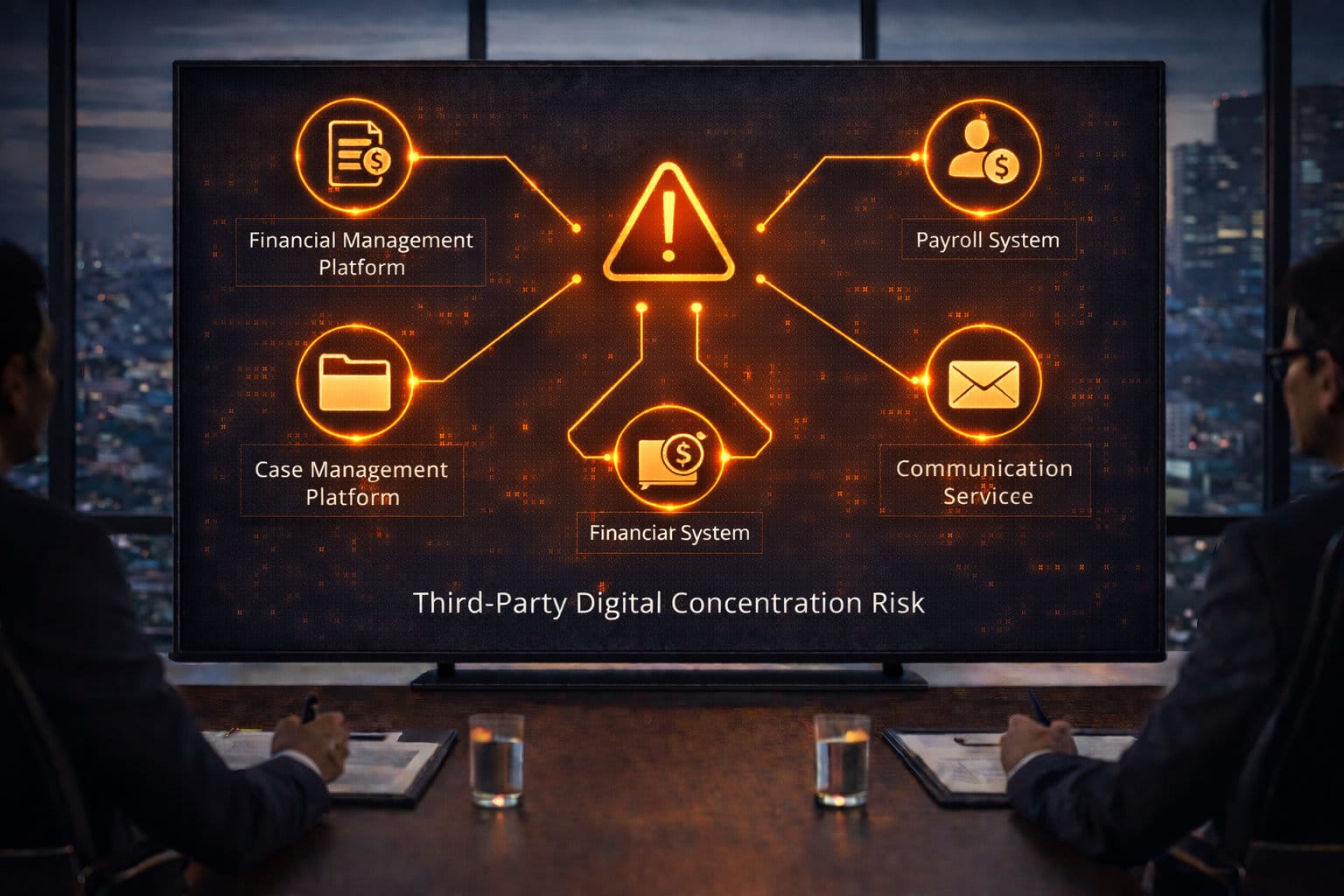
Today, most organizations depend on:
- A single cloud infrastructure provider
- A single financial management platform
- A single payroll system
- A single case management application
- A small cluster of software vendors
If one of those vendors fails — or is compromised — the impact can cascade across the enterprise.
Third-party cyber risk has become structural risk.
And structural risk is a governance issue.
The Hidden Centralization of Digital Operations
Digital transformation has created efficiency.
It has also created dependency.
Organizations increasingly consolidate:
- Data storage
- Identity management
- Payment processing
- Communications
- Operational workflows
This consolidation simplifies management.
It also concentrates exposure.
When a vendor experiences a breach, outage, or ransomware event, your organization may become collateral damage.
Boards must recognize this as concentration risk in digital form.
The Illusion of Outsourced Responsibility
Many organizations assume:
“We outsourced the system. The risk sits with the vendor.”
Operational responsibility may shift.
Fiduciary responsibility does not.
If a third-party failure disrupts operations, exposes data, or triggers regulatory obligations, governance scrutiny will still reach the board.
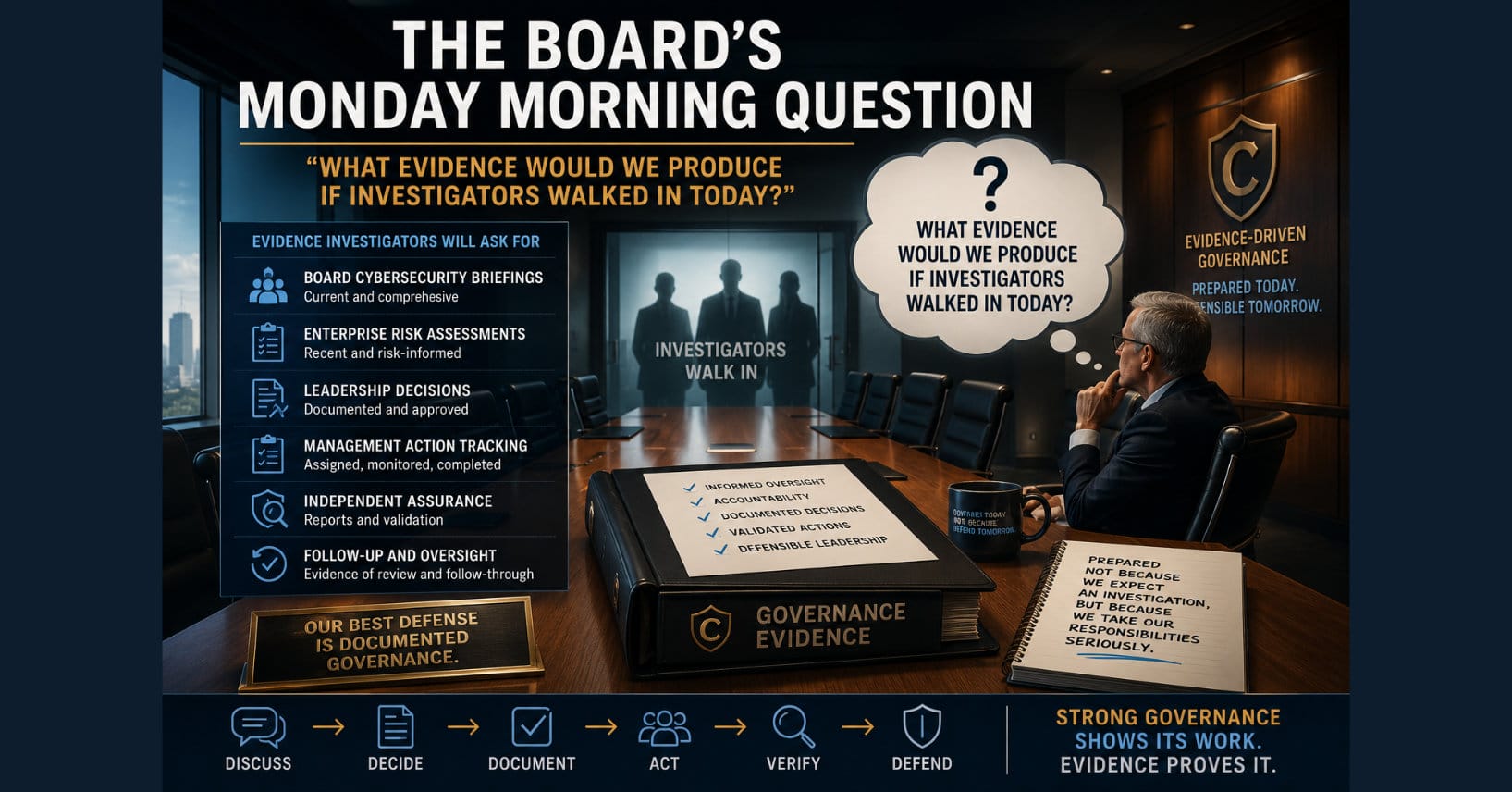
Investigators will ask:
- Was vendor risk assessed?
- Was due diligence conducted?
- Were security standards reviewed?
- Was monitoring periodic and documented?
- Was dependency risk evaluated at the enterprise level?
Vendor contracts do not eliminate oversight obligations.
The Enterprise Impact of Vendor Failure
Third-party incidents can result in:
- Prolonged service outages
- Inaccessible financial records
- Compromised donor or customer data
- Regulatory notification requirements
- Insurance complications
- Reputational damage
In some cases, organizations are not directly breached.
They are impacted indirectly through trusted partners.
Indirect exposure is still exposure.
Questions Boards Should Be Asking
Directors should consider:
- Do we understand which vendors are mission-critical?
- Have we assessed single points of digital failure?
- Do contracts include cybersecurity expectations?
- Are vendor security attestations reviewed periodically?
- Is third-party risk included in enterprise risk discussions?
- Have we modeled vendor outage scenarios?
These are not procurement details.
They are governance questions.
The Insurance and Disclosure Dimension
Cyber insurance policies increasingly scrutinize vendor management practices.
Public disclosures may require reporting of third-party incidents that materially affect operations.
Grantors and regulators may ask about vendor due diligence following disruptions.
Vendor dependency intersects with compliance, reporting, and fiduciary responsibility.
Beyond Checklists
Vendor risk management should not be reduced to collecting SOC reports or compliance certificates.
Effective governance includes:
- Classification of critical vendors
- Scenario-based impact analysis
- Contingency planning
- Contractual security clauses
- Ongoing oversight documentation
The objective is not elimination of vendor risk.
It is transparency of dependency.
The Core Principle
Third-party risk is the modern equivalent of concentration risk.
If your enterprise relies heavily on a small number of digital providers, the exposure is structural.
Boards that understand financial concentration risk must now apply the same discipline to digital dependency.
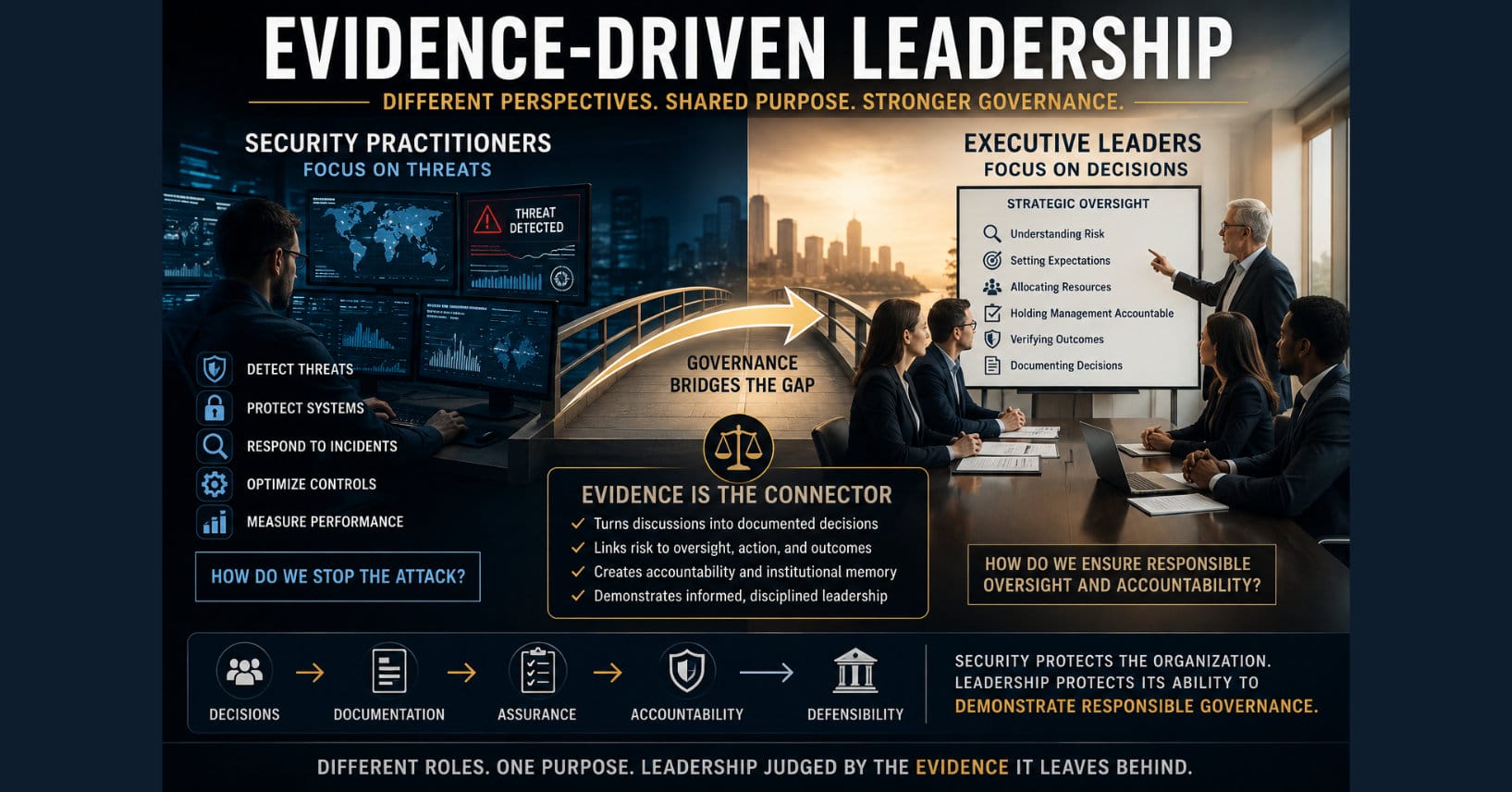
Outsourcing infrastructure does not outsource accountability.
Oversight must extend beyond your walls.
In our next edition, we will examine cyber insurance — and why boards should treat policy coverage as a governance instrument rather than a safety net.
If you serve on a board or advise executive leadership teams, subscribe to The Cyber Governance Brief for continued analysis on cybersecurity as fiduciary responsibility.