Why Checkbox Culture Fails Boards
Cybersecurity maturity models are everywhere.
Tiered levels.
Color-coded scorecards.
Benchmark comparisons.
Self-assessment surveys.
They provide structure.
They can also create false confidence.
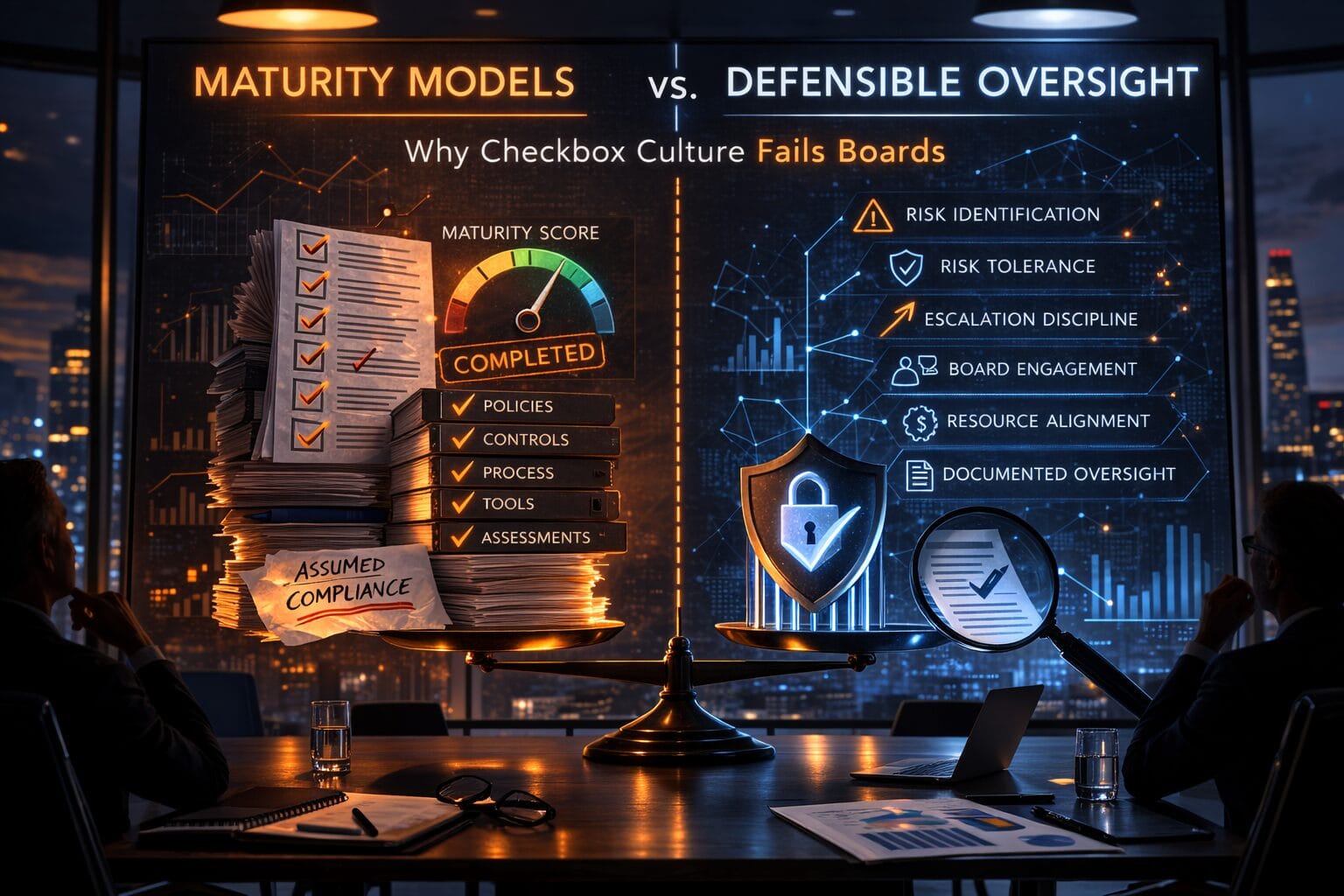
This edition examines the difference between scoring maturity and demonstrating defensible oversight — and why boards must understand that distinction.
The Comfort of the Score
Maturity models simplify complexity.
They assign levels:
Level 1 – Initial
Level 2 – Developing
Level 3 – Defined
Level 4 – Managed
Level 5 – Optimized
A number appears.
A tier is achieved.
Progress feels measurable.
But boards should ask:
Does a maturity score prove oversight?
Or does it simply describe process adoption?
Scoring systems can obscure governance gaps when they are treated as proof of resilience.
Activity Is Not Accountability
Many maturity frameworks evaluate:
- Policy existence
- Control documentation
- Process formalization
- Tool deployment
- Audit frequency
These are important.
But defensible oversight requires more.
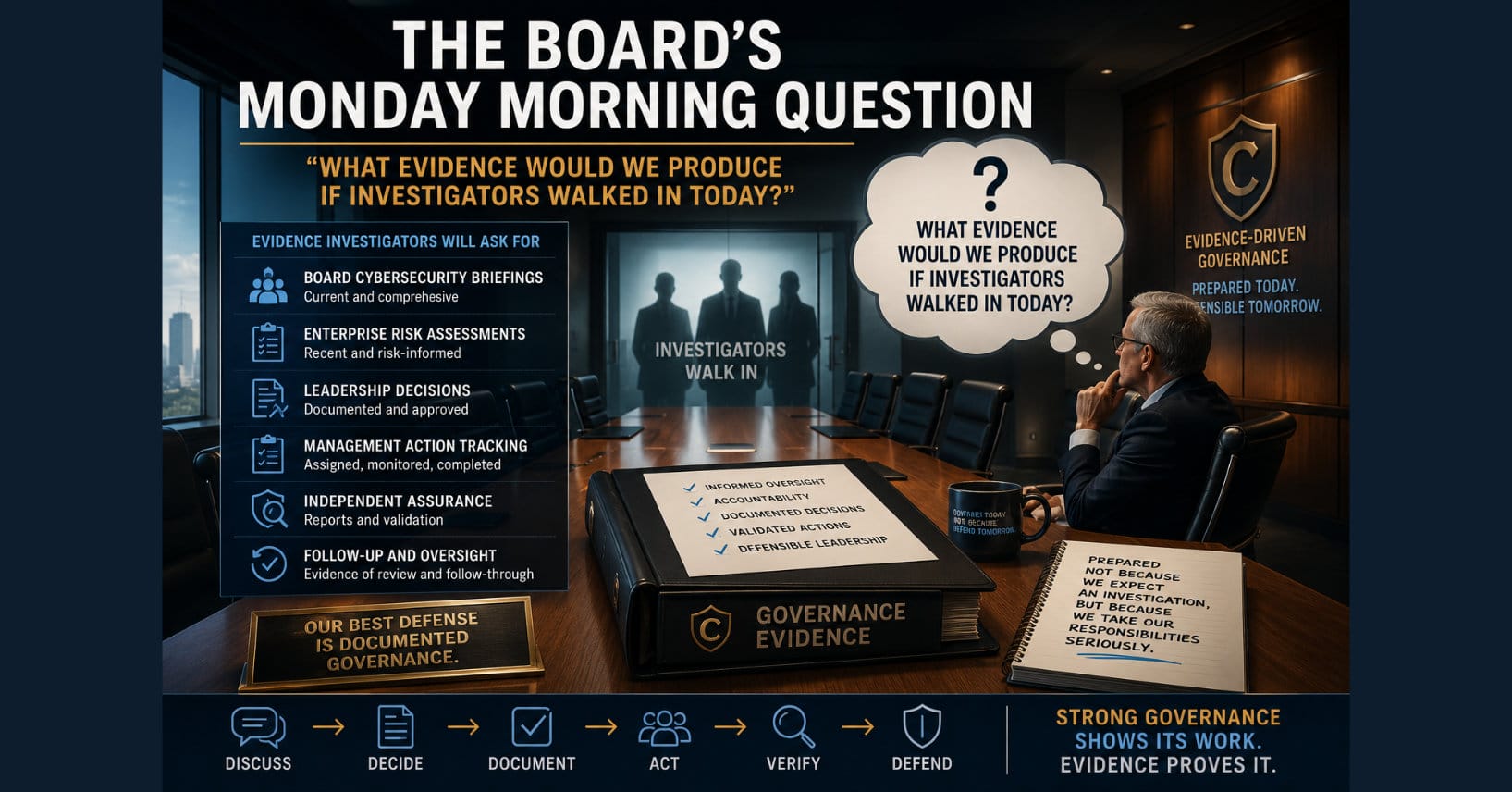
Investigators, regulators, and insurers do not ask:
“What maturity level were you?”
They ask:
- What did leadership know?
- When were risks identified?
- Were material exposures escalated?
- Were investment decisions aligned to risk tolerance?
- Was oversight documented?
A maturity tier does not answer those questions.
Documentation and governance discipline do.
The Checkbox Trap
Checkbox culture emerges when organizations focus on:
- Passing assessments
- Achieving certifications
- Completing annual questionnaires
- Satisfying audit checklists
Instead of focusing on:
- Enterprise consequence
- Scenario-based risk
- Escalation clarity
- Board engagement
- Resource alignment
Compliance activity can coexist with governance weakness.
Boards must distinguish between the two.
Why Maturity Models Still Matter
This is not an argument against structured frameworks.
Maturity models can:
- Provide benchmarking context
- Highlight control gaps
- Encourage process improvement
- Support resource planning
They are tools.
They are not evidence of fiduciary discipline.
Boards must ensure that maturity assessments feed governance conversation — not replace it.
Defensible Oversight Defined
Defensible oversight requires:
- Clear risk identification
- Defined risk tolerance
- Structured reporting
- Escalation discipline
- Documented engagement
- Follow-up accountability
- Independent validation
It is not a score.
It is a pattern of behavior and documentation.
When scrutiny arrives, defensibility is demonstrated through records, not ratings.
The Investigative Perspective
After a significant cyber incident, external reviewers may examine:
- Board minutes
- Risk registers
- Prior warnings
- Deferred funding decisions
- Escalation timing
- Policy updates
They do not begin by asking for a maturity scorecard.
They assess whether leadership exercised reasonable oversight.
Maturity without documentation becomes narrative.
Documentation with engagement becomes evidence.
The Strategic Risk
When boards rely too heavily on maturity dashboards, several risks emerge:
- Overconfidence
- Underinvestment
- Reduced inquiry
- Cultural complacency
- Weak escalation behavior
A high score can silence necessary questions.
And silence weakens governance.
Practical Board Questions
Directors reviewing maturity assessments should ask:
- What material risks remain outside tolerance?
- Where are we dependent on self-attestation?
- What investment gaps exist despite high scores?
- Has independent review validated this assessment?
- How does this translate into documented oversight?
These questions move maturity from optics to accountability.
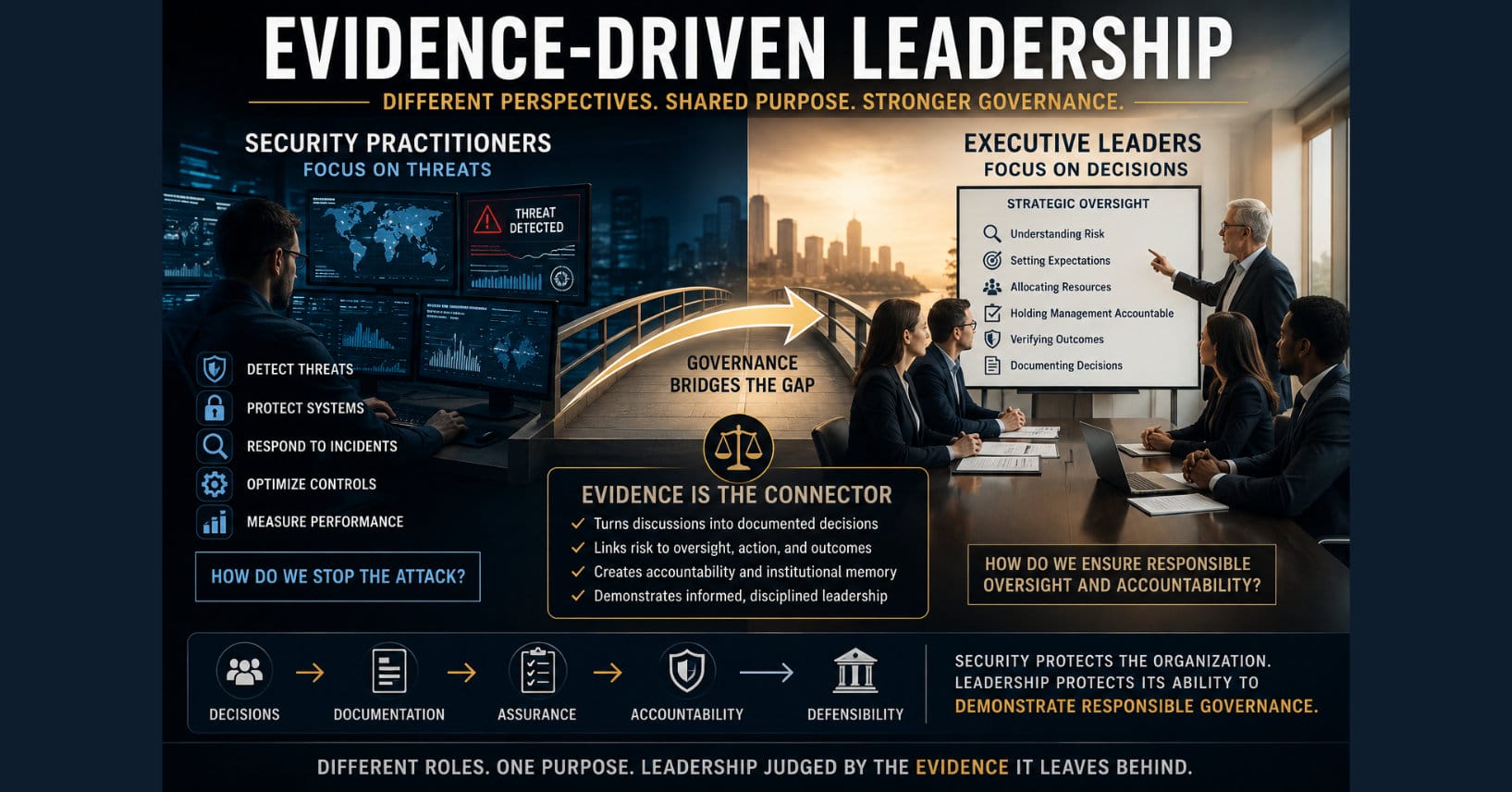
The Core Principle
Maturity models measure structure.
Defensible oversight demonstrates governance.
One is a diagnostic tool.
The other is a fiduciary obligation.
Boards should use maturity assessments to inform oversight — not to substitute for it.
Because in the end, scrutiny evaluates leadership behavior, not certification badges.
In our next edition, we will examine independent assessments — and why external validation strengthens governance credibility.
If you serve on a board or advise executive leadership teams, subscribe to The Cyber Governance Brief for continued analysis on cybersecurity as fiduciary responsibility.