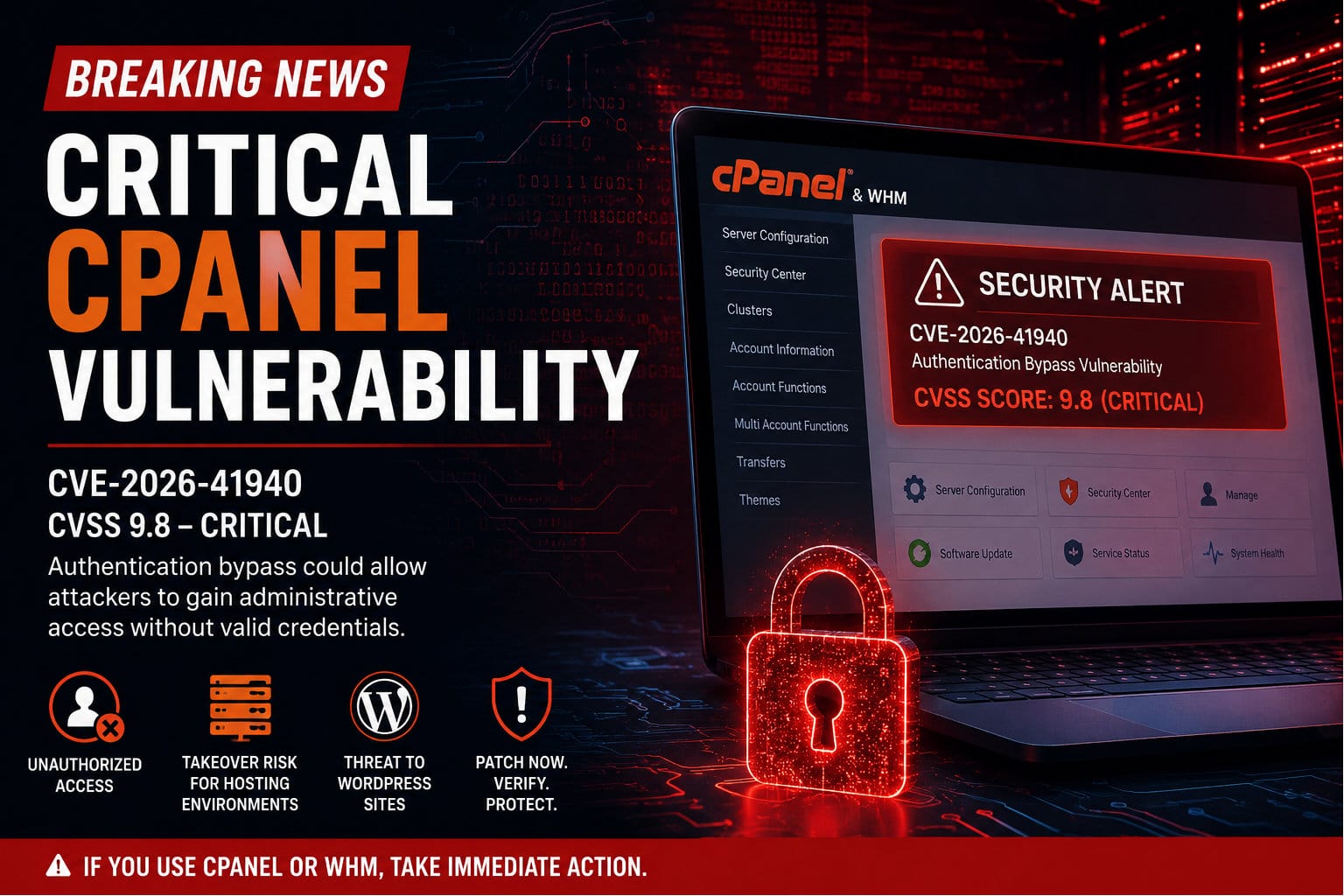
A newly disclosed cPanel vulnerability, CVE-2026-41940, is sending shockwaves through the hosting and WordPress communities because of what it represents operationally: a direct threat to the management layer of internet infrastructure.
This is not a minor software defect.
The vulnerability carries a CVSS severity score of 9.8 and affects cPanel & WHM environments through an authentication bypass condition that could allow attackers to gain unauthorized administrative access without valid credentials.
For WordPress administrators, agencies, MSPs, hosting providers, and enterprise web teams, this is particularly serious because cPanel often sits upstream from the application itself.
If compromised, attackers may gain the ability to:
- Access or modify WordPress files
- Reset hosting credentials
- Manipulate databases
- Create malicious accounts
- Deploy persistent malware
- Exfiltrate backups and email data
- Pivot laterally across multiple hosted websites
In shared hosting environments, the exposure may extend beyond a single website.
That is what makes this event strategically important.
Many organizations focus cybersecurity attention on WordPress plugins, themes, and endpoint protection while overlooking the infrastructure control plane managing the entire environment.
The immediate remediation priorities are clear:
- Apply vendor patches immediately
- Verify cPanel and WHM versions
- Review authentication and administrative logs
- Audit newly created accounts and scheduled tasks
- Rotate privileged credentials
- Verify backup integrity
- Restrict management interface exposure where possible
- Conduct compromise assessments on internet-facing systems
But the governance implications extend much further.
CVE-2026-41940 exposes a recurring leadership problem in cybersecurity governance:
Organizations often do not fully understand the dependency stack supporting their digital operations.
Many companies do not even realize cPanel exists within their infrastructure because hosting decisions were outsourced years ago to agencies, consultants, or third-party providers.
That creates a dangerous oversight gap.
Cybersecurity governance is not merely about patch management.
It is about institutional visibility.
Boards and executives should be asking:
- Do we maintain an inventory of critical infrastructure dependencies?
- Who owns responsibility for hosting-layer security oversight?
- How quickly can we validate exposure during a zero-day event?
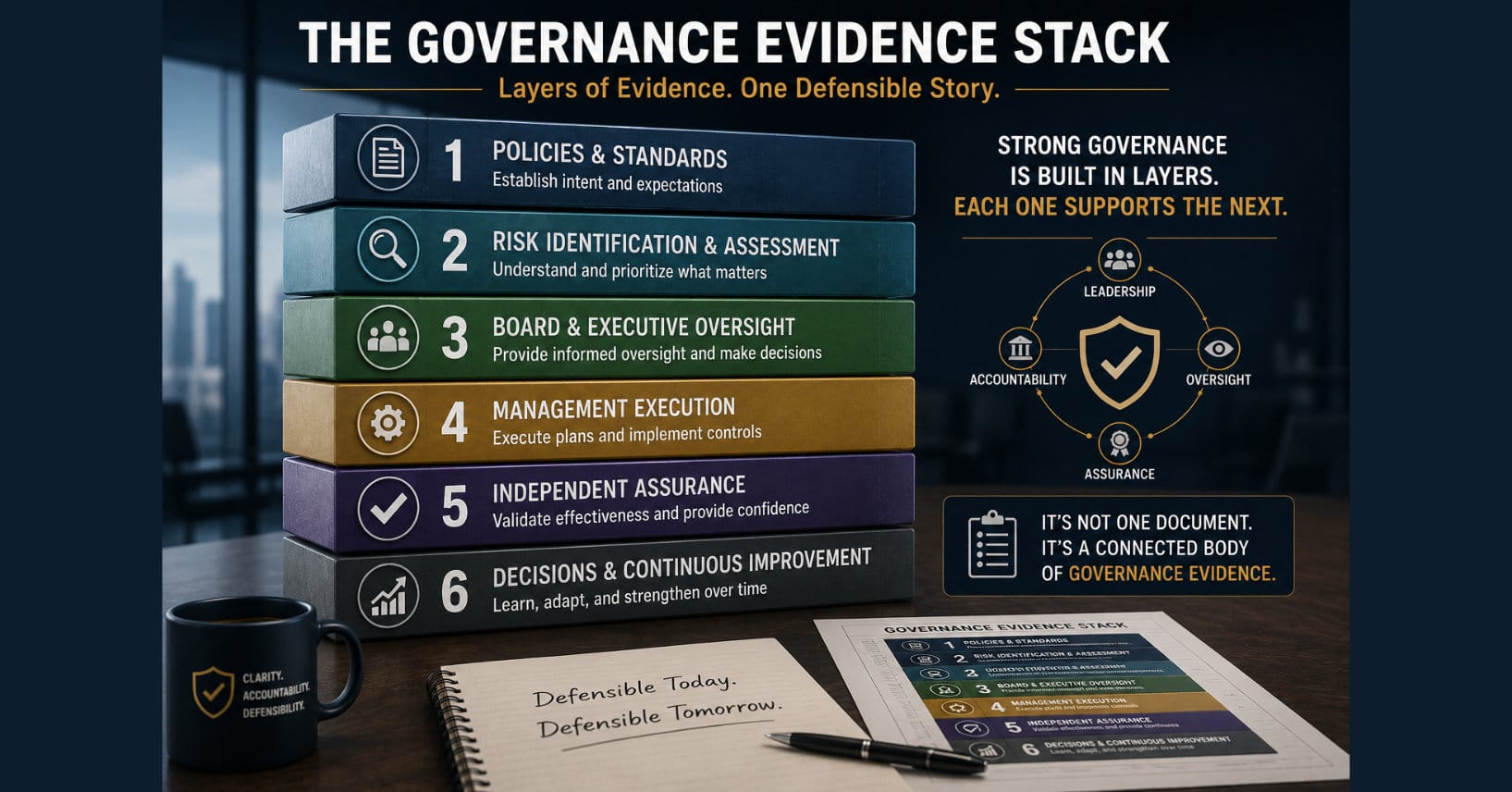
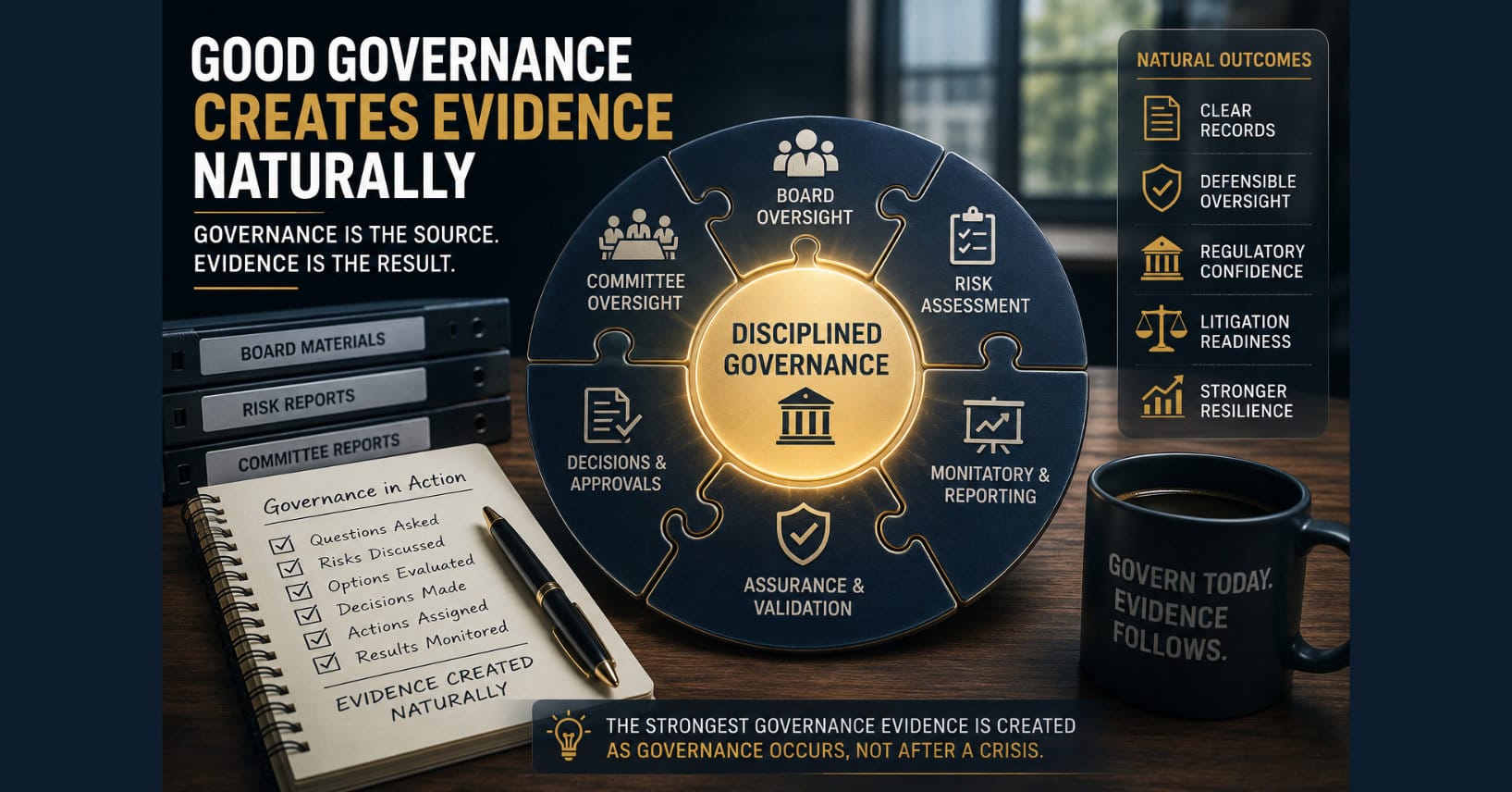
- What evidence demonstrates our response decisions?
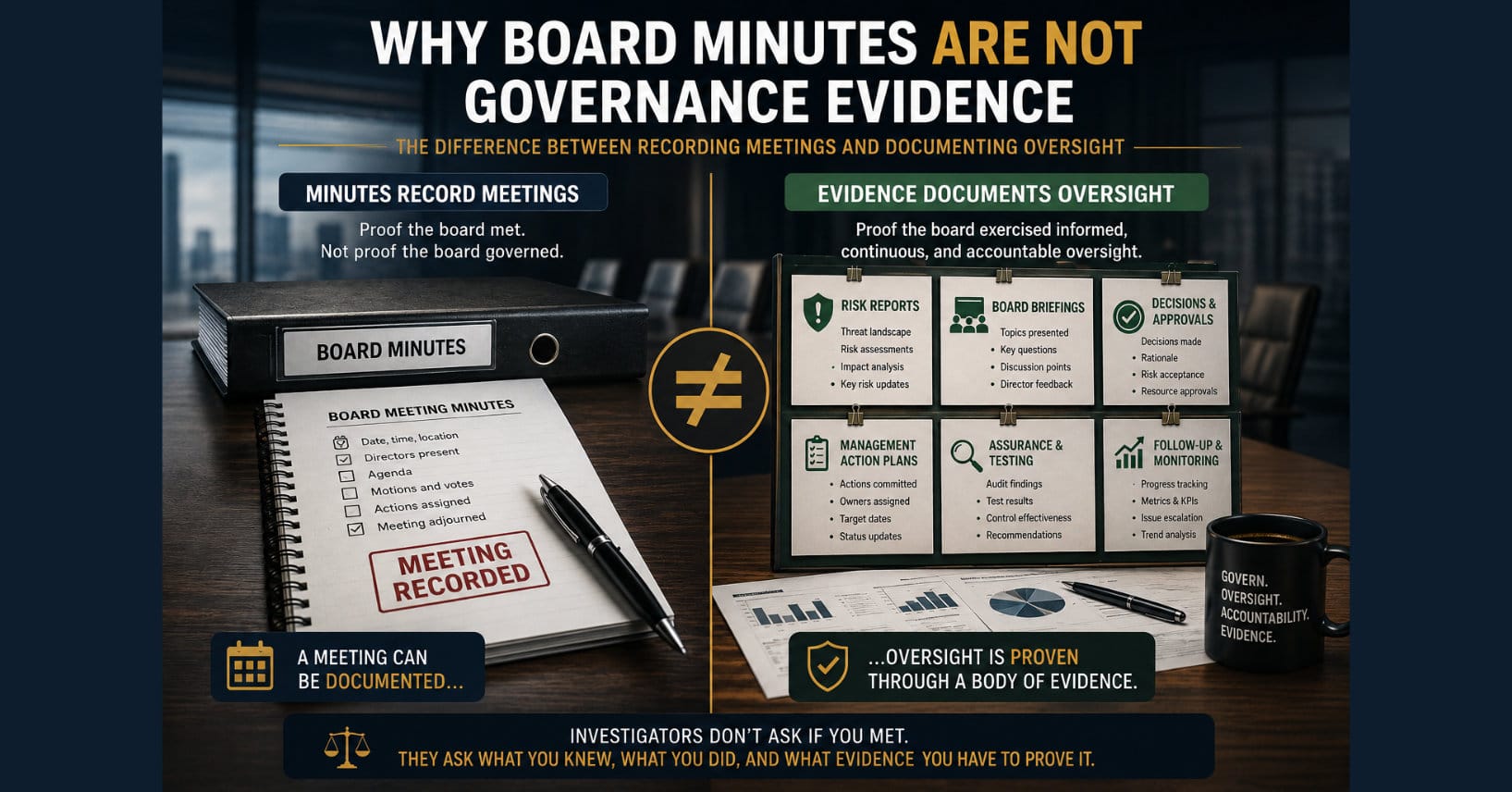
Because after a compromise, investigators rarely ask only whether a patch existed.
They ask:
- When did leadership become aware?
- How quickly did the organization respond?
- Was oversight documented?
- Can evidence of governance decisions be produced?
That distinction matters.
Operational activity may restore systems.
Documented governance determines whether leadership can defend its oversight under regulatory, legal, insurance, or fiduciary scrutiny.
The larger lesson from CVE-2026-41940 is becoming increasingly clear:
Modern organizations are not only dependent on software.
They are dependent on invisible layers of administrative infrastructure that most leadership teams never evaluate until a crisis occurs.
And when the management layer becomes vulnerable, the blast radius extends far beyond a single website.