After a breach, activity is irrelevant.
Effort is irrelevant.
Intent is irrelevant.
There is only one question that ultimately matters:
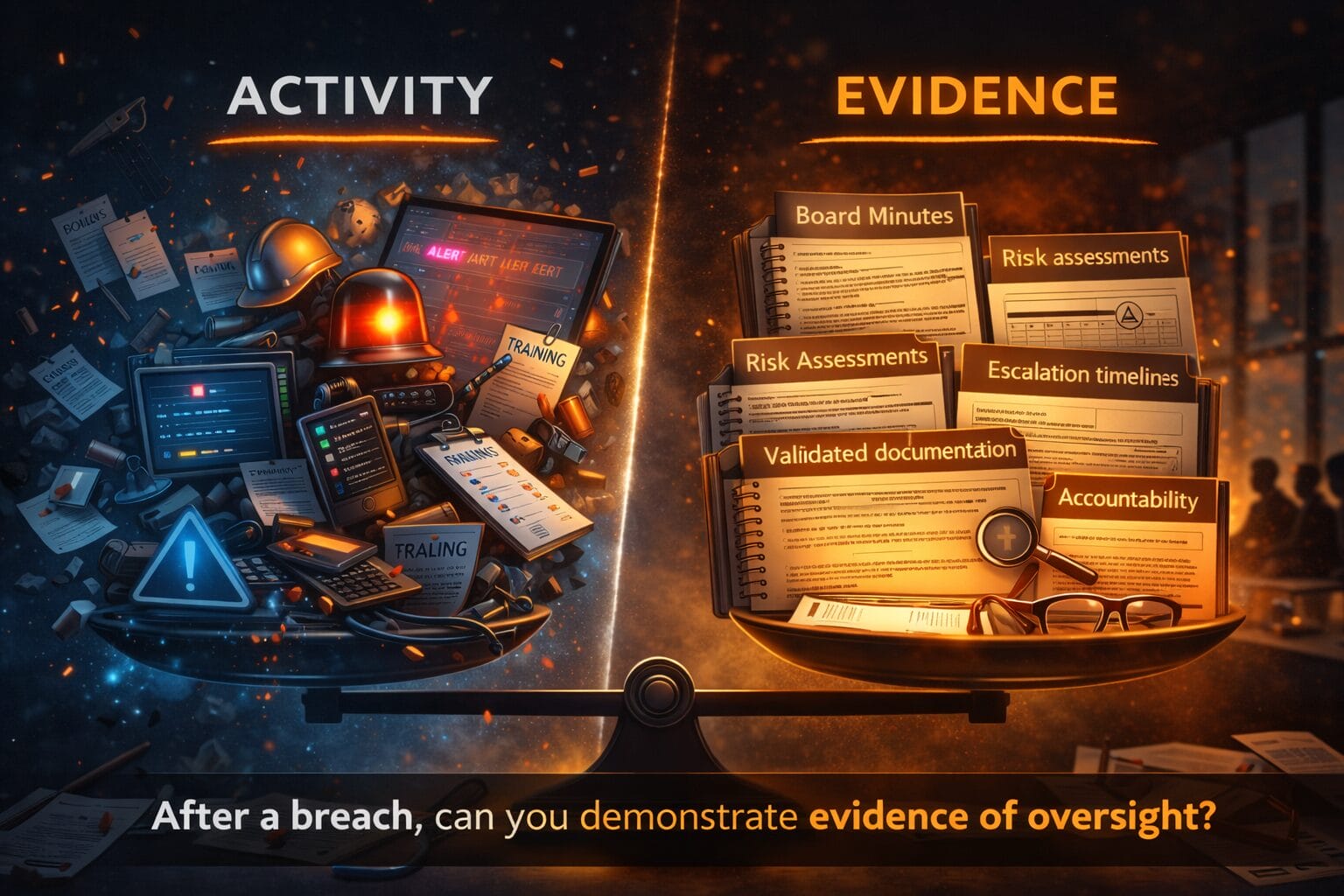
Can you demonstrate evidence of oversight?
Not activity.
Evidence.
Organizations often respond to incidents by describing:
- The tools they purchased
- The alerts they monitored
- The policies they wrote
- The training they delivered
- The hours their teams worked
All of that may be true.
But investigators, regulators, insurers, and litigators ask something different:
What can you show?
They will look for:
- Board minutes reflecting cyber discussion
- Risk assessments identifying known exposure
- Escalation timelines
- Documented investment decisions
- Independent validation records
- Follow-up accountability
They do not evaluate intent.
They evaluate documentation.
After a breach, the narrative shifts from:
“Were we busy?”
to
“Was oversight structured?”
That distinction determines defensibility.
Evidence answers:
- Did leadership know?
- When did they know it?
- What actions were taken?
- Were material risks escalated?
- Were decisions aligned with risk tolerance?
Without documentation, the answer defaults to uncertainty.
And uncertainty rarely favors the organization.
Cyber governance is not about appearing mature.
It is about being demonstrably disciplined.
Policies without minutes are weak.
Discussions without documentation are fragile.
Dashboards without follow-up are cosmetic.
The only question that matters after a breach is simple:
Can you prove that oversight occurred?
Everything else is background noise.

#BoardGovernance #CyberRisk #DefensibleOversight #FiduciaryDuty #IncidentResponse