Many nonprofit boards focus carefully on grant compliance.
Reporting deadlines.
Allowable costs.
Performance metrics.
Financial audits.
What often receives less attention is the digital infrastructure that supports all of it.
Grant funding today depends on systems.
Financial management systems.
Case management platforms.
Cloud storage.
Reporting portals.
Email communications.
If those systems fail — or are compromised — compliance can fail with them.
That is where boards frequently overlook exposure.
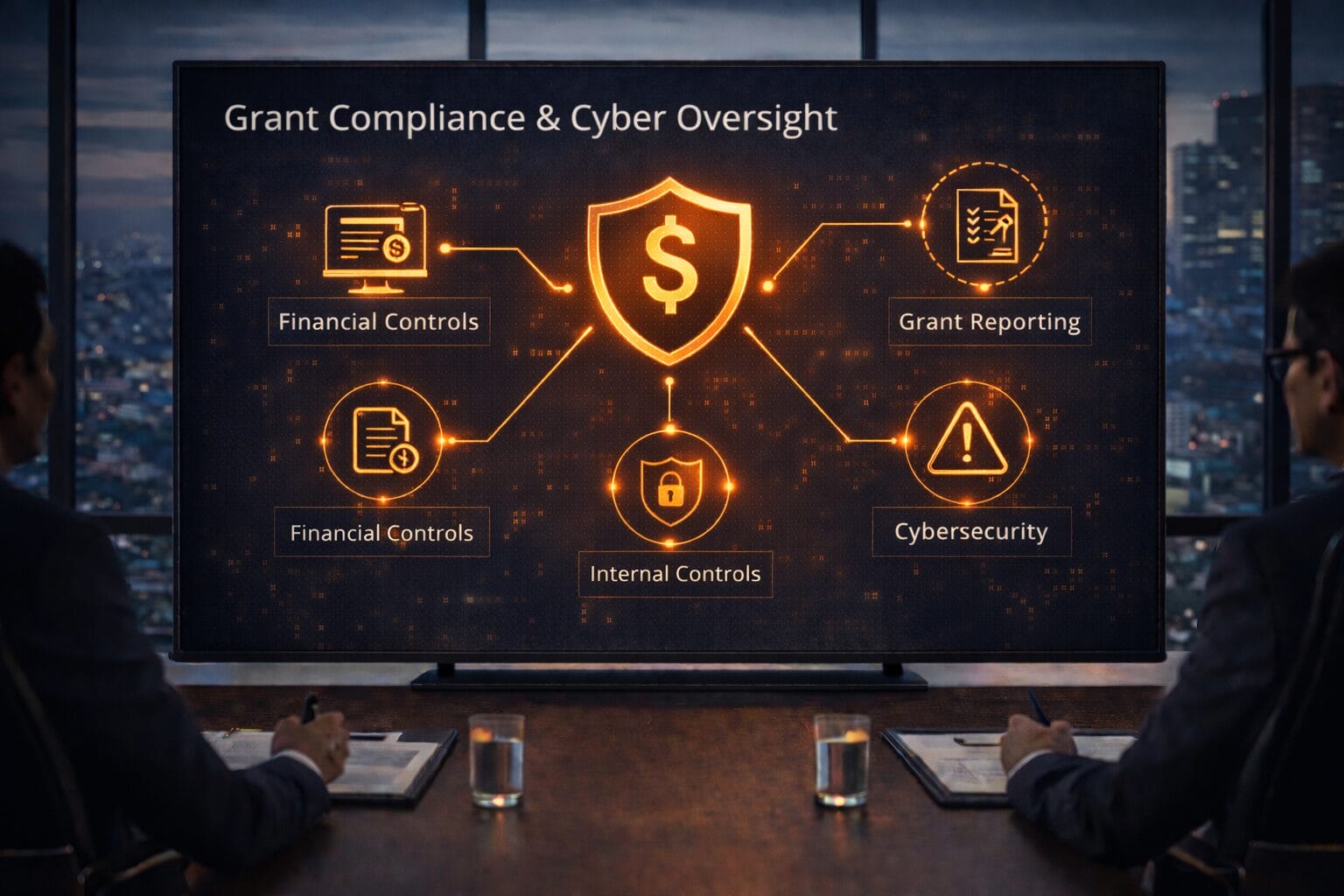
Cyber oversight is not separate from grant stewardship.
It is part of it.
Boards should consider:
- Do our internal control discussions include digital safeguards?
- Have we assessed how a cyber incident would affect grant reporting timelines?
- Do we know what data is subject to federal protection standards?
- Are vendor platforms evaluated as part of oversight?
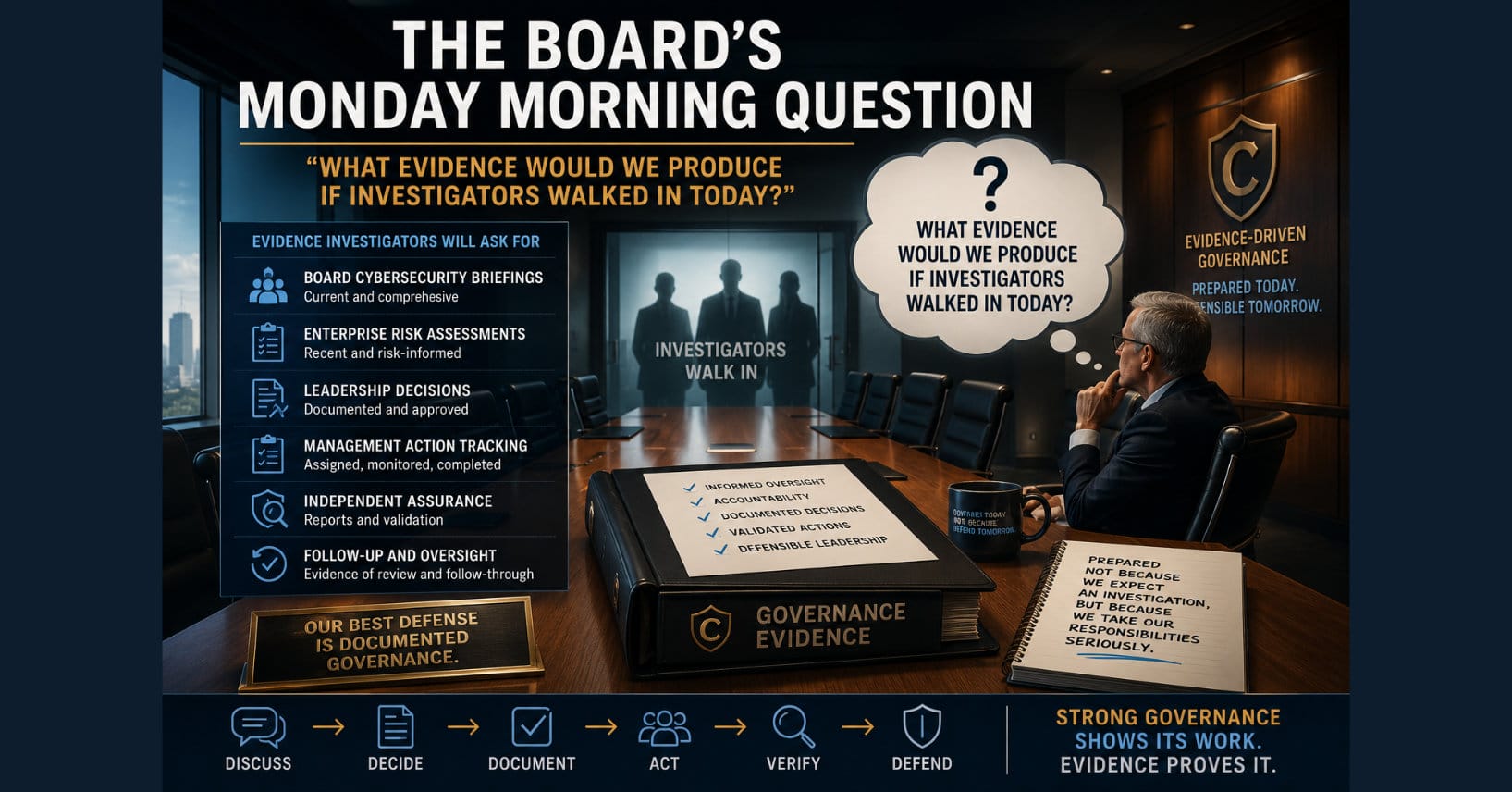
- Would we be able to demonstrate governance structure if funding agencies requested documentation?
Grantors increasingly expect internal controls that protect both funds and information.
A cyber breach can create:
- Reporting delays
- Data integrity concerns
- Reimbursement disruption
- Audit findings
- Public trust erosion
None of these are purely technical.
They are governance consequences.
The risk is not only operational.
It is reputational and financial.
Boards that treat cybersecurity as an IT matter may inadvertently weaken grant defensibility.
Boards that integrate cyber oversight into internal control governance strengthen resilience.
Grant funding is a stewardship obligation.
Digital systems now sit at the center of that obligation.
If you serve on a nonprofit board, ask:
Is our cyber posture aligned with our grant accountability?

#NonprofitGovernance #CyberRisk #InternalControls #GrantCompliance #BoardLeadership