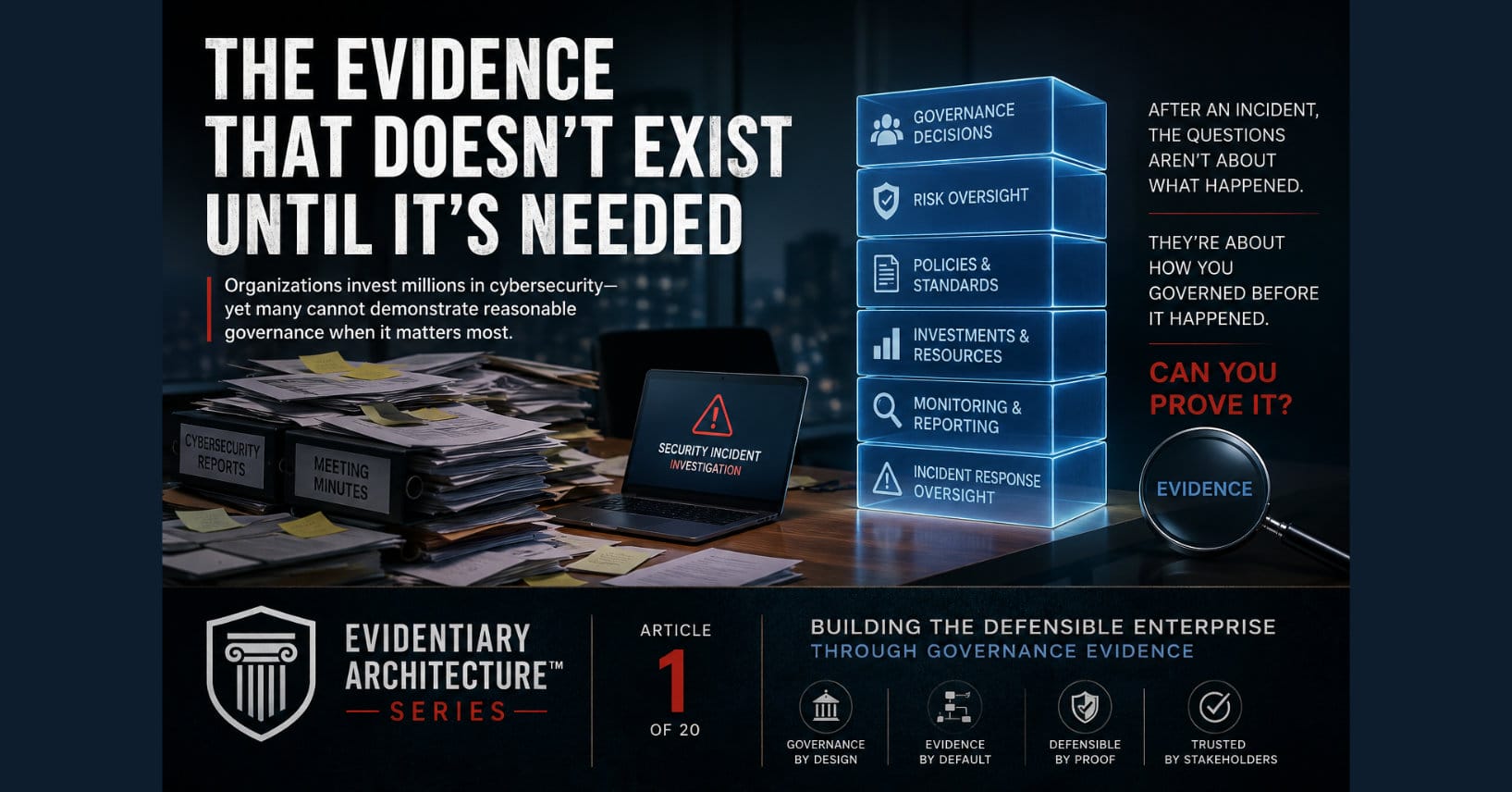
After a significant cyber incident, the first wave is operational.
The second wave is investigative.
Regulators, insurers, outside counsel, and sometimes law enforcement will begin asking questions.
They are not looking for technical brilliance.
They are looking for governance structure.
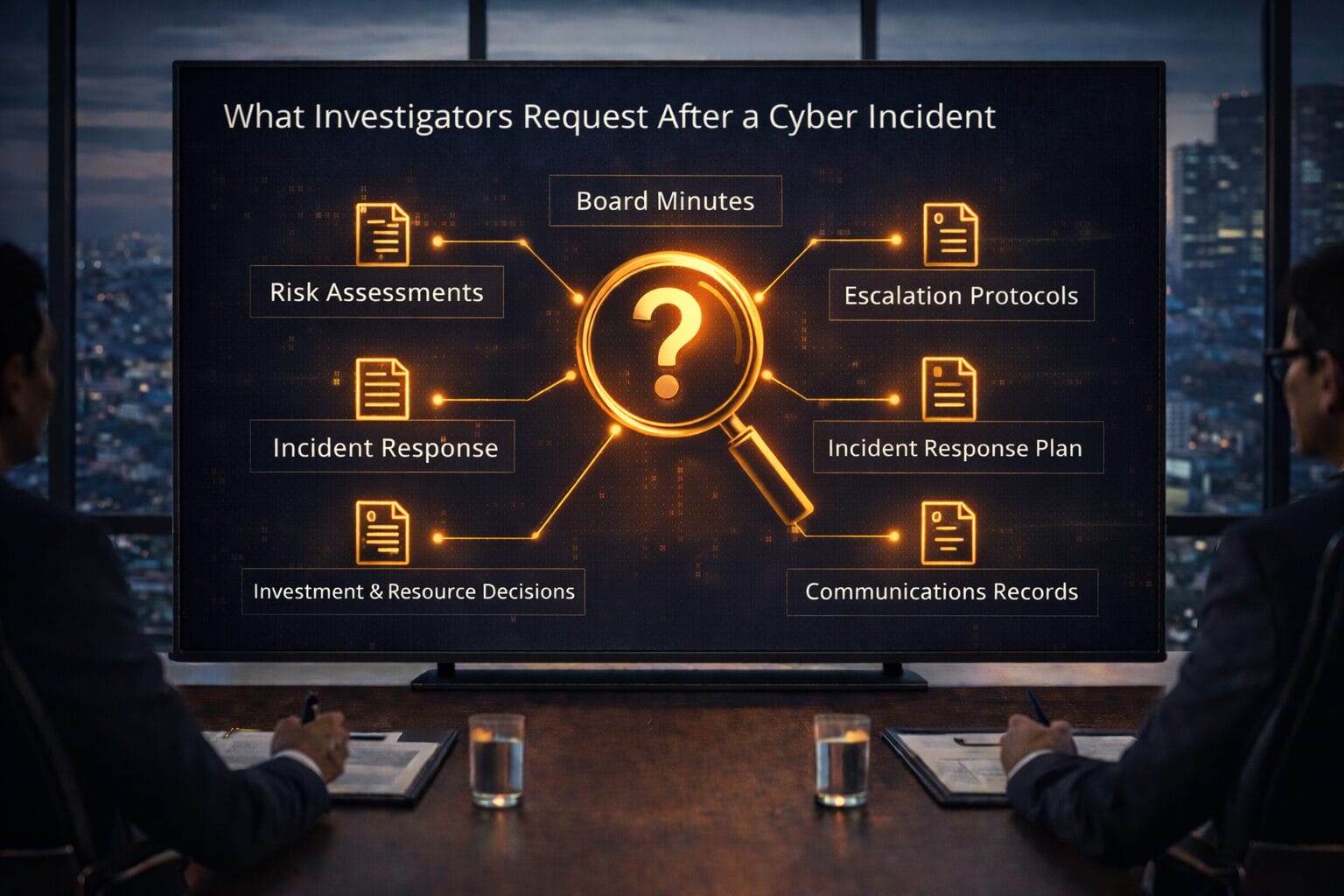
Here is what investigators commonly request after a cyber event.
1. Board Minutes
- When was the board notified?
- What information was presented?
- What questions were asked?
- What decisions were made?
Silence in minutes becomes evidence of silence in oversight.
2. Risk Assessments
- Most recent enterprise risk review
- Identified cyber exposures
- Known vulnerabilities
- Deferred mitigation decisions
If risks were identified but not addressed, documentation will be examined closely.
3. Escalation Protocols
- Defined notification thresholds
- Internal reporting pathways
- Timeline of notification
- Compliance with policy
Improvised escalation creates defensibility challenges.
4. Incident Response Plan
- Date of last update
- Date of last exercise
- Roles and responsibilities
- Legal and insurance coordination
Investigators will compare what was written to what was done.
5. Investment and Resource Decisions
- Budget allocations
- Deferred security upgrades
- Funding gaps
- Risk tolerance discussions
Alignment between risk awareness and resource allocation matters.
6. Communications Records
- Public disclosures
- Stakeholder notifications
- Regulatory filings
- Timing of external communication
Messaging discipline becomes part of the governance review.
None of these requests are punitive by default.
They are structural.
Investigators are assessing whether leadership exercised reasonable oversight.
The standard is not perfection.
It is preparedness.
Boards that:
- Integrated cyber into enterprise risk
- Defined escalation triggers
- Documented oversight discussions
- Conducted governance-level exercises
can demonstrate discipline.
Boards that treated cybersecurity as an operational appendix may struggle to show structure.
Cyber incidents test systems.
Investigations test governance.
Directors should ask themselves now:
If these documents were requested tomorrow, would they reflect deliberate oversight?
Preparation is quieter than reaction.
But it is far more defensible.
#BoardGovernance #CyberRisk #FiduciaryDuty #IncidentResponse #EnterpriseRisk