Why Investment Discipline Must Reflect Both Opportunity and Exposure
Boards are designed to drive growth.
- New programs.
- Expanded services.
- Digital transformation.
- Market expansion.
Growth is the mandate.
But growth introduces dependency.
And dependency introduces exposure.
This creates a governance tension:
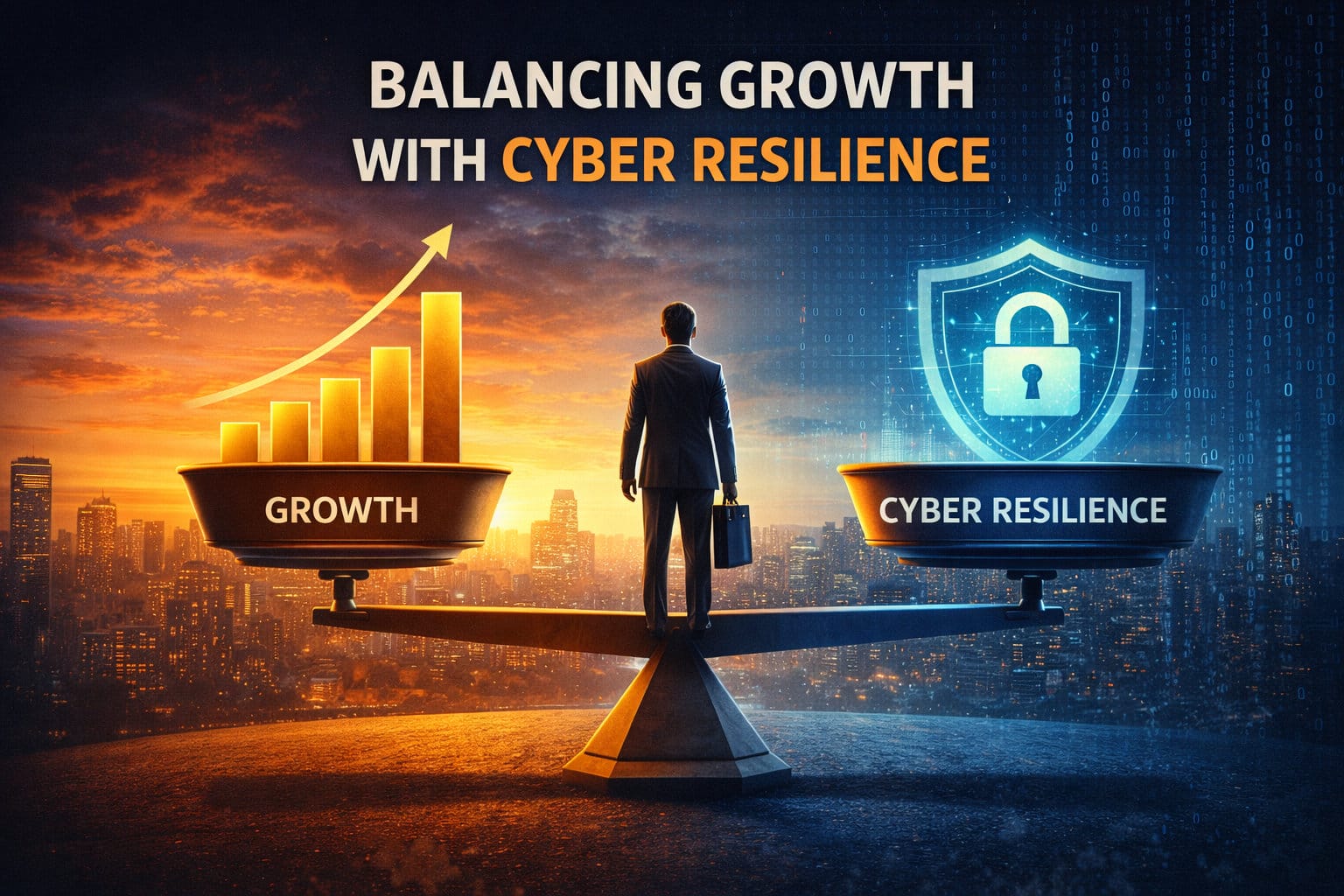
How do boards balance mission advancement with cyber resilience?
Growth Changes the Risk Profile
Every growth initiative expands the attack surface.
- New platforms.
- New integrations.
- New data flows.
- New vendors.
- New users.
These are not just operational changes.
They are risk multipliers.
Growth without corresponding resilience investment creates asymmetry.
Opportunity increases.
Protection does not.
The Investment Imbalance
In many organizations:
- Growth investments are visible.
- Resilience investments are invisible.
Boards readily approve:
- New systems
- New capabilities
- New digital initiatives
But resilience investments often appear as:
- Cost centers
- Maintenance activities
- Non-revenue generating spend
This creates a structural imbalance.
One side drives value.
The other protects it.
The Hidden Cost of Underinvestment
When resilience is underfunded, consequences emerge during disruption:
- Extended downtime
- Data loss
- Recovery delays
- Contractual penalties
- Regulatory exposure
- Reputational damage
At that point, the cost of resilience becomes visible.
Often too late.
Resilience as an Enabler, Not a Constraint
Cyber resilience is often positioned as a constraint on growth.
In reality, it enables sustainable growth.
Organizations with strong resilience can:
- Scale with confidence
- Recover quickly from disruption
- Maintain service continuity
- Protect stakeholder trust
Resilience is not the opposite of growth.
It is what allows growth to persist.
The Governance Question
Boards should ask:
- Does each growth initiative include a resilience component?
- Are we funding recovery capability alongside expansion?
- What is the impact if this system fails at scale?
- Have we modeled disruption scenarios tied to growth?
- Is resilience aligned with our risk tolerance?
These questions connect strategy to exposure.
Integrating Resilience Into Investment Decisions
Effective boards integrate resilience into capital allocation by:
- Evaluating cyber risk alongside strategic proposals
- Requiring resilience considerations in business cases
- Aligning budgets with risk exposure
- Monitoring resilience metrics at the board level
This moves resilience from afterthought to requirement.
The Cultural Signal
Investment decisions signal priority.
If growth is consistently funded while resilience is deferred, culture absorbs that signal.
Over time, organizations optimize for expansion, not durability.
That imbalance becomes visible during disruption.
The Core Principle
Growth creates opportunity.
Resilience preserves it.
Boards must govern both.
Because the success of one depends on the strength of the other.
In our next edition, we will examine how boards evaluate cyber investments — and whether traditional ROI models adequately capture risk reduction.
If you serve on a board or advise executive leadership teams, subscribe to The Cyber Governance Brief for continued analysis on cybersecurity as fiduciary responsibility.