Cyber risk is rarely ignored.
It is more often deferred.
- Budget cycles shift.
- Priorities compete.
- Investments are postponed.
The decision is not to avoid risk.
It is to delay addressing it.
Delay Is a Decision
When cyber investments are deferred, the organization is not standing still.
Exposure continues to evolve:
- Systems age
- Vulnerabilities accumulate
- Dependencies increase
- Threat actors adapt
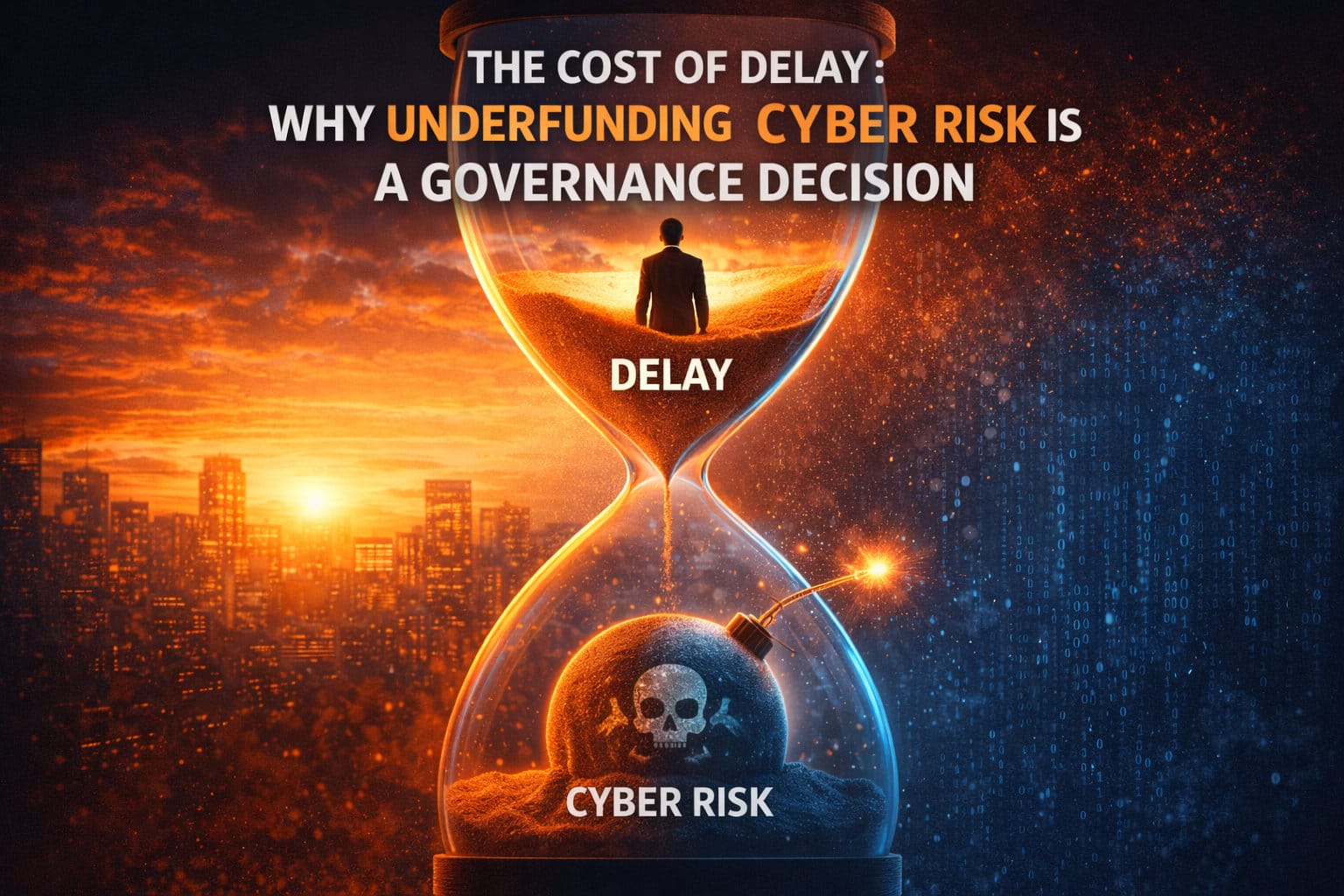
Delay does not pause risk.
It compounds it.
The Illusion of Temporary Deferral
Deferral is often framed as temporary:
“We’ll address this next quarter.”
“Let’s revisit this next budget cycle.”
“We can accept this risk for now.”
But deferred risk rarely returns unchanged.
It typically returns:
- Larger
- More complex
- More expensive to address
What appears as cost control may become cost escalation.
The Financial Reality
Underfunding cyber risk does not eliminate cost.
It shifts it.
From:
Planned investment
To:
Unplanned loss
- Incident response
- Business interruption
- Regulatory exposure
- Legal expense
- Reputational damage
The question is not whether cost will occur.
It is when and how.
The Governance Lens
Boards are responsible for:
- Aligning investment with risk
- Defining risk tolerance
- Approving resource allocation
- Documenting decision rationale
When cyber risk is knowingly underfunded, that is not an operational gap.
It is a governance decision.
The Compounding Effect
Deferred investment increases:
- Likelihood of incident
- Severity of impact
- Cost of recovery
- Complexity of response
This creates a multiplier effect.
Delay today increases cost tomorrow.
What Boards Should Be Asking
- What risks are we knowingly deferring?
- How does deferral align with our risk tolerance?
- What is the cost if this risk materializes?
- Are we documenting the rationale for delay?
- Have we modeled the impact of inaction?
These questions convert deferral into governance.
The Cultural Signal
When cyber investment is repeatedly deferred, culture adapts.
Teams learn:
- Risk can wait
- Exposure is acceptable
- Funding is uncertain
That signal shapes behavior long before an incident occurs.
The Core Principle
Cyber risk does not disappear when it is deferred.
It accumulates.
And when boards choose to delay investment, they are not avoiding cost.
They are choosing its timing.
#BoardGovernance #CyberRisk #EnterpriseRisk #FiduciaryDuty #RiskManagement