Why Cyber Incidents Are Ultimately Trust Events
Reputation has always mattered.
- Brand trust.
- Customer confidence.
- Stakeholder perception.
But in a digital enterprise, reputation is no longer abstract.
It is operational.
Reputation Now Moves at Network Speed
In a pre-digital environment, reputational damage unfolded slowly.
Today, it moves instantly.
A cyber incident can trigger:
- Immediate public awareness
- Media amplification
- Social distribution
- Stakeholder reaction
- Regulatory attention
Narratives form quickly.
And they are difficult to reverse.
From Security Event to Trust Event
Cyber incidents are often framed as technical failures.
In reality, they are trust events.
Customers ask:
- Was my data protected?
- Can I rely on this organization?
Partners ask:
- Is this relationship secure?
Regulators ask:
- Was oversight adequate?
The technical details matter.
But the perception of trust determines impact.
The Compounding Effect of Response
Reputation is shaped not only by the incident, but by the response.
- Delayed communication.
- Inconsistent messaging.
- Lack of transparency.
- Defensive posture.
These amplify damage.
Conversely:
- Clear communication
- Timely disclosure
- Demonstrated accountability
- Structured response
These can preserve trust — even during disruption.
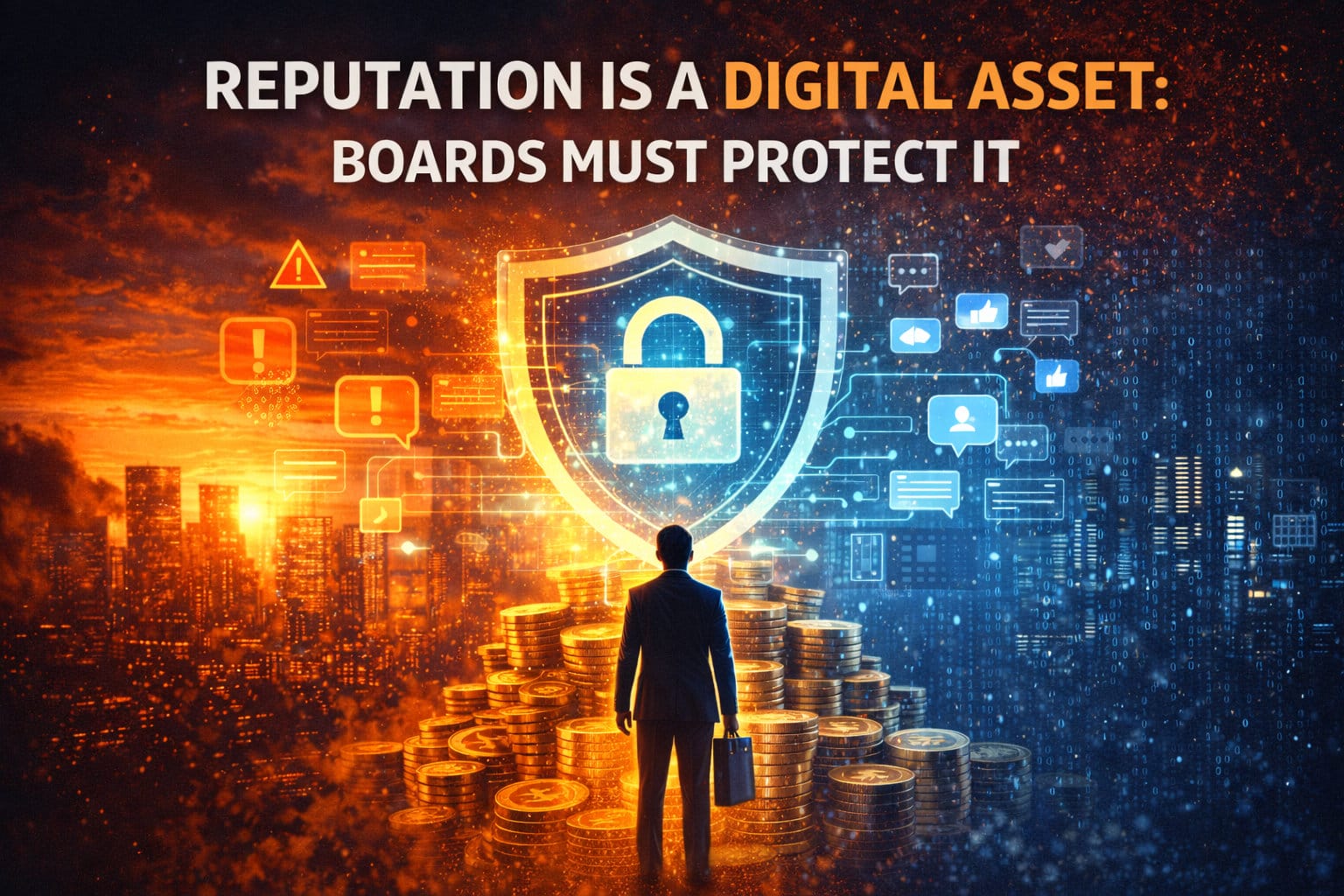
Reputation as an Asset
Boards routinely oversee:
- Financial assets
- Operational assets
- Intellectual property
Reputation should be viewed the same way.
It is:
- Hard to build
- Easy to damage
- Expensive to restore
And increasingly tied to digital resilience.
The Governance Gap
Many boards do not explicitly connect cyber risk to reputational impact.
Cyber is discussed.
Reputation is discussed.
The linkage is often implied, not governed.
This creates a gap in oversight.
What Boards Should Be Asking
- How would a cyber incident affect stakeholder trust?
- Do we have a defined communications strategy?
- Who is responsible for external messaging?
- Have we tested reputational response scenarios?
- Are we prepared for real-time public scrutiny?
These are governance questions.
Not communications exercises.
Crisis Communication as Governance
Crisis response is not only operational.
It is reputational governance.
Boards should ensure:
- Alignment between legal, communications, and leadership
- Predefined messaging frameworks
- Clear escalation pathways
- Documented response roles
In a crisis, preparation becomes visible.
The Investor and Market Dimension
Reputational impact extends beyond customers.
Investors evaluate:
- Leadership credibility
- Transparency of response
- Governance discipline
Market reaction often reflects perceived trustworthiness, not just incident severity.
The Core Principle
Reputation is no longer separate from cybersecurity.
It is directly influenced by it.
Boards that treat reputation as a digital asset will govern cyber risk differently.
Because they understand what is truly at stake.
In our next edition, we will examine crisis response timing — and why the first 24 hours often determine long-term reputational impact.
If you serve on a board or advise executive leadership teams, subscribe to The Cyber Governance Brief for continued analysis on cybersecurity as fiduciary responsibility.