
From Technical Oversight to Enterprise Accountability
Cybersecurity governance is not static.
It is evolving.
And over the next five years, the expectations placed on boards will shift in ways that are already becoming visible today.
From Technical Topic to Enterprise Risk
Cyber risk has already moved beyond IT.
Over the next five years, it will fully integrate into:
- Enterprise risk management
- Financial oversight
- Strategic planning
- Operational resilience
Boards will no longer ask, “How is cybersecurity performing?”
They will ask, “How is cyber risk affecting enterprise value?”
Regulatory Convergence Accelerates
Regulators are increasingly aligned in their expectations:
- Disclosure requirements
- Governance accountability
- Documentation standards
- Executive responsibility
This convergence will:
- Reduce ambiguity
- Increase scrutiny
- Standardize expectations
Boards should expect less flexibility — and more accountability.
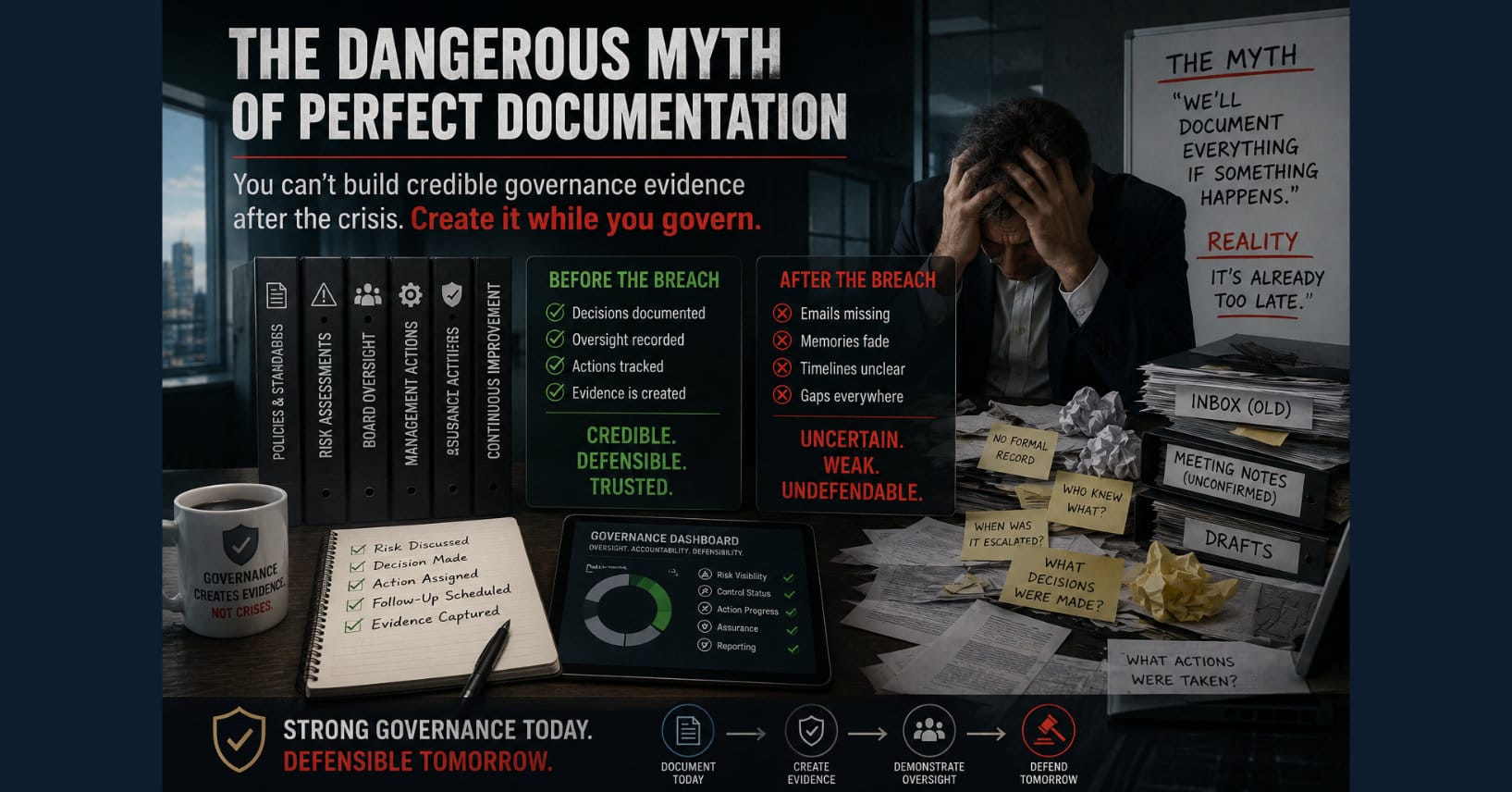
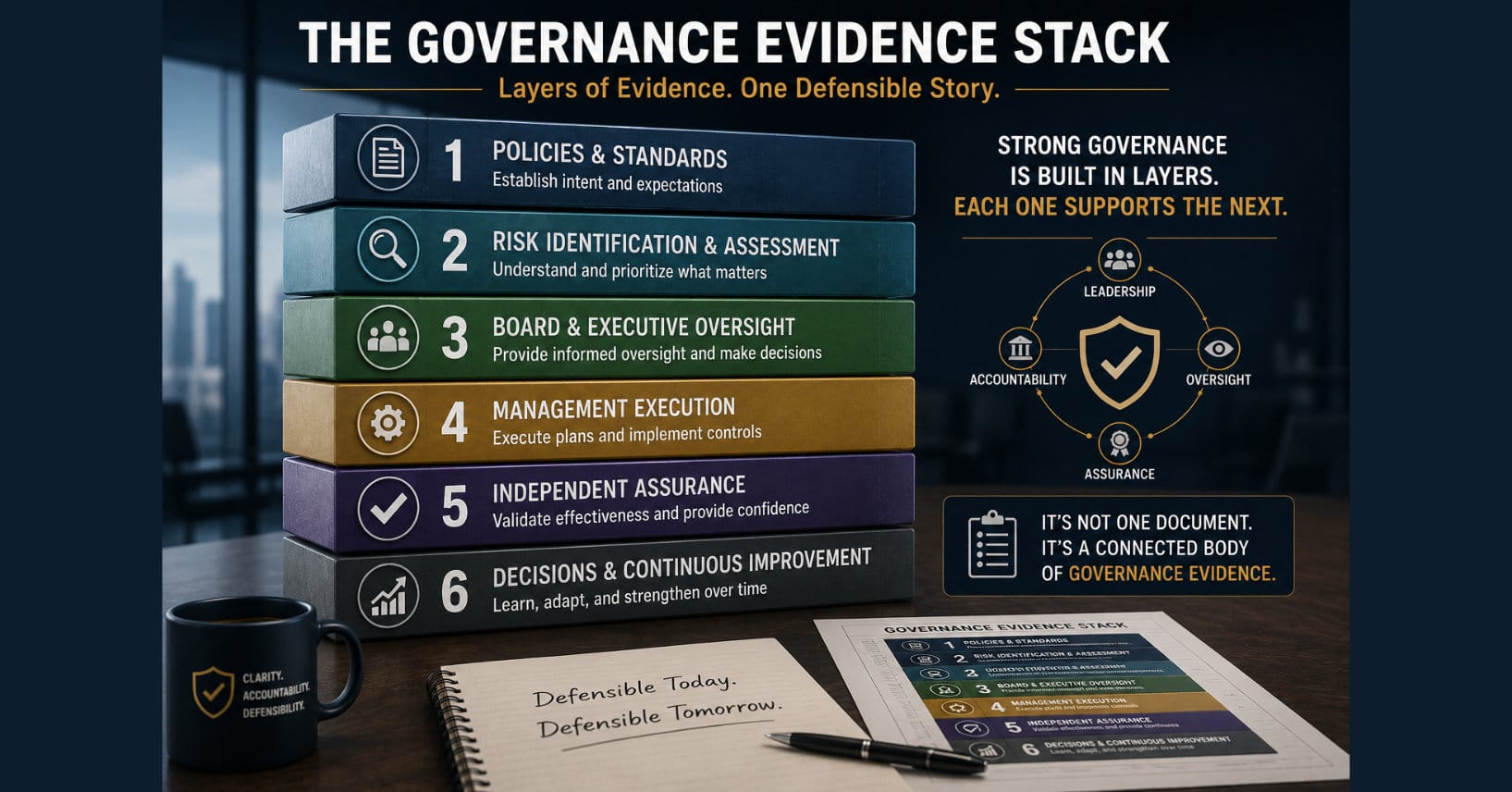
Documentation Becomes the Record of Governance
The shift toward defensibility will continue.
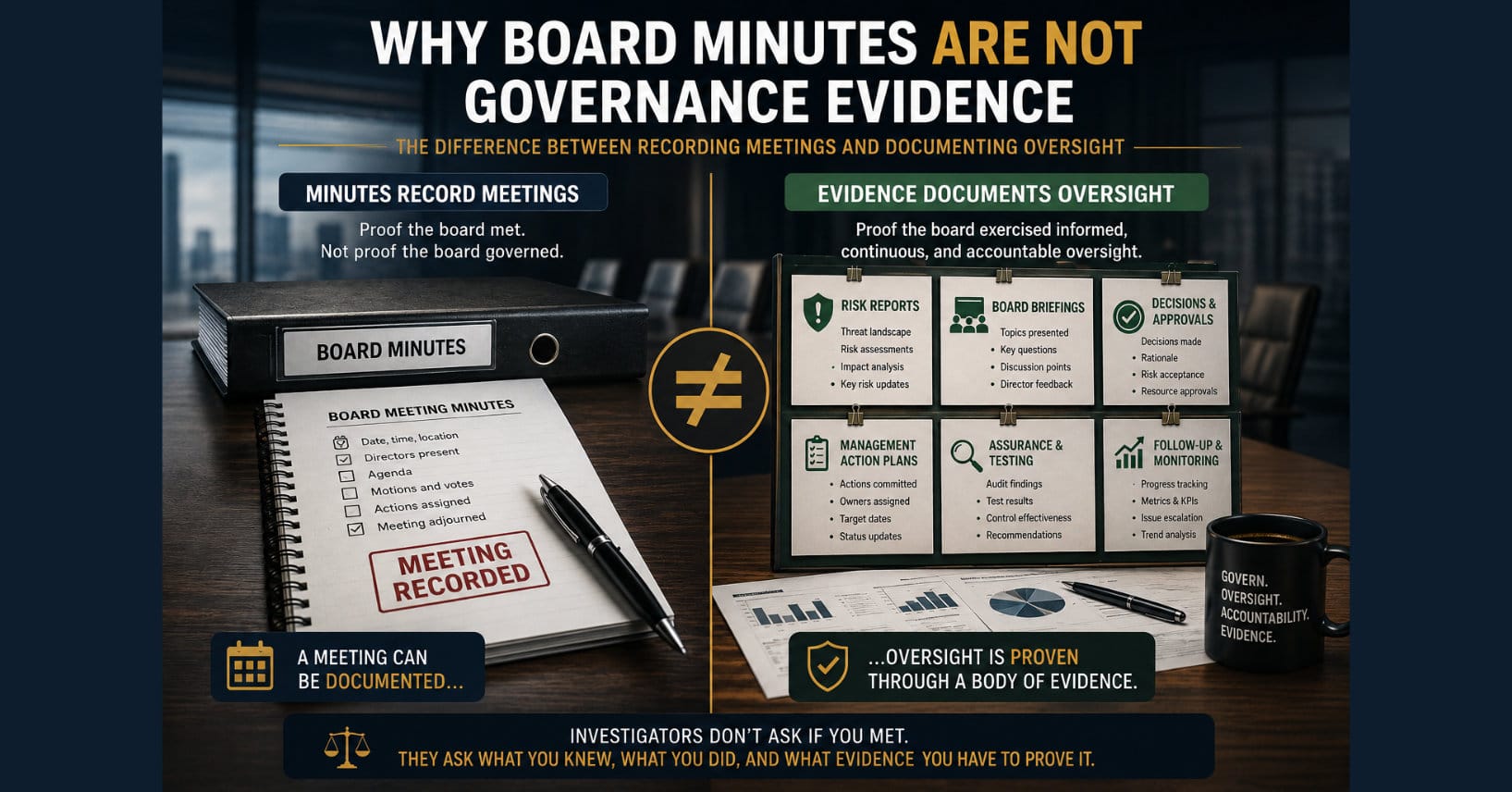
Boards will be evaluated based on:
- What was discussed
- What decisions were made
- What risks were acknowledged
- What actions were taken
Documentation will become the primary evidence of oversight.
Cyber Literacy Becomes Baseline
Cyber literacy will move from “helpful” to “expected.”
Boards will:
- Recruit for digital risk understanding
- Invest in director education
- Increase reliance on independent expertise
The question will no longer be whether boards understand cyber risk.
It will be whether they can govern it effectively.
Scenario-Based Governance Expands
Static reporting will give way to dynamic evaluation.
Boards will increasingly engage in:
- Scenario modeling
- Tabletop exercises
- Disruption simulations
- Recovery validation
Governance will become more experiential.
Third-Party and Systemic Risk Intensify
Vendor ecosystems will continue to expand.
Dependencies will deepen.
Boards will need to oversee:
- Third-party concentration risk
- Cloud dependency
- Supply chain exposure
Risk will become more interconnected.
Insurance and Financial Integration Deepen
Cyber risk will be more tightly integrated with:
- Insurance underwriting
- Financial disclosures
- Capital allocation
- Investor communication
Boards will treat cyber risk as a financial variable, not a technical one.
Reputation and Trust Become Central
Cyber incidents will increasingly be evaluated as:
- Leadership events
- Trust events
- Governance events
Reputation will be directly tied to:
- Response quality
- Transparency
- Accountability
Boards will govern not only risk, but perception.
AI and Automation Introduce New Governance Challenges
As AI becomes embedded in operations:
- Decision-making accelerates
- Risk surfaces expand
- Oversight complexity increases
Boards will need to govern not only systems, but autonomous behaviors.
The Core Principle
Over the next five years, cybersecurity governance will evolve from:
Oversight of technology
to
Accountability for enterprise risk
Boards that adapt to this shift will strengthen resilience.
Those that do not will face increasing scrutiny.
In our next and final edition, we will bring the series together — defining what effective cyber governance looks like in practice.
If you serve on a board or advise executive leadership teams, subscribe to The Cyber Governance Brief for continued analysis on cybersecurity as fiduciary responsibility.