
The White House’s June 2026 Executive Order signals a shift in how advanced AI is viewed, framing it as a cybersecurity, critical infrastructure, and governance issue rather than only an innovation tool. It highlights concern about frontier models with significant cyber capabilities and their potential impact on sectors such as finance, utilities, healthcare, and hospitals.
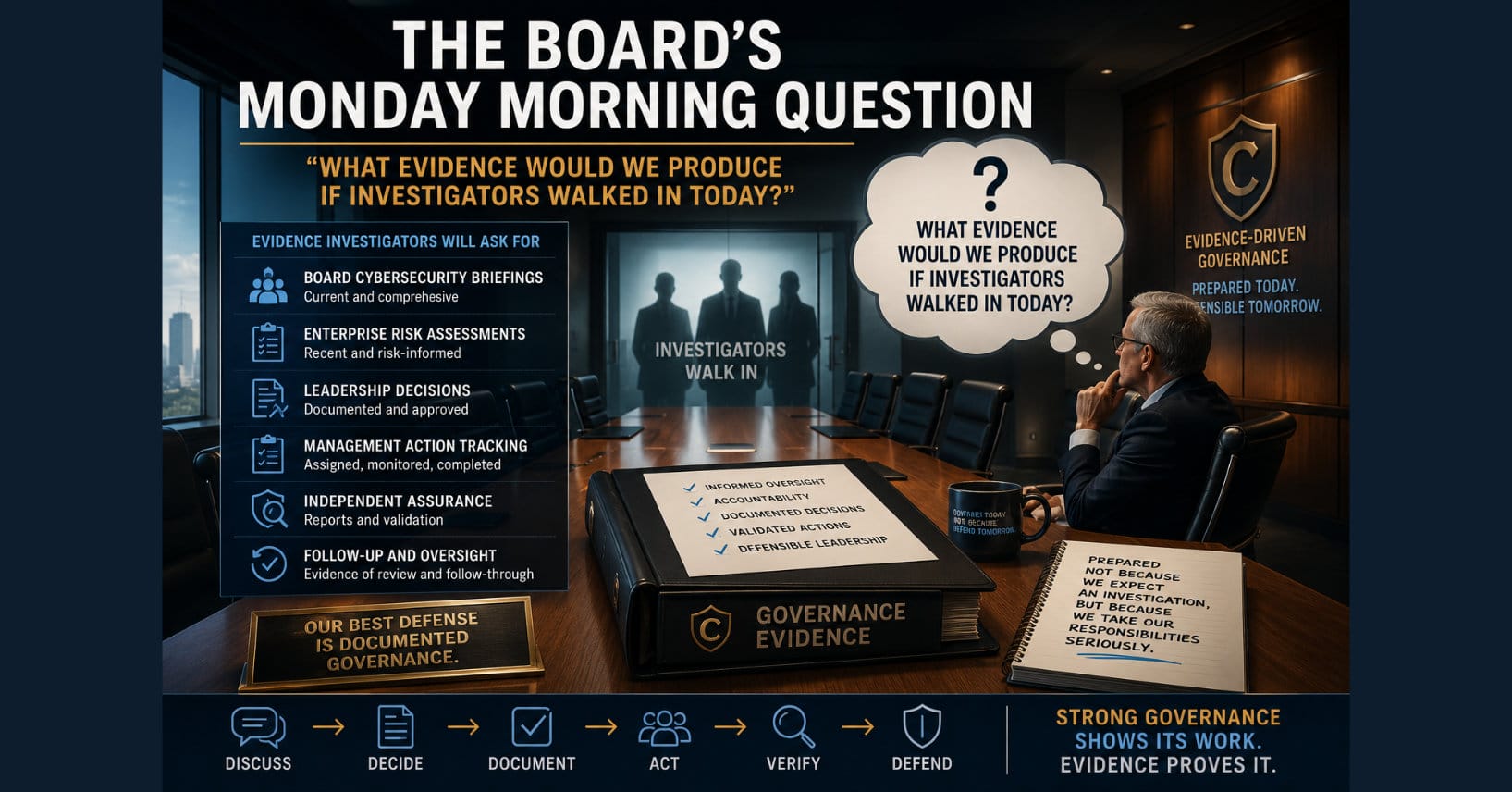
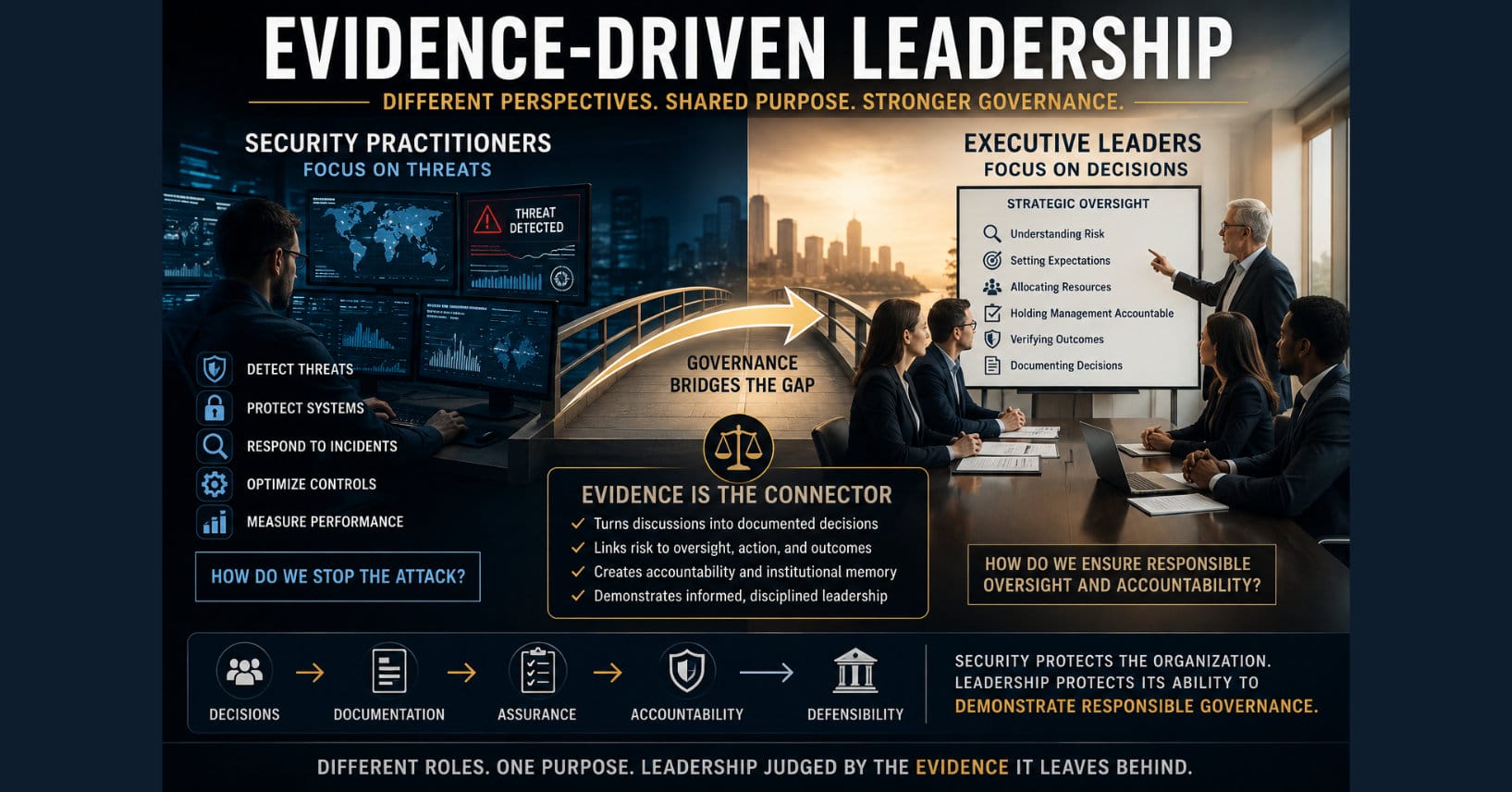
The piece argues that AI oversight is becoming similar to cybersecurity governance, with boards needing visibility into AI systems, vendor tools, data exposure, and human oversight. It emphasizes that organizations may soon be expected to show evidence of due diligence before AI-related risks materialize.
For years, most organizations have treated artificial intelligence as an innovation initiative.
The discussion centered on productivity gains, automation, analytics, and competitive advantage. AI was framed primarily as a technology accelerator — something to help organizations move faster, reduce operational friction, and unlock new business models.
The White House’s June 2026 Executive Order on advanced artificial intelligence suggests the federal government now sees something much larger emerging.
This is no longer simply an innovation conversation.
It is increasingly a cybersecurity, critical infrastructure, and governance conversation.
That distinction matters because it changes the questions boards and executive leadership teams should be asking.
The Shift from Productivity to National Security
Buried beneath the headlines about American competitiveness and AI leadership is a far more important governance signal: the federal government is beginning to treat advanced AI systems as potential national security assets — and risks.
The Executive Order establishes new initiatives designed to evaluate, benchmark, and strengthen AI-driven cybersecurity capabilities across both government and critical infrastructure sectors.
That includes support for sectors such as financial services, utilities, healthcare systems, and rural hospitals — industries whose disruption carries systemic consequences.
The language itself is revealing.
The administration specifically references the need to evaluate “covered frontier models” for advanced cyber capabilities.
That phrase deserves careful attention.
What Are “Covered Frontier Models”?
A “frontier model” generally refers to an advanced AI system operating at or near the current limits of artificial intelligence capability.
These are not ordinary consumer chatbots or narrow-purpose automation tools.
Frontier models are large-scale AI systems capable of advanced reasoning, software generation, vulnerability analysis, autonomous decision support, and increasingly sophisticated cyber operations.
The word “covered” indicates that certain models may meet thresholds significant enough to warrant government attention, benchmarking, testing, or security evaluation.
In practical terms, the government is signaling concern about AI systems capable of:
- Discovering software vulnerabilities at scale
- Assisting offensive cyber operations
- Automating reconnaissance and exploitation activities
- Generating sophisticated phishing or social engineering campaigns
- Accelerating malware development
- Influencing critical infrastructure systems
- Operating with increasing autonomy
Whether one agrees with the policy approach is secondary to the larger governance implication:
The federal government now appears to believe that some AI systems possess cyber capabilities significant enough to justify national-security-level scrutiny.
Boards should not ignore that signal.
AI Governance Is Becoming Cyber Governance
Many organizations still approach AI governance informally.
In some cases, AI adoption is occurring faster than governance structures can keep pace. Business units are experimenting with tools independently. Employees are embedding AI into workflows without formal review. Vendors are integrating AI capabilities into platforms faster than many procurement processes can evaluate them.
That creates a governance gap.
Historically, organizations made a similar mistake with cybersecurity itself. For years, cyber risk was treated as a technical operations issue delegated almost entirely to IT departments.
Only after major breaches, regulatory pressure, litigation exposure, and insurance scrutiny did boards begin recognizing cybersecurity as an enterprise governance responsibility.
AI appears to be following the same trajectory.
The Executive Order may ultimately be remembered less for its technical provisions and more for the governance signal it sends:
Advanced AI is now being evaluated through the lens of systemic risk.
That changes the oversight equation.
The New Questions Boards Should Be Asking
Boards do not need to become AI engineers.
They do, however, need evidence that management understands how AI is being introduced into the organization and what controls exist around its use.
The emerging governance questions are remarkably similar to the questions mature boards already ask about cybersecurity:
- What AI systems are currently in use across the enterprise?
- Which vendors are embedding AI into existing platforms?
- What risks have been assessed?
- What governance policies exist regarding AI usage?
- What data is being exposed to external AI systems?
- What human oversight exists over AI-generated outputs?
- What evidence demonstrates that governance is functioning?
That final question matters most.
Because governance is ultimately an evidentiary discipline.
In the aftermath of a cyber incident, organizations are rarely judged solely by whether an attack occurred. They are judged by whether leadership exercised reasonable oversight, documented risk decisions, implemented governance processes, and preserved evidence demonstrating due diligence.
AI governance is rapidly moving toward the same standard.
Voluntary Today. Expected Tomorrow.
One of the more interesting aspects of the Executive Order is what it does not do.
The administration avoided creating broad mandatory licensing requirements for AI systems. Instead, portions of the framework rely on voluntary participation, benchmarking, collaboration, and testing.
But governance professionals understand how these cycles typically evolve.
Voluntary frameworks often become de facto expectations long before they become formal regulation.
Cybersecurity itself followed this path.
Best practices became frameworks. Frameworks became contractual obligations. Contractual obligations became regulatory expectations. Regulatory expectations became litigation standards.
AI governance may now be entering the early stages of the same progression.
Organizations waiting for explicit mandates before establishing AI oversight processes may eventually discover they are operating behind both market expectations and governance maturity standards.
The Real Governance Issue
The larger issue is not whether AI innovation should continue.
It will.
The larger issue is whether organizations understand that advanced AI introduces a new category of enterprise risk that intersects cybersecurity, operational resilience, legal exposure, regulatory scrutiny, and fiduciary responsibility.
That makes this a governance issue.
Not merely a technology issue.
The organizations that adapt early will likely build defensible oversight structures before external pressure forces them to do so.
The organizations that delay may eventually find themselves trying to explain why transformative AI capabilities entered the enterprise faster than governance mechanisms were prepared to manage them.
And when that moment arrives, the most important question may not be whether AI was innovative.
It may be whether leadership can demonstrate evidence of oversight before the risk materialized.