
-
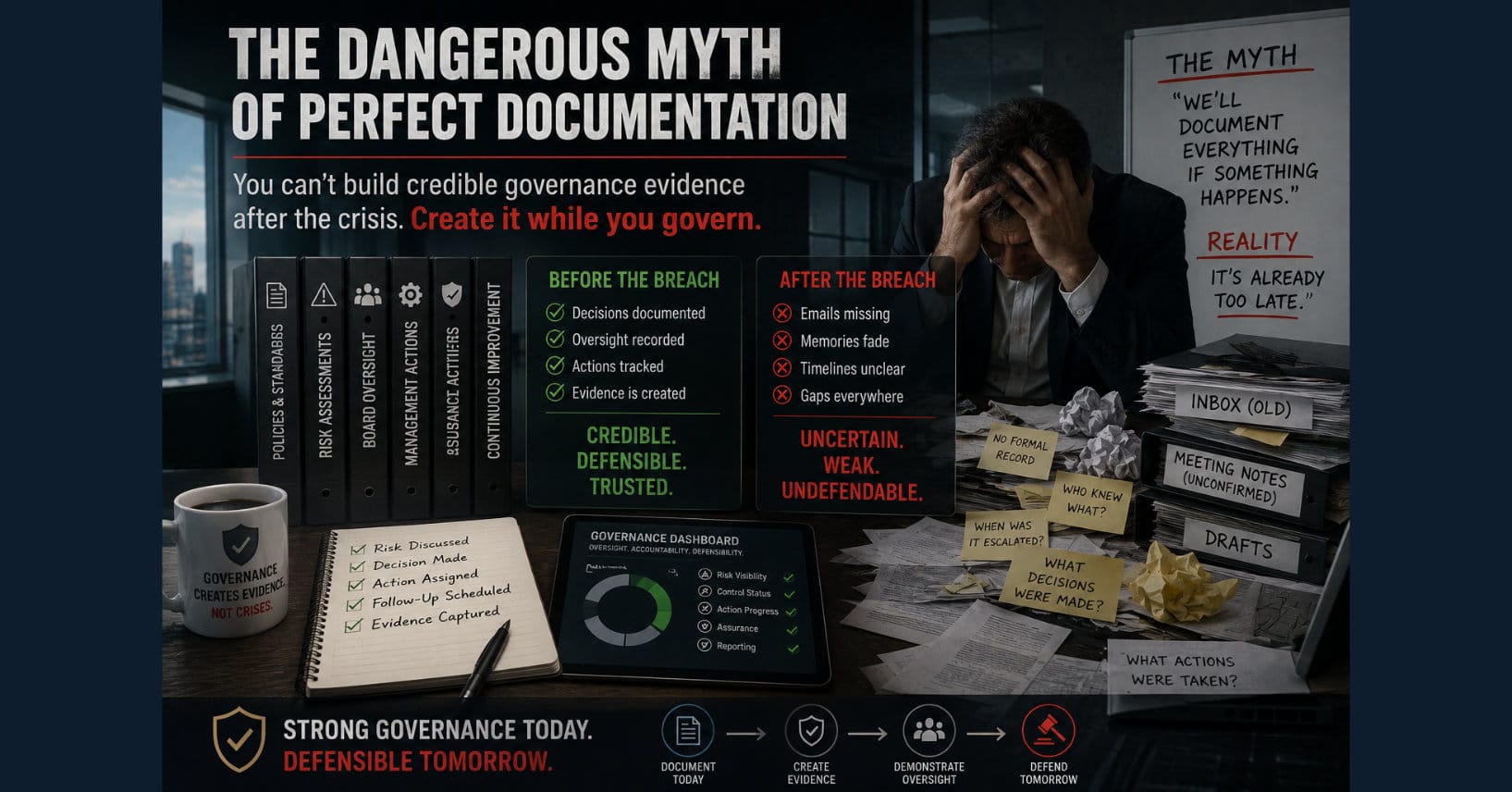
The Dangerous Myth of Perfect Documentation
Many organizations believe they can reconstruct governance evidence after a cyber incident. They can’t. Discover why contemporaneous documentation is far more credible than records assembled…
-
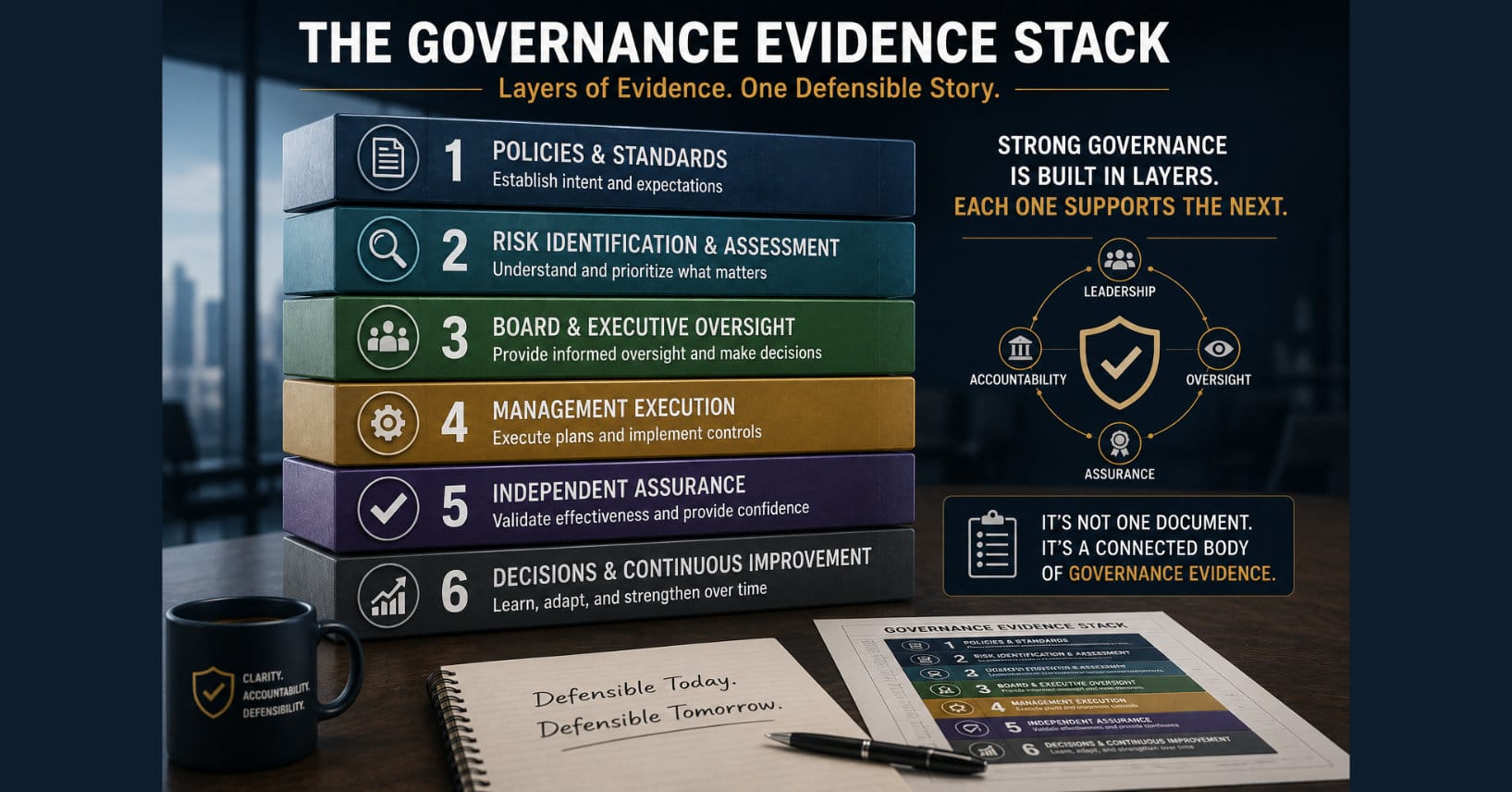
The Governance Evidence Stack
Good governance is not proven by a single document. It is demonstrated through a connected body of evidence spanning policy, risk, oversight, execution, assurance, and…
-
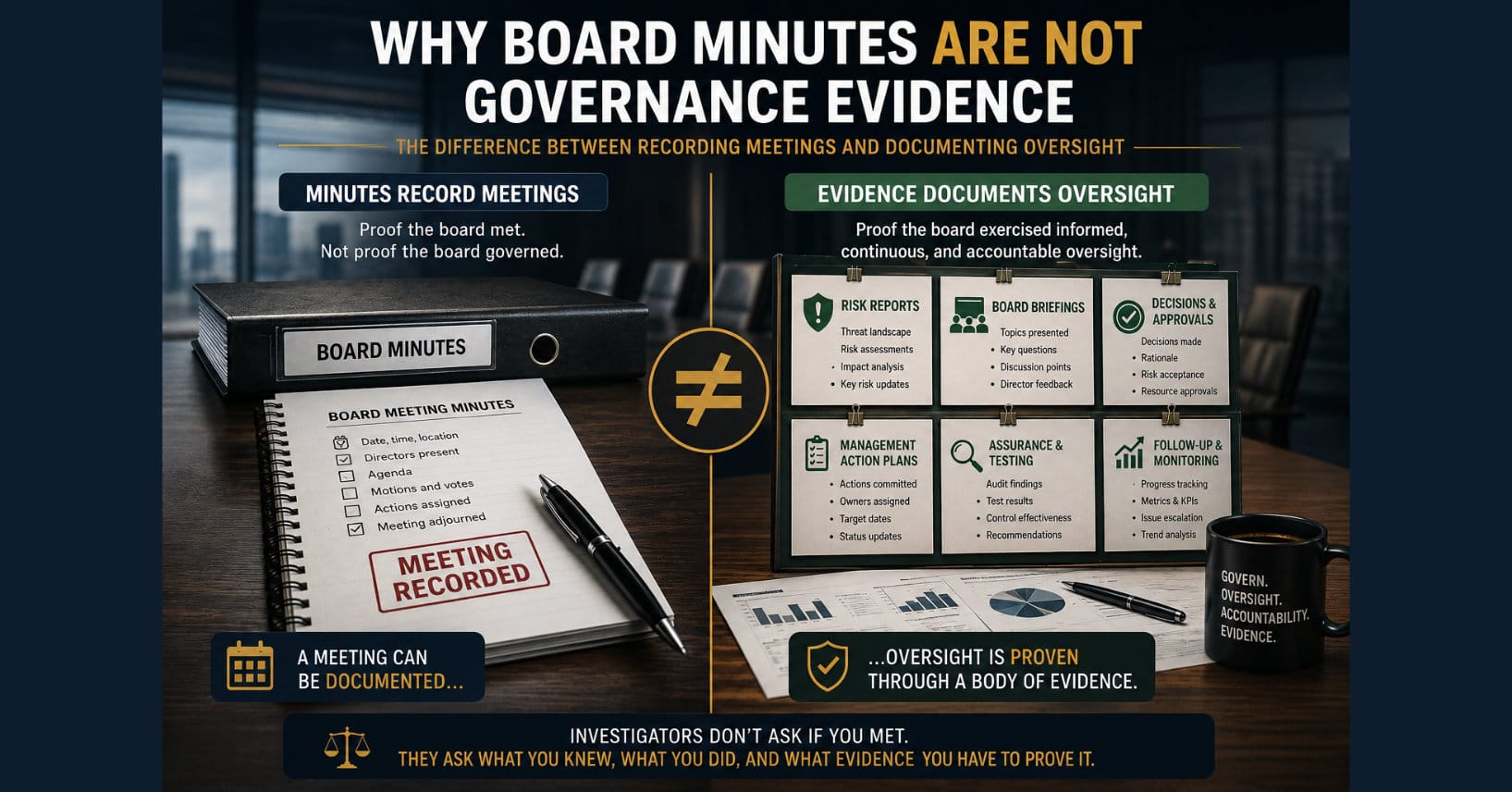
Why Board Minutes Are Not Governance Evidence
Board minutes document discussions, but they rarely prove effective oversight. Learn why defensible governance requires evidence beyond meeting records.
-
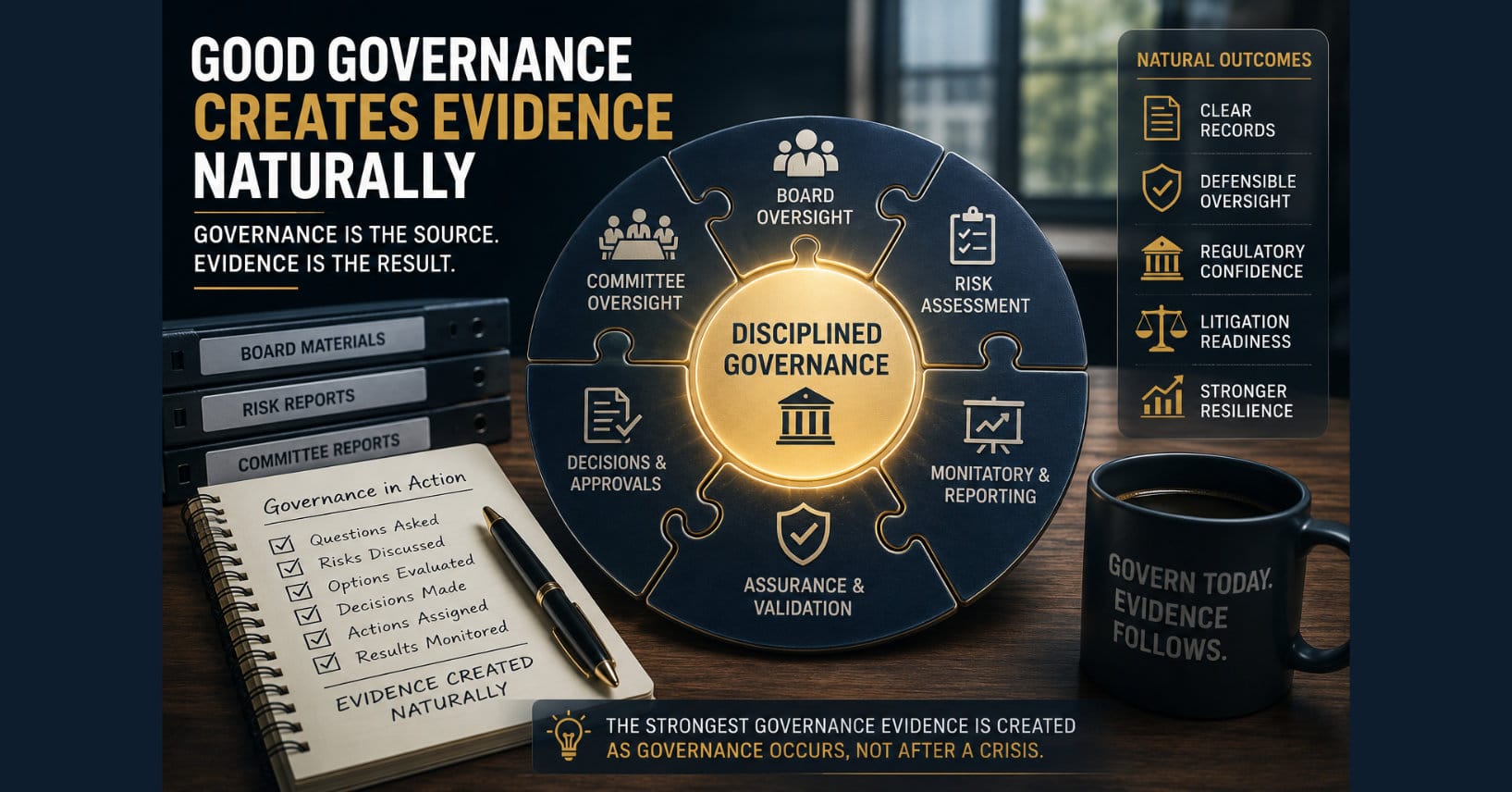
Good Governance Creates Evidence Naturally
The strongest governance evidence isn’t assembled after a cyber incident—it is created as governance occurs. Discover the central principle behind the Defensible Evidence Framework™ and…
-
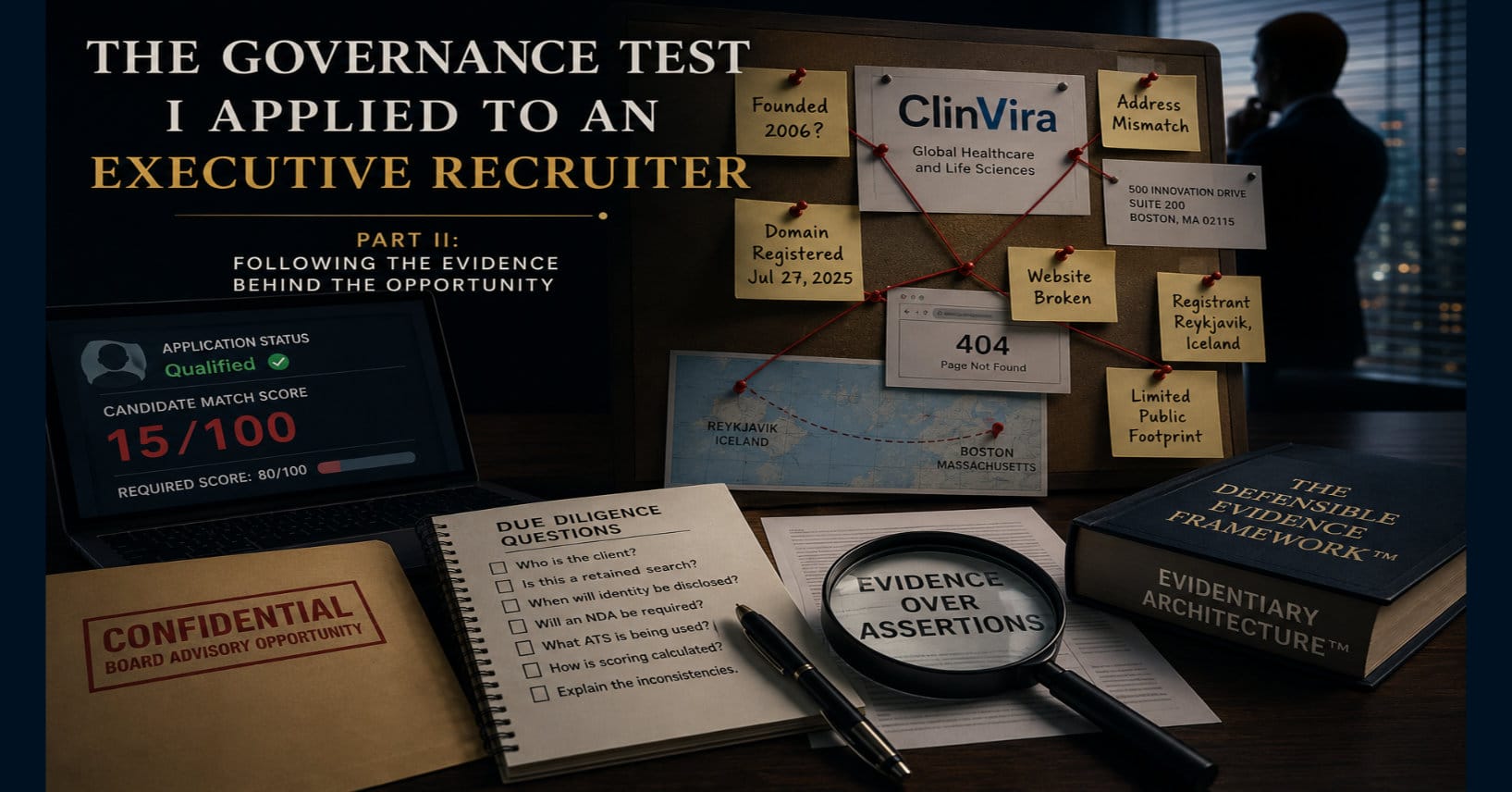
The Governance Test I Applied to an Executive Recruiter
Part II follows the evidence beyond the recruiting emails. Public records, domain history, website analysis, and unanswered questions reveal why governance depends on verification—not persuasion.
-
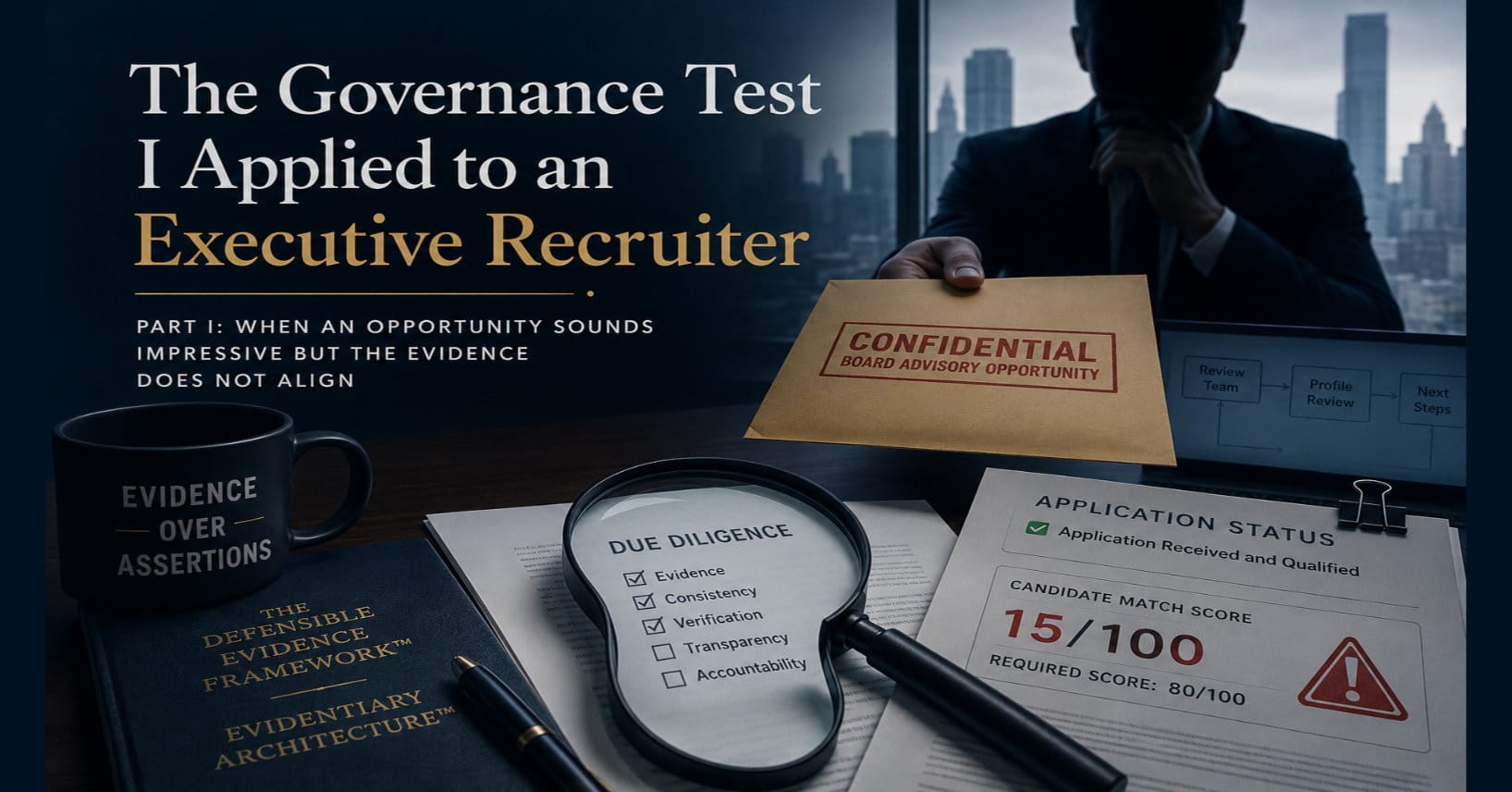
The Governance Test I Applied to an Executive Recruiter
What happens when you apply the same evidence-based governance principles used in cybersecurity and AI oversight to an executive recruiting process? In Part I, I…
-
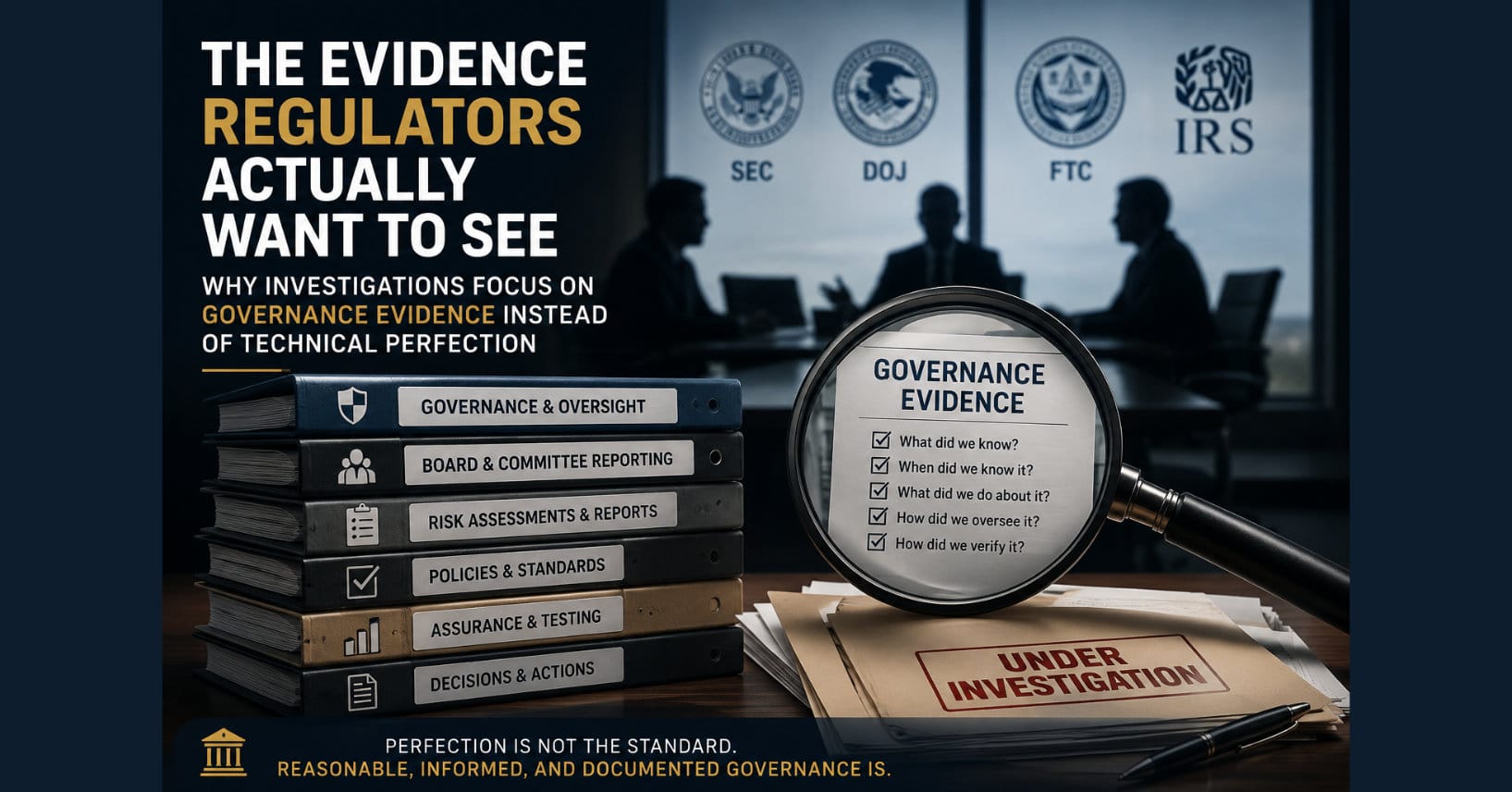
The Evidence Regulators Actually Want to See
After a cyber incident, investigators rarely begin by asking what security tools an organization deployed. They ask what leadership knew, when they knew it, and…
-
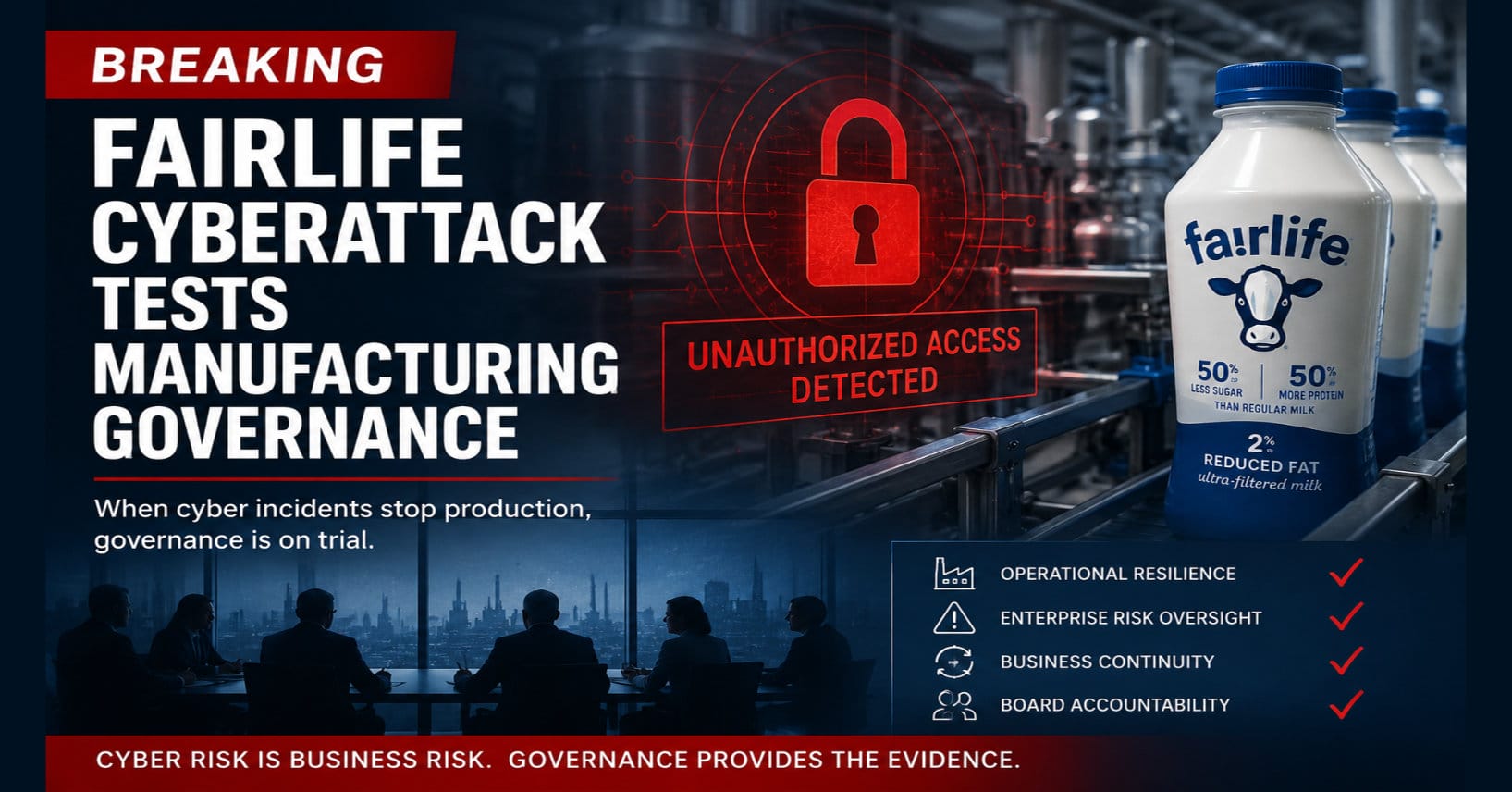
Breaking: fairlife Cyberattack Tests Manufacturing Governance
A cyberattack that halted fairlife’s U.S. production demonstrates how cybersecurity has become an operational resilience issue. The real governance question is no longer how the…
-
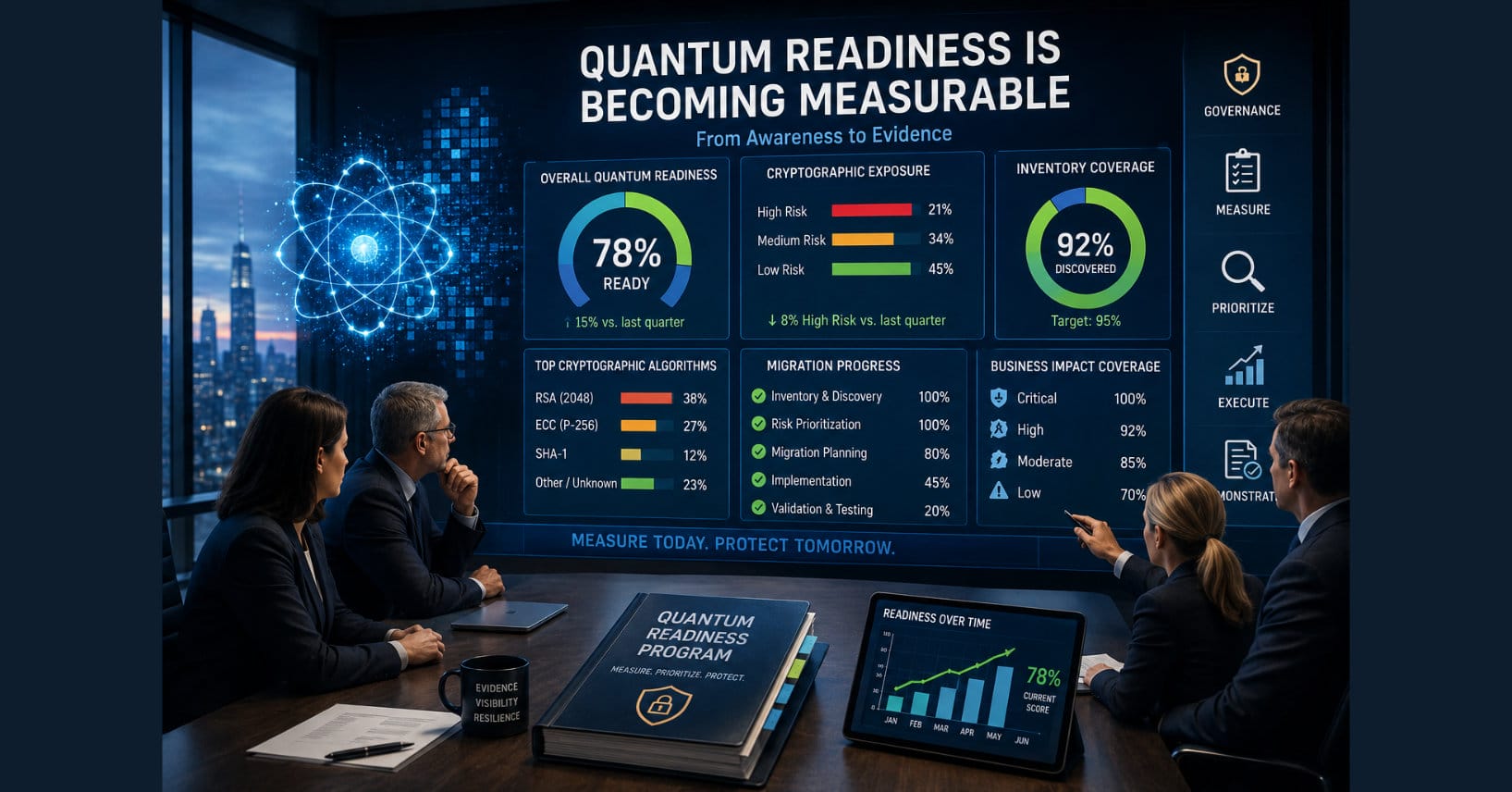
Quantum Readiness Is Becoming Measurable
Quantum readiness is no longer measured by plans alone. Organizations must produce objective evidence of cryptographic exposure, migration progress, and measurable resilience for boards, regulators,…
-
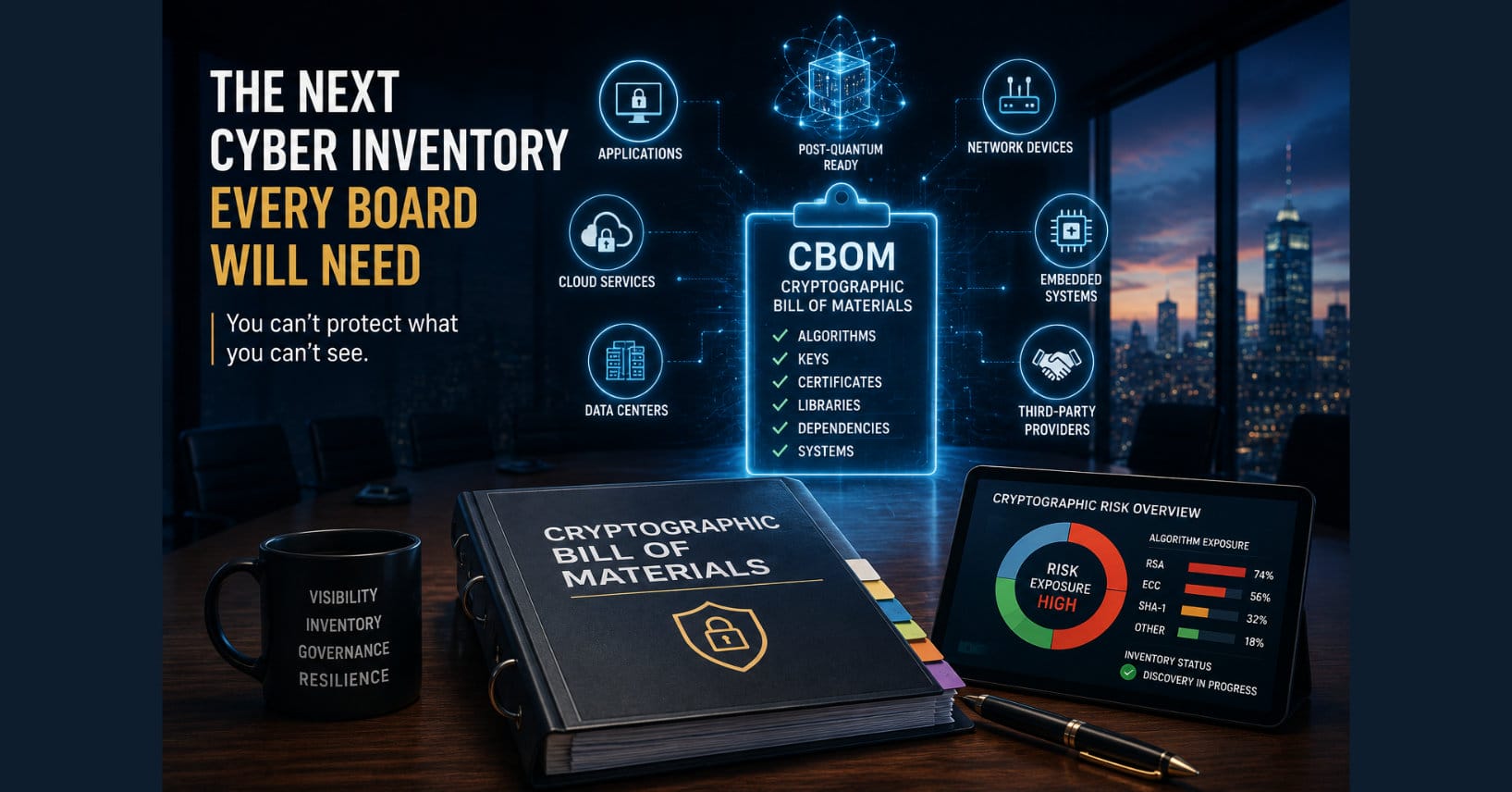
The Next Cyber Inventory Every Board Will Need
Most organizations inventory hardware and software. Few maintain a governance inventory of AI systems, cloud services, vendors, privileged accounts, and critical data. Boards cannot oversee…
-

Quantum Readiness Has Left the Research Lab
Quantum computing is moving from research to business reality. Boards must begin governing cryptographic risk before today’s encryption becomes tomorrow’s liability.
-
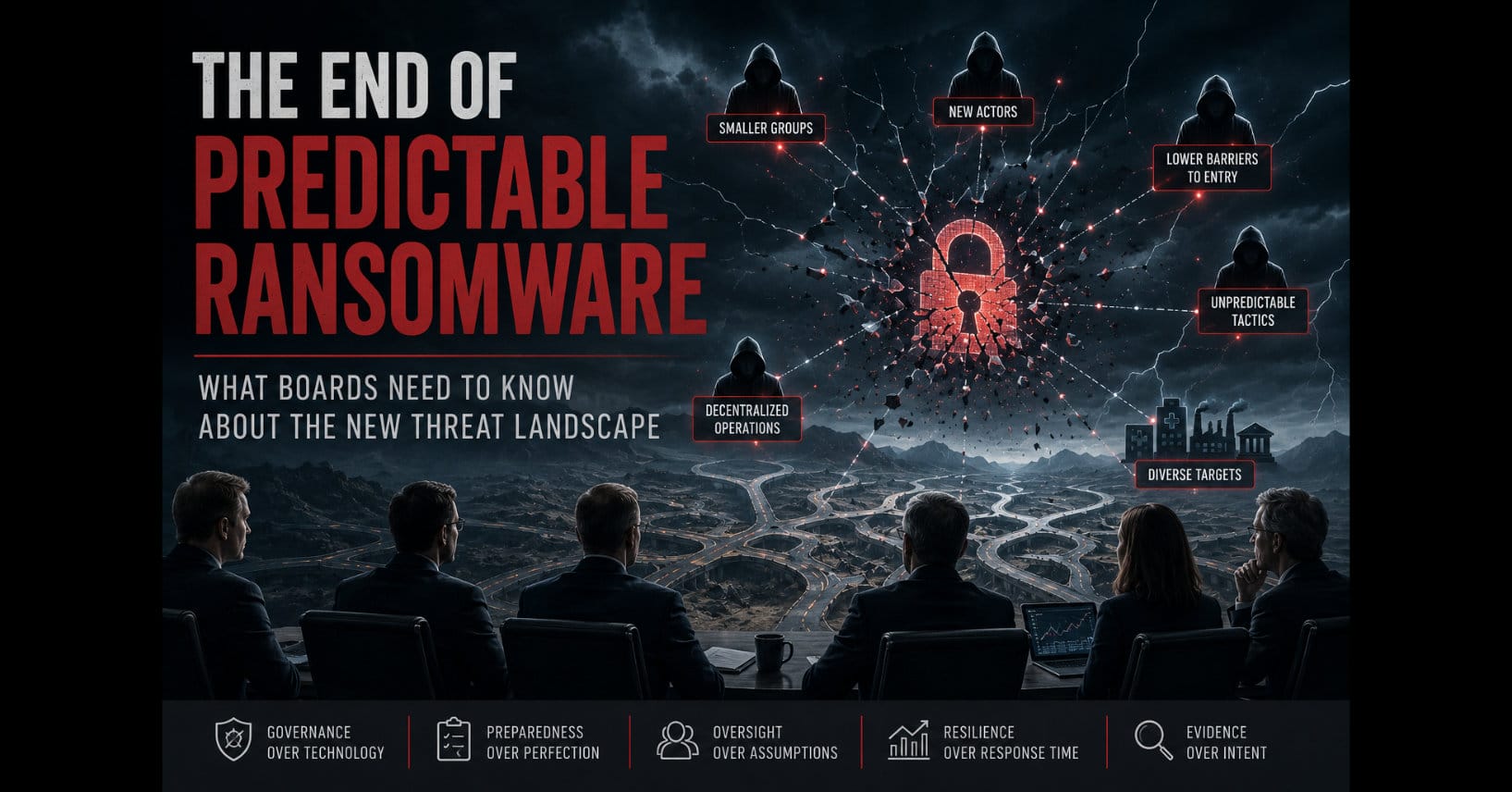
The End of Predictable Ransomware: What Boards Need to Know About the New Threat Landscape
The ransomware landscape is changing. As major criminal groups fragment into smaller and less predictable actors, boards must shift their focus from prevention alone to…
-
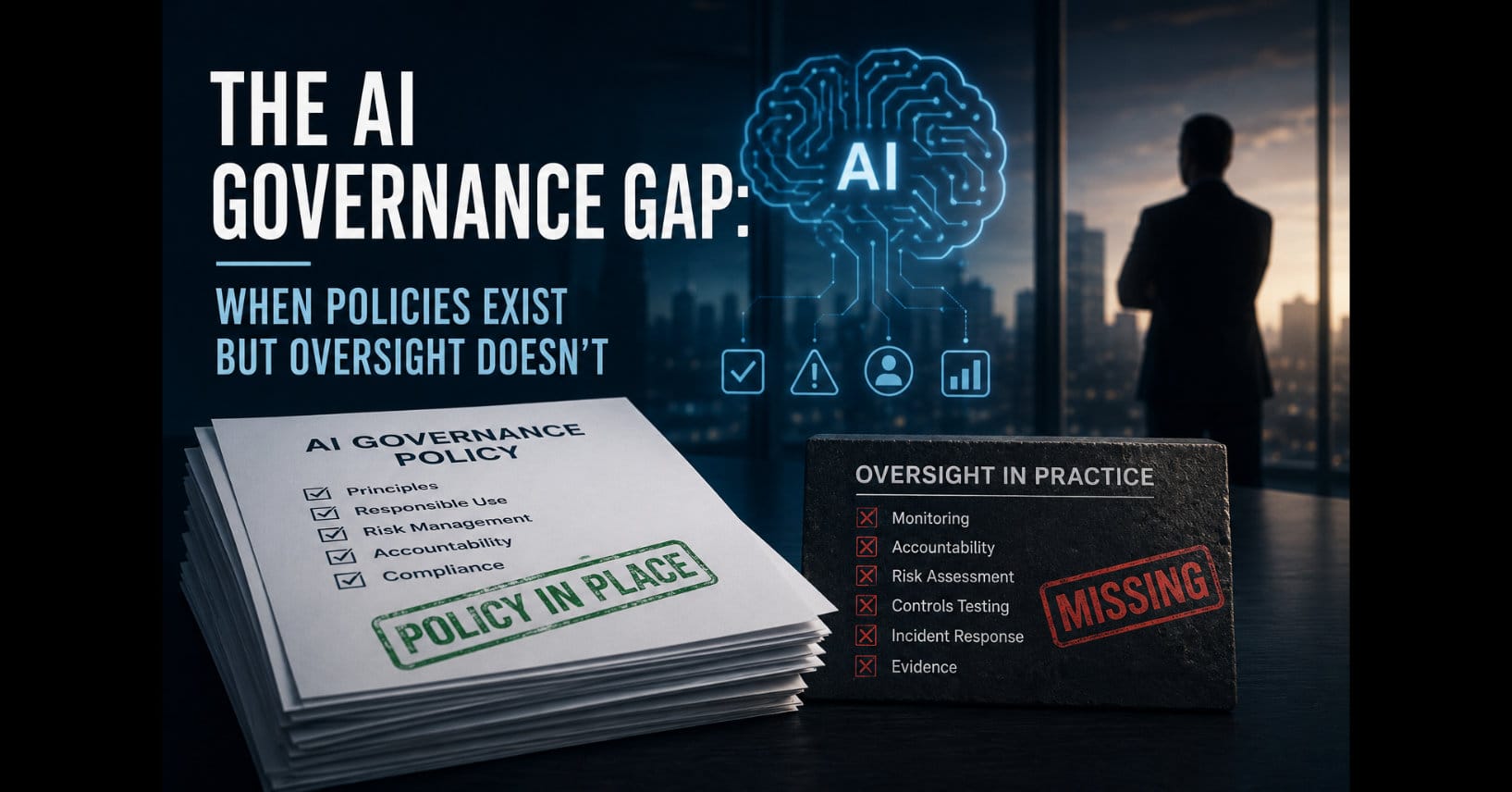
The AI Governance Gap: When Policies Exist but Oversight Doesn’t
Many organizations have AI policies, but few can demonstrate effective oversight. As regulators, insurers, and auditors focus on accountability, governance must move beyond documentation to…
-
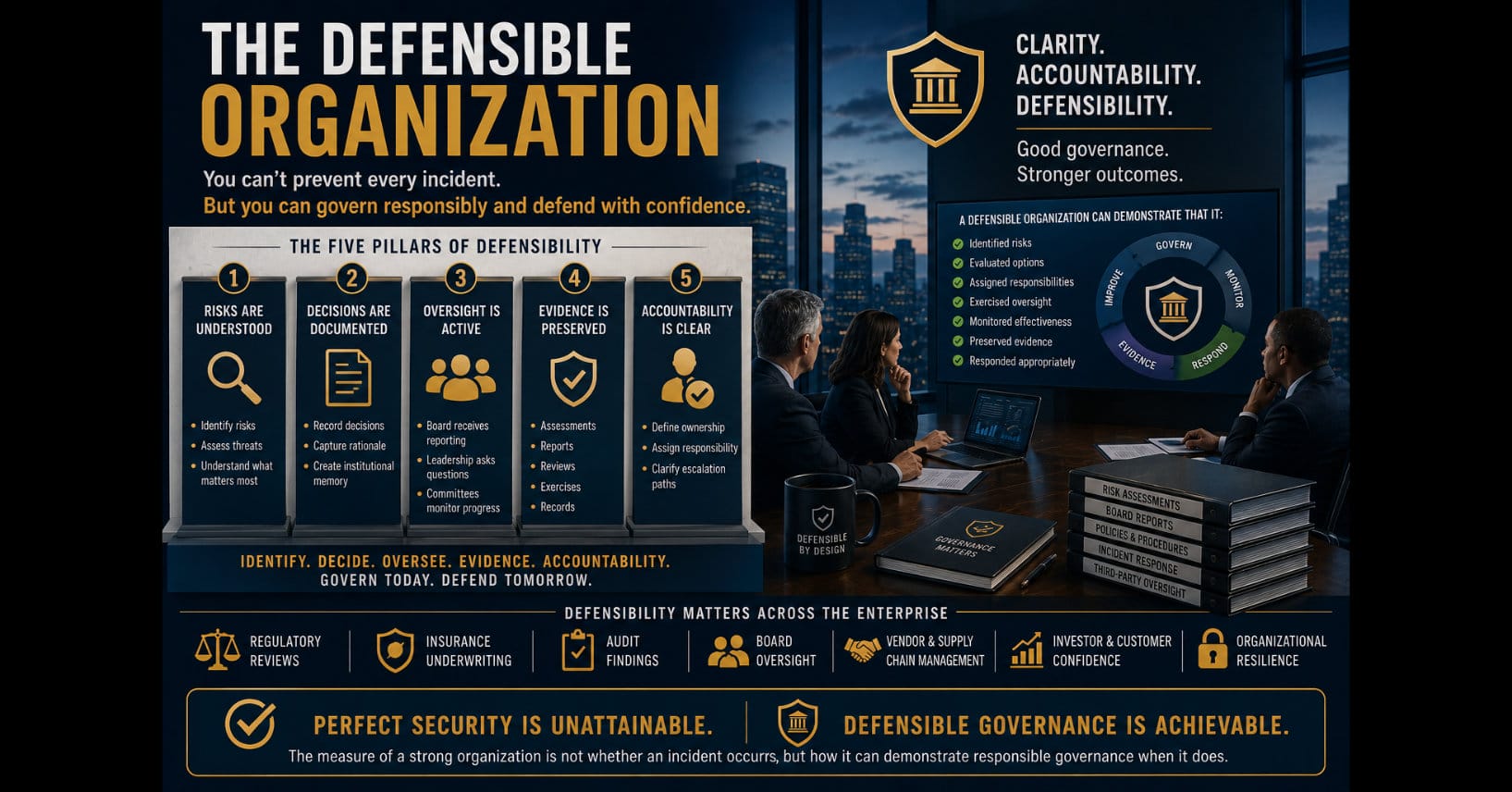
The Defensible Organization
Organizations cannot eliminate every cyber risk or prevent every incident. The goal of effective governance is not perfection—it’s defensibility. Learn the five pillars of a…
-
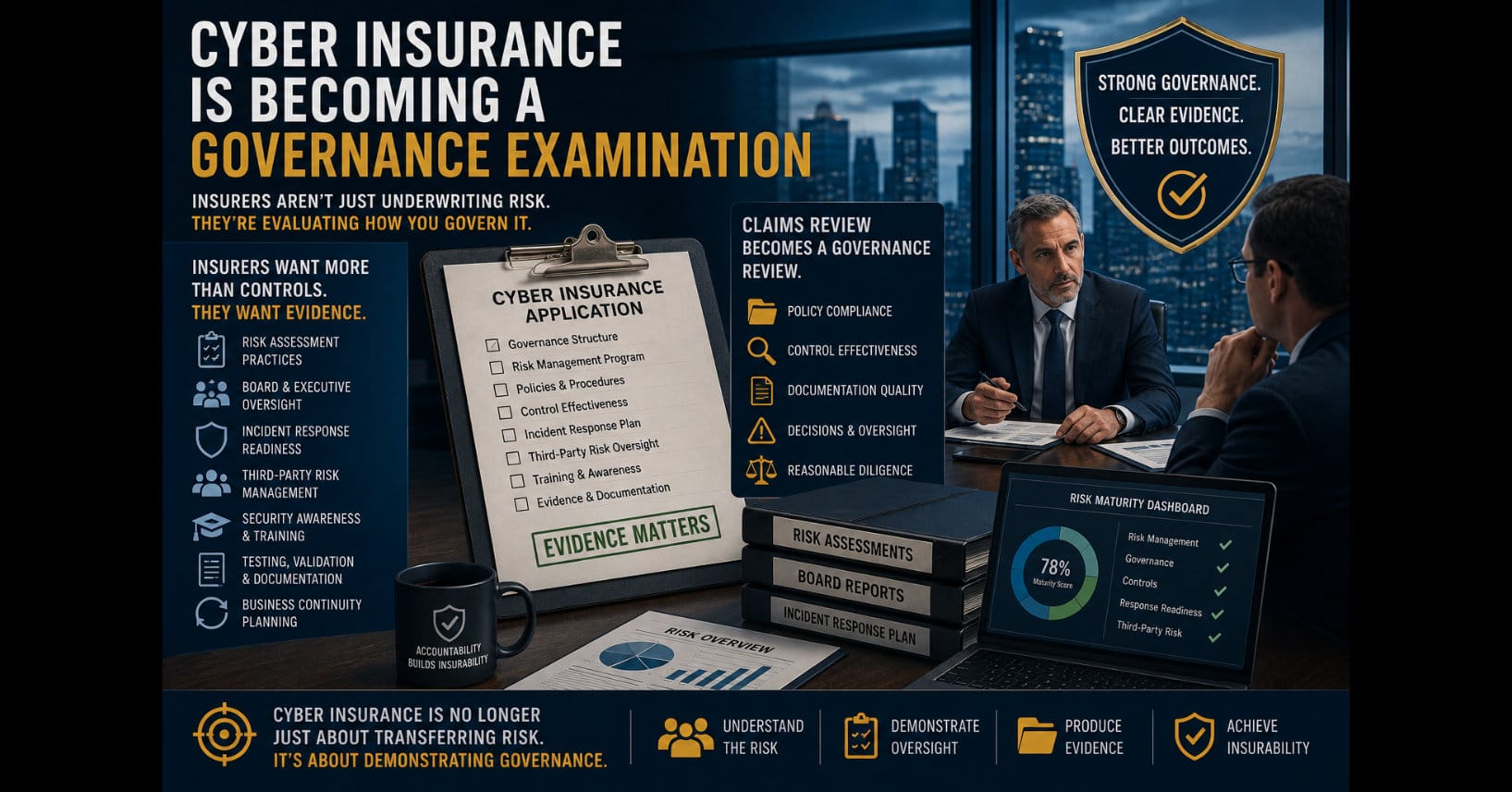
Cyber Insurance Is Becoming a Governance Examination
Cyber insurance is no longer just about transferring risk. Insurers increasingly evaluate governance, oversight, accountability, and evidence when determining coverage and reviewing claims.
-
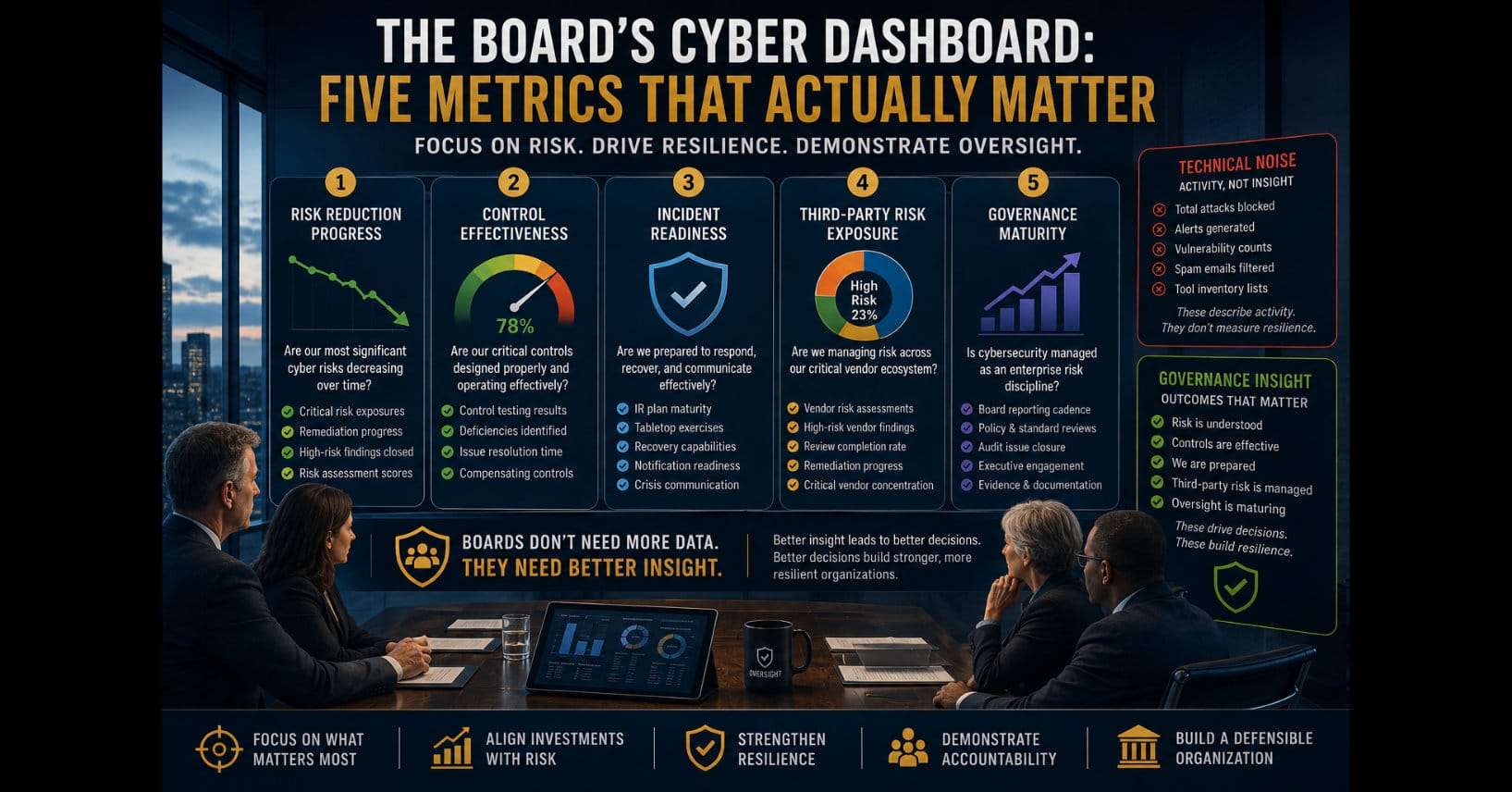
The Board’s Cyber Dashboard: Five Metrics That Actually Matter
Boards are often overwhelmed with cybersecurity data but lack meaningful insight. Discover the five metrics that help leaders understand risk, resilience, preparedness, and governance effectiveness.
-
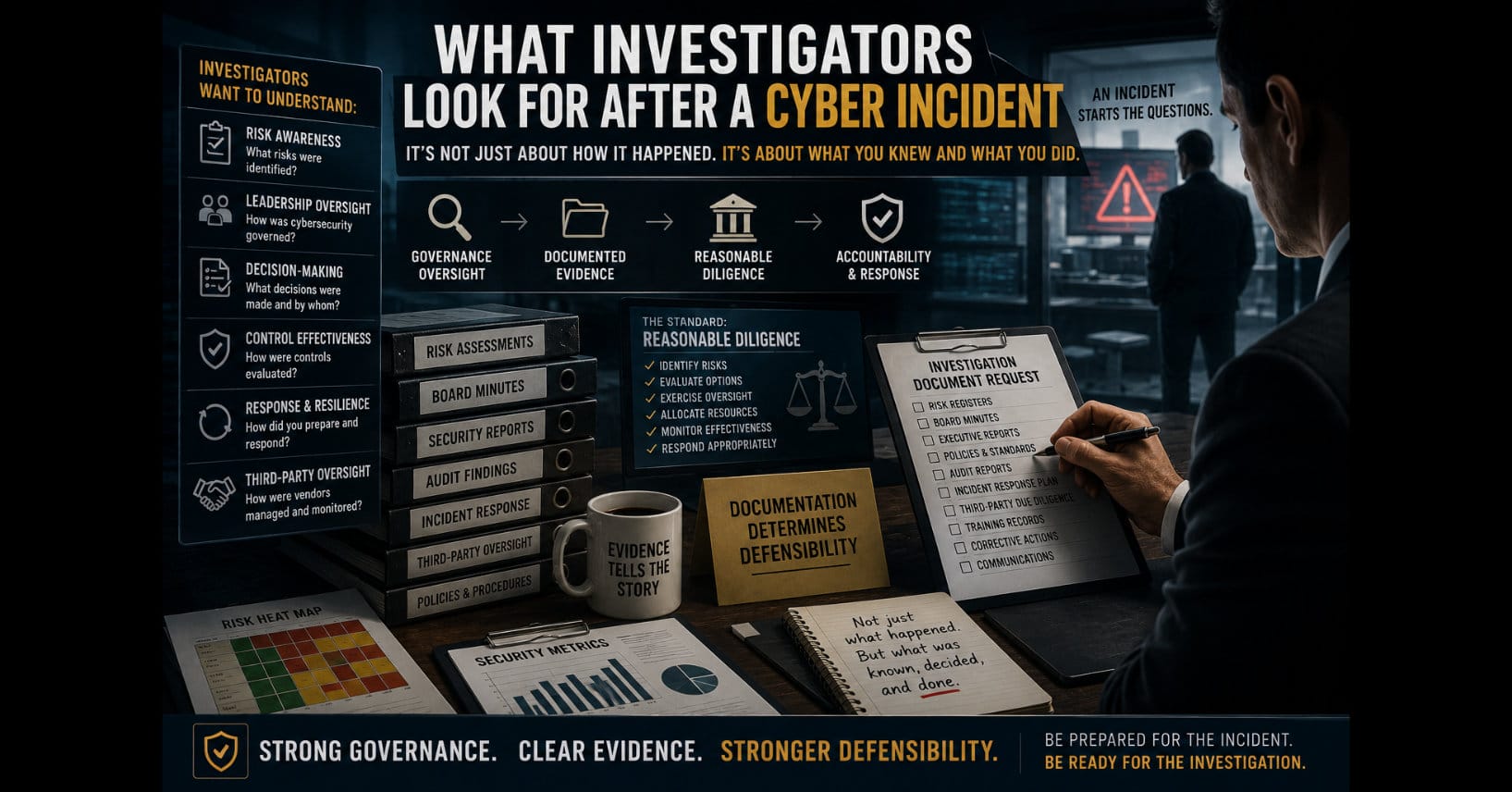
What Investigators Look for After a Cyber Incident
Most organizations prepare for cyberattacks. Few prepare for cyber investigations. Discover what regulators, insurers, auditors, attorneys, and investigators look for after a cybersecurity incident and…
-
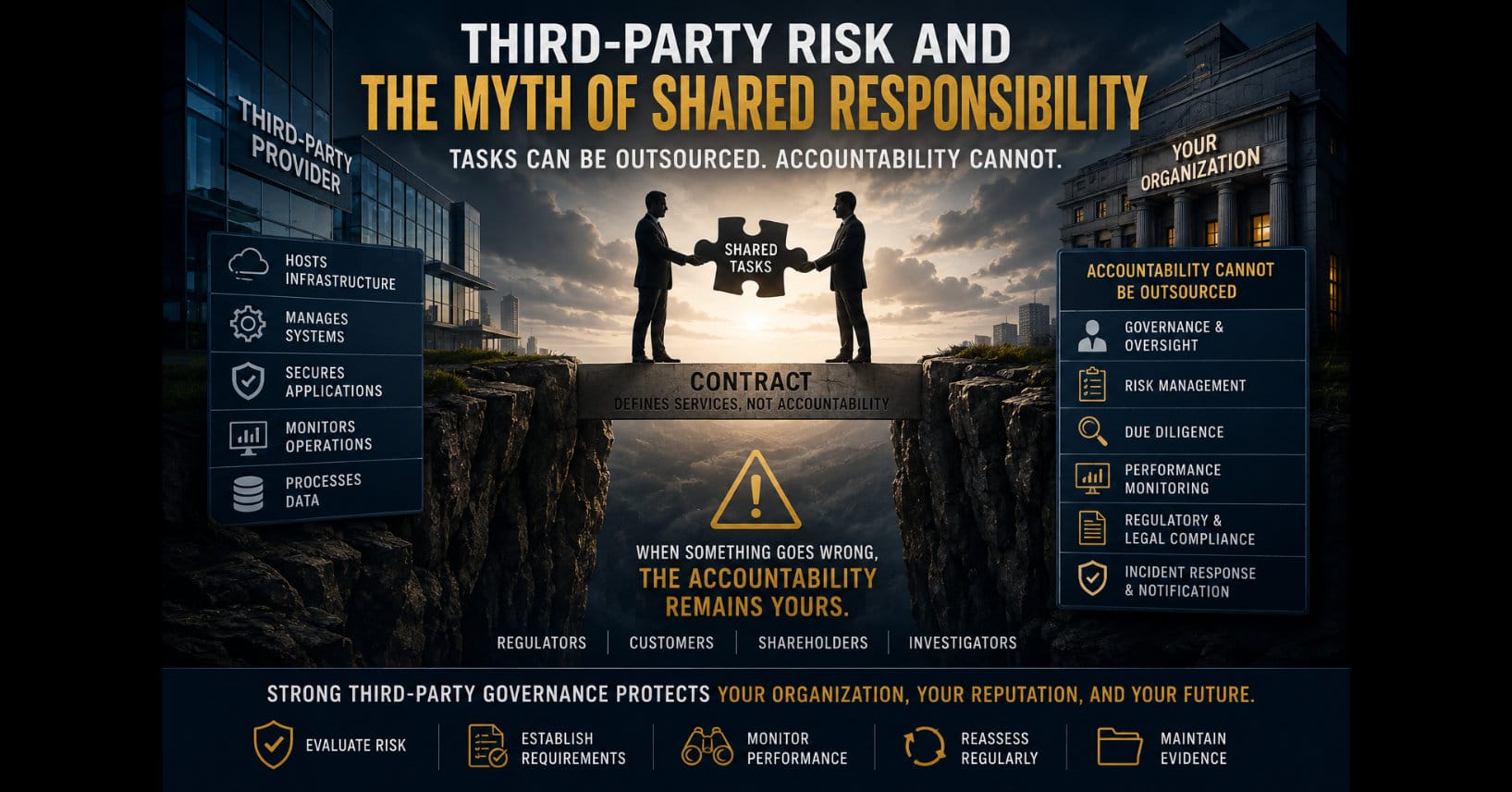
Third-Party Risk and the Myth of Shared Responsibility
Modern organizations depend on vendors, cloud providers, managed service providers, and software platforms. While services can be outsourced, accountability cannot. Learn why effective third-party risk…
-
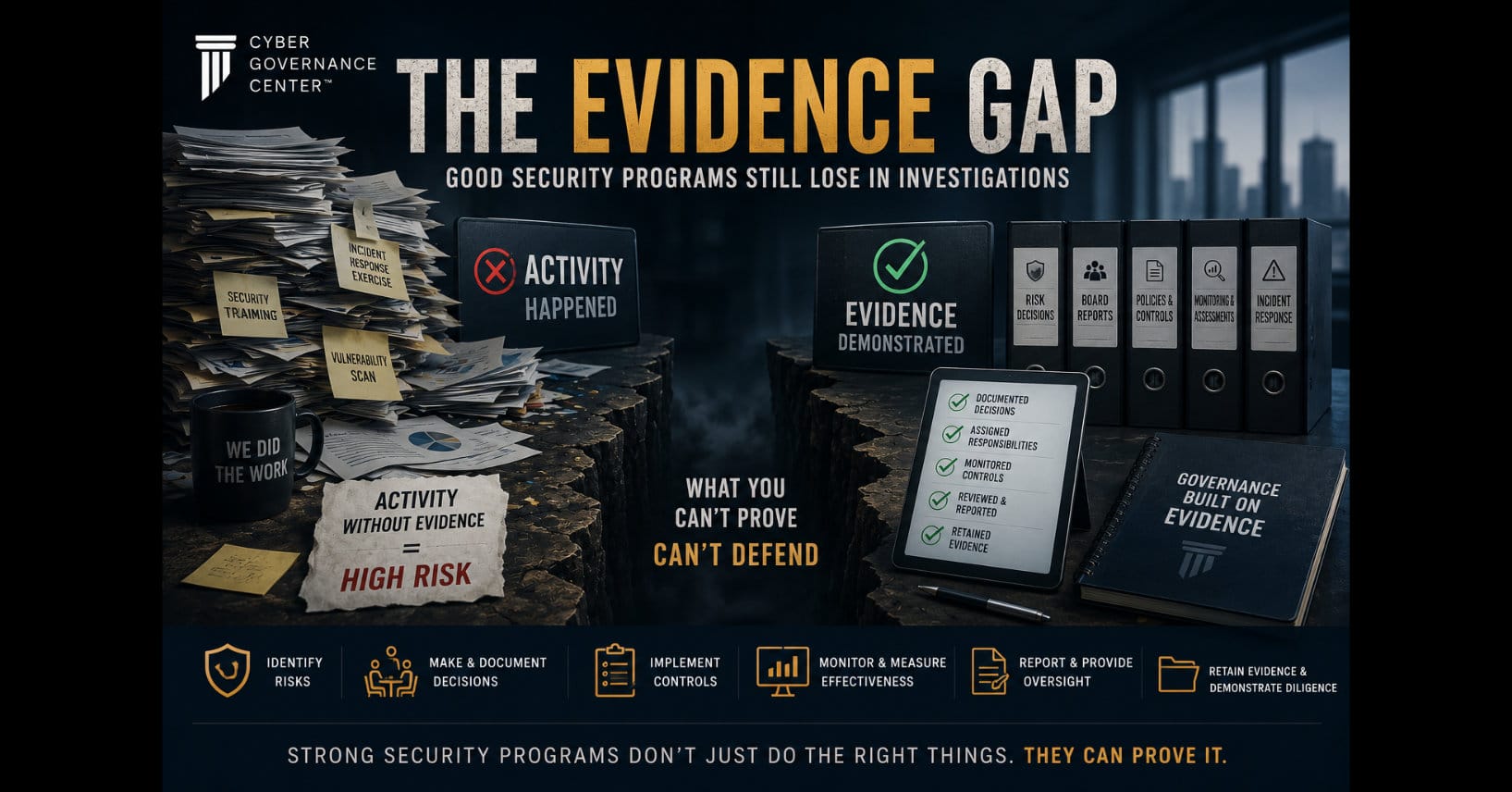
The Evidence Gap: Why Good Security Programs Still Lose in Investigations
Organizations invest heavily in cybersecurity controls, yet many struggle to prove what they did when regulators, insurers, auditors, or investigators come calling. Discover why evidence—not…
-
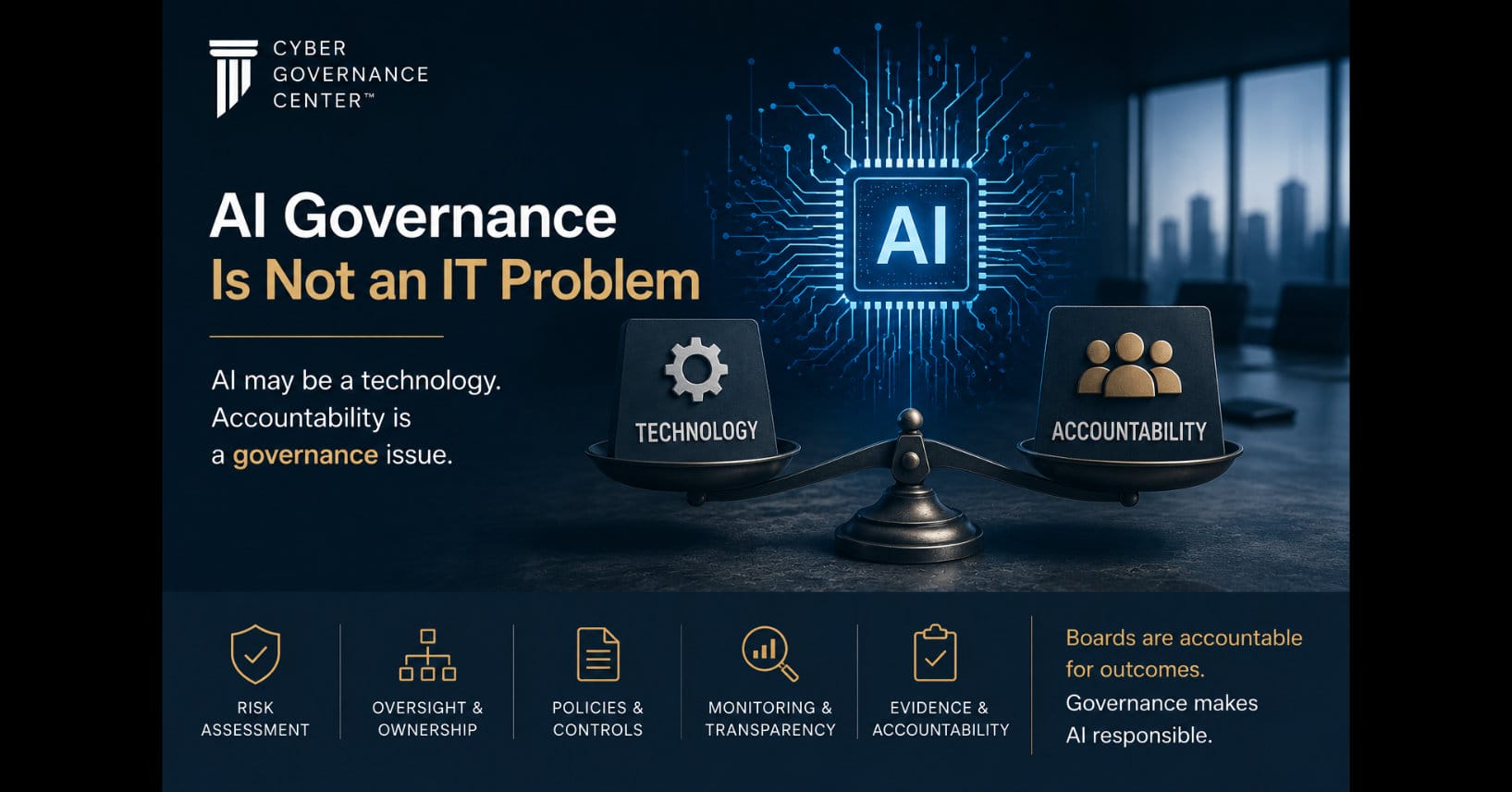
AI Governance Is Not an IT Problem
Many organizations treat artificial intelligence as a technology initiative. In reality, AI is a governance issue involving accountability, oversight, risk management, and enterprise decision-making. Boards…