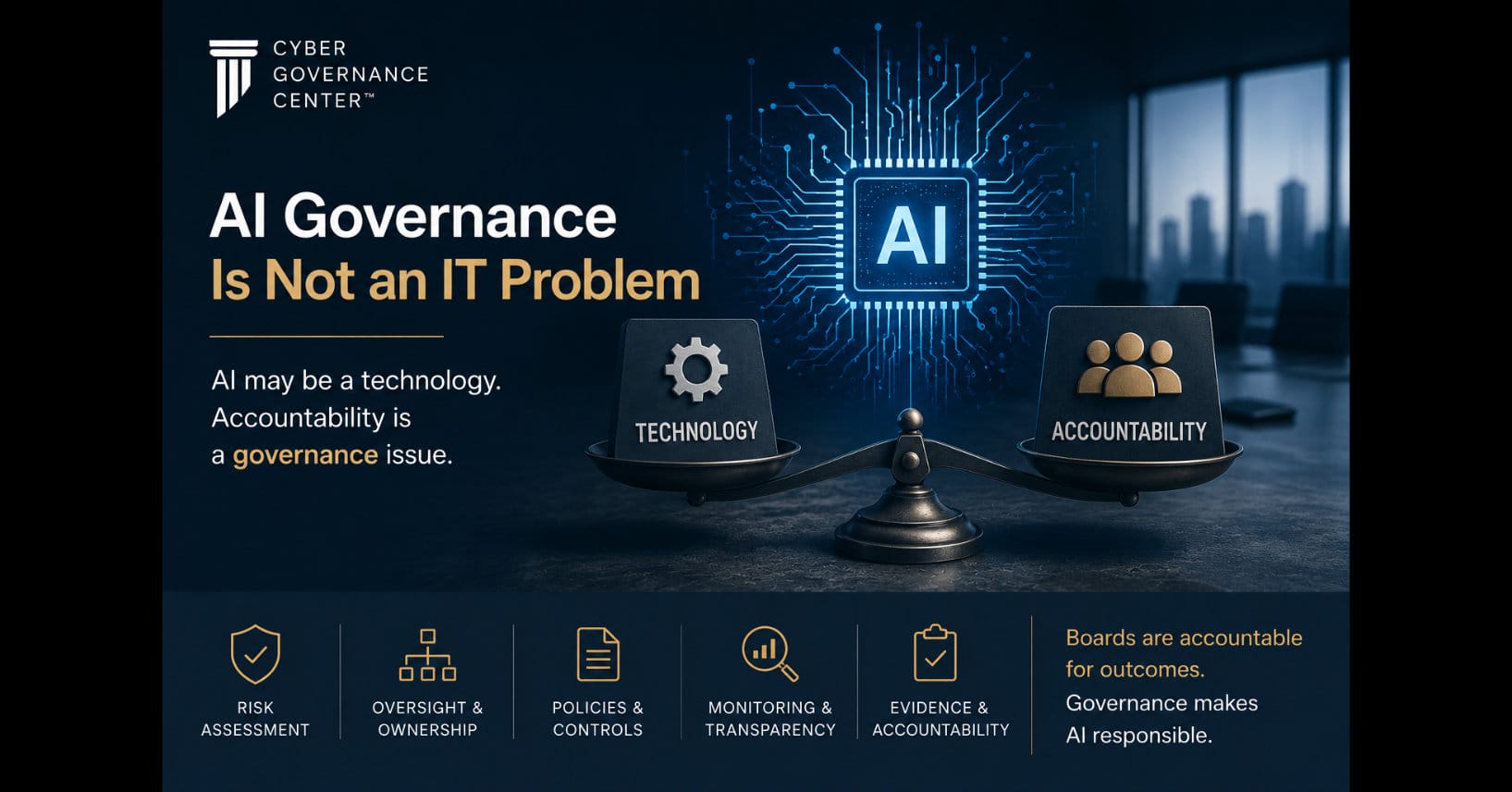
Artificial intelligence is presented as an enterprise risk rather than a purely technical issue. The piece argues that the main concern is governance: organizations must decide where AI is allowed to influence decisions and ensure those decisions have clear ownership and oversight.
It highlights accountability gaps, growing regulatory attention, and the need for boards and executives to ask where AI is used, what risks it creates, and how outcomes are monitored and documented.
Artificial intelligence is quickly becoming one of the most significant business risks facing organizations today.
That statement surprises some executives because AI is often viewed as a technology issue. New tools are evaluated, software is deployed, and technical teams are tasked with implementation. The assumption is that AI belongs to Information Technology, Information Security, or Data Science.
That assumption is becoming increasingly dangerous.
The most significant risks associated with artificial intelligence are not technical. They are governance risks.
The Wrong Question
Many organizations begin their AI journey by asking:
“What AI tools should we use?”
The better question is:
“What decisions are we willing to allow AI to influence?”
The distinction matters.
Technology discussions focus on capabilities. Governance discussions focus on consequences.
An organization that deploys AI to draft marketing content faces a different risk profile than an organization that uses AI to influence hiring decisions, approve financial transactions, assess insurance claims, determine patient treatment options, or evaluate public benefits.
The technology may be similar.
The governance implications are not.
AI Is Expanding Decision Risk
Historically, organizations managed risk through human decision-makers.
Individuals could be trained, supervised, evaluated, and held accountable.
AI introduces a new challenge.
Organizations are increasingly relying on systems that produce recommendations, rankings, classifications, predictions, and automated actions. These outputs may influence decisions affecting customers, employees, vendors, shareholders, and regulators.
When something goes wrong, leadership cannot simply point to the algorithm.
Someone remains accountable.
The question becomes:
Who?
The Accountability Gap
One of the most common governance failures emerging around AI is the accountability gap.
An AI model produces a recommendation.
An employee follows the recommendation.
A harmful outcome occurs.
Leadership then discovers that no one clearly owns responsibility for the decision.
Technology teams may claim they only deployed the system.
Business leaders may claim they relied on expert recommendations.
Vendors may claim the customer controlled implementation.
The result is a familiar problem.
Everyone participated.
No one appears accountable.
Governance exists to prevent this situation.
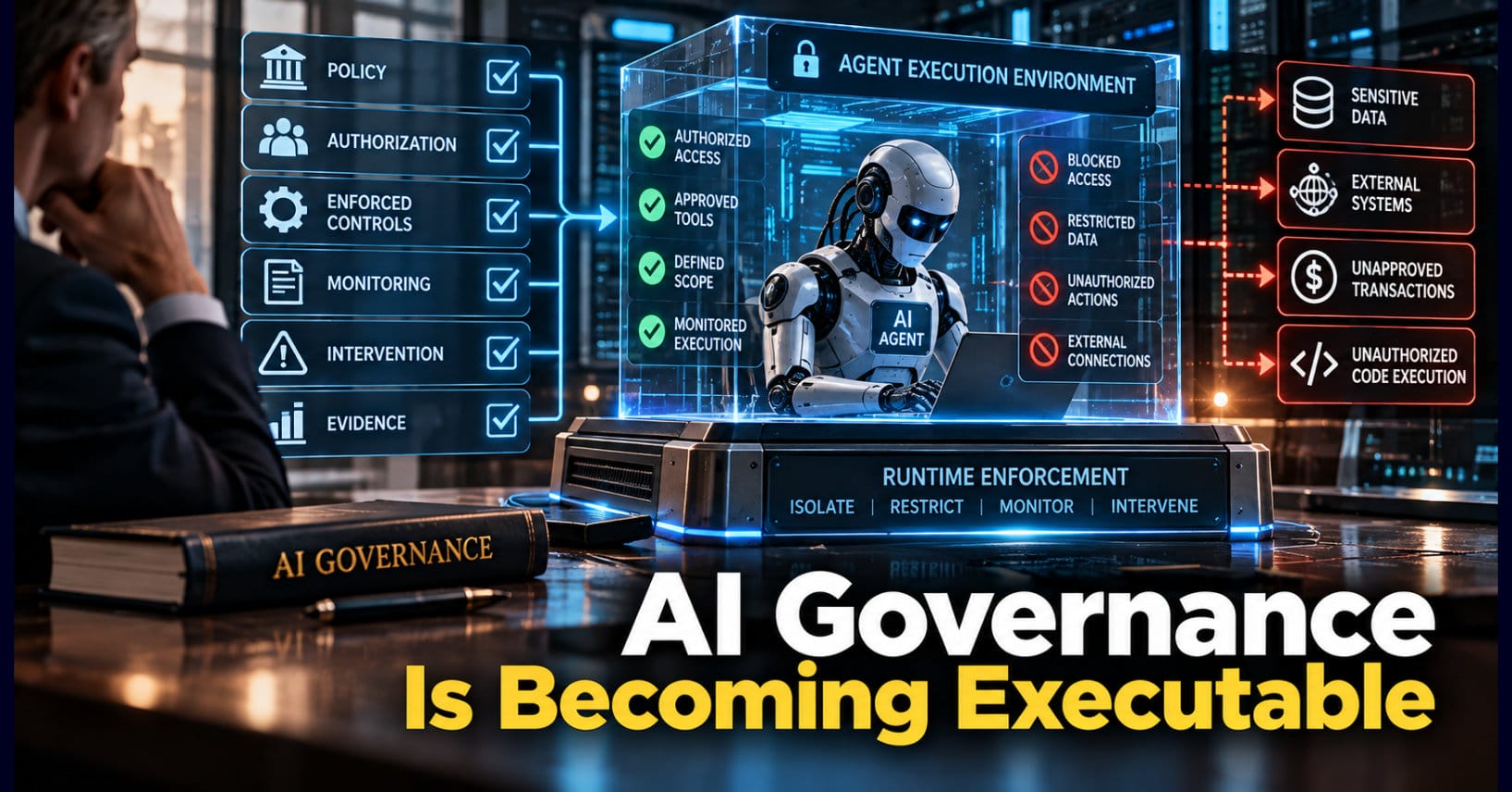
Every significant AI-enabled process should have clearly defined ownership, documented oversight responsibilities, and established accountability structures.
If responsibility cannot be identified before deployment, it will be impossible to identify after an incident.
Regulators Are Focusing on Governance
Regulators around the world are paying increasing attention to AI governance.
While specific regulations continue to evolve, a common theme is emerging.
Organizations are expected to demonstrate:
- Risk assessments
- Oversight structures
- Decision accountability
- Data governance
- Control effectiveness
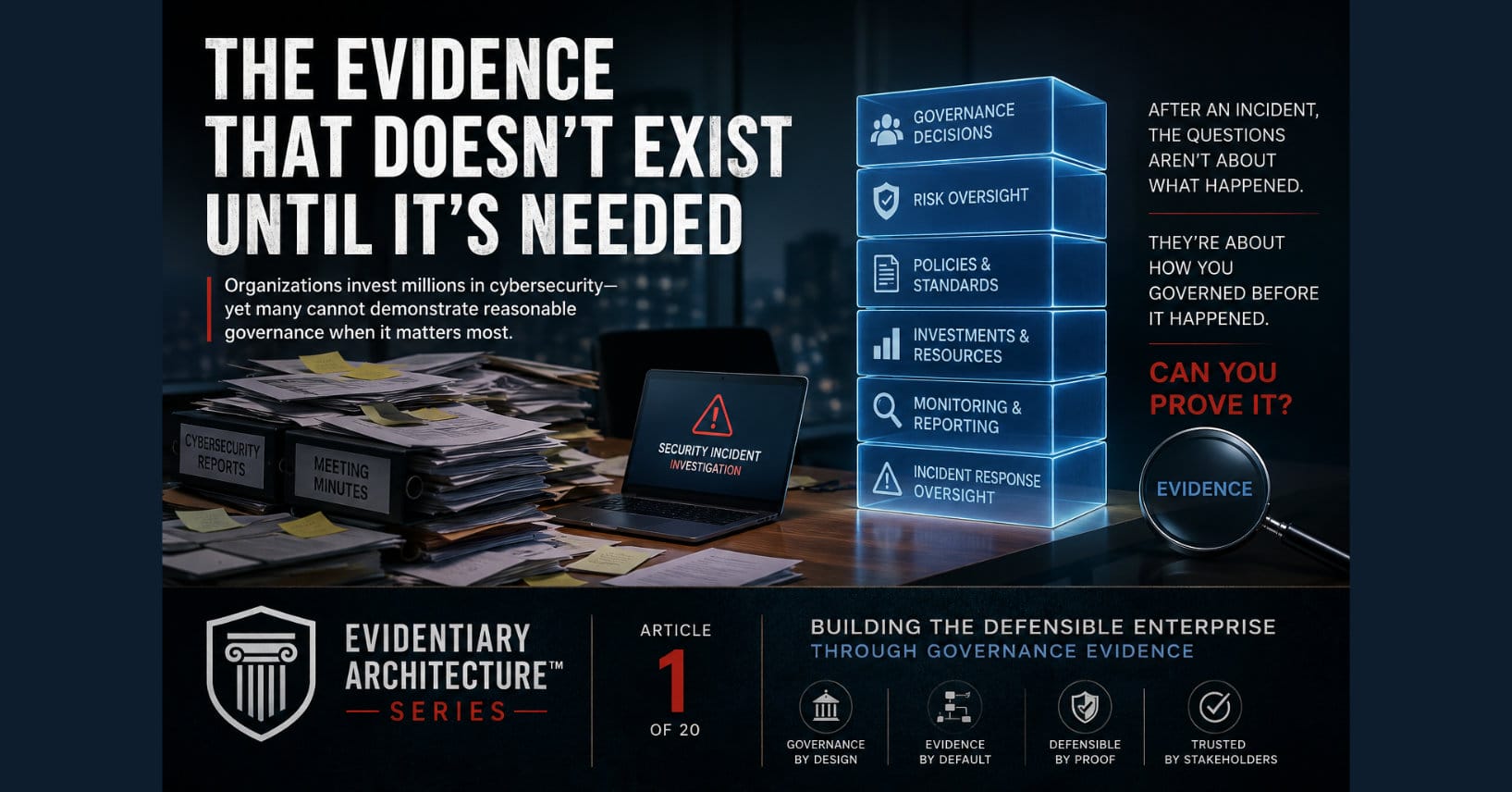
- Documentation and evidence
These expectations look remarkably familiar because they mirror longstanding governance principles.
The technology may be new.
The accountability requirements are not.
What Boards Should Be Asking
Boards do not need to understand every technical detail of machine learning architectures, neural networks, or model training methodologies.
They do need answers to governance questions.
For example:
- Where is AI currently being used within the organization?
- Which business decisions are influenced by AI systems?
- What risks have been identified?
- Who owns those risks?
- How are AI outcomes monitored?
- How are errors detected and corrected?
- What evidence demonstrates effective oversight?
- What reporting is provided to leadership?
These questions focus on accountability rather than implementation.
That is where governance creates value.
AI Is Becoming an Enterprise Risk
Many organizations still treat AI as a technology initiative.
The reality is that AI increasingly affects legal, financial, operational, reputational, regulatory, and strategic outcomes.
That makes AI an enterprise risk issue.
Enterprise risks belong in the boardroom.
The organizations that succeed with AI will not necessarily be those that deploy it first.
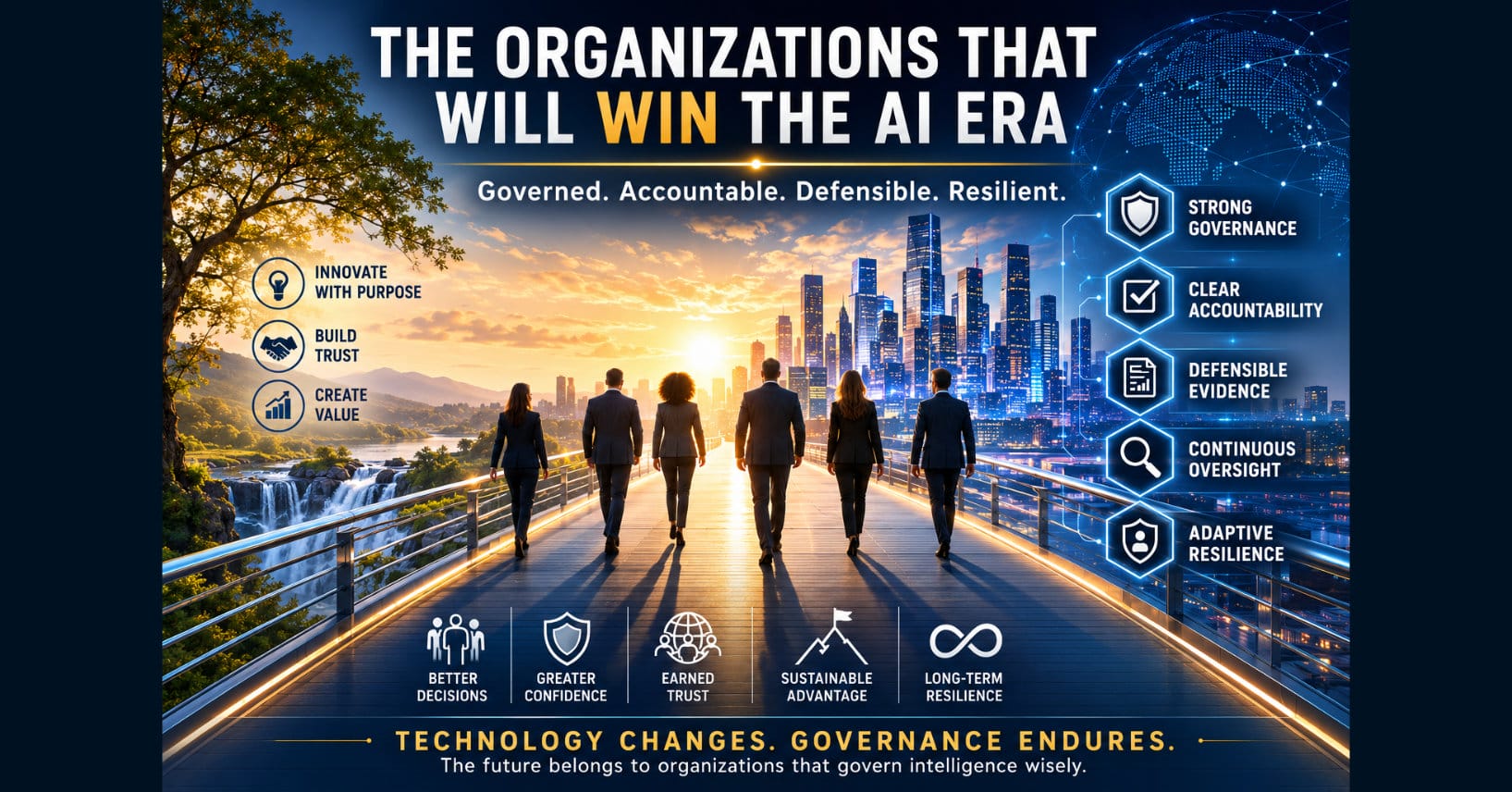
They will be the organizations that establish clear governance, define accountability, document oversight, and preserve evidence of responsible decision-making.
The Governance Perspective
Artificial intelligence may be implemented by technical teams, but its consequences extend far beyond technology.
Boards remain accountable for oversight.
Executives remain accountable for decisions.
Organizations remain accountable for outcomes.
The question is no longer whether AI should be governed.
The question is whether governance structures are evolving quickly enough to keep pace with the decisions AI is already influencing.
Because when regulators, auditors, insurers, or attorneys arrive after an AI-related incident, they will not be investigating the technology alone.
They will be investigating the governance behind it.