AI Governance Series | Article 2 of 20
Governing Intelligence Before It Governs You
Summary: Artificial intelligence has introduced a growing accountability gap inside many organizations. While AI projects often have technical owners, accountability for the business outcomes they produce is frequently unclear. This article explores the critical distinction between ownership and accountability, explaining why governance—not operations—must define who approves AI use, accepts risk, oversees performance, and reports material issues to executive leadership and the Board. As AI becomes embedded across every business function, clear accountability is essential for regulatory compliance, enterprise risk management, and stakeholder trust.
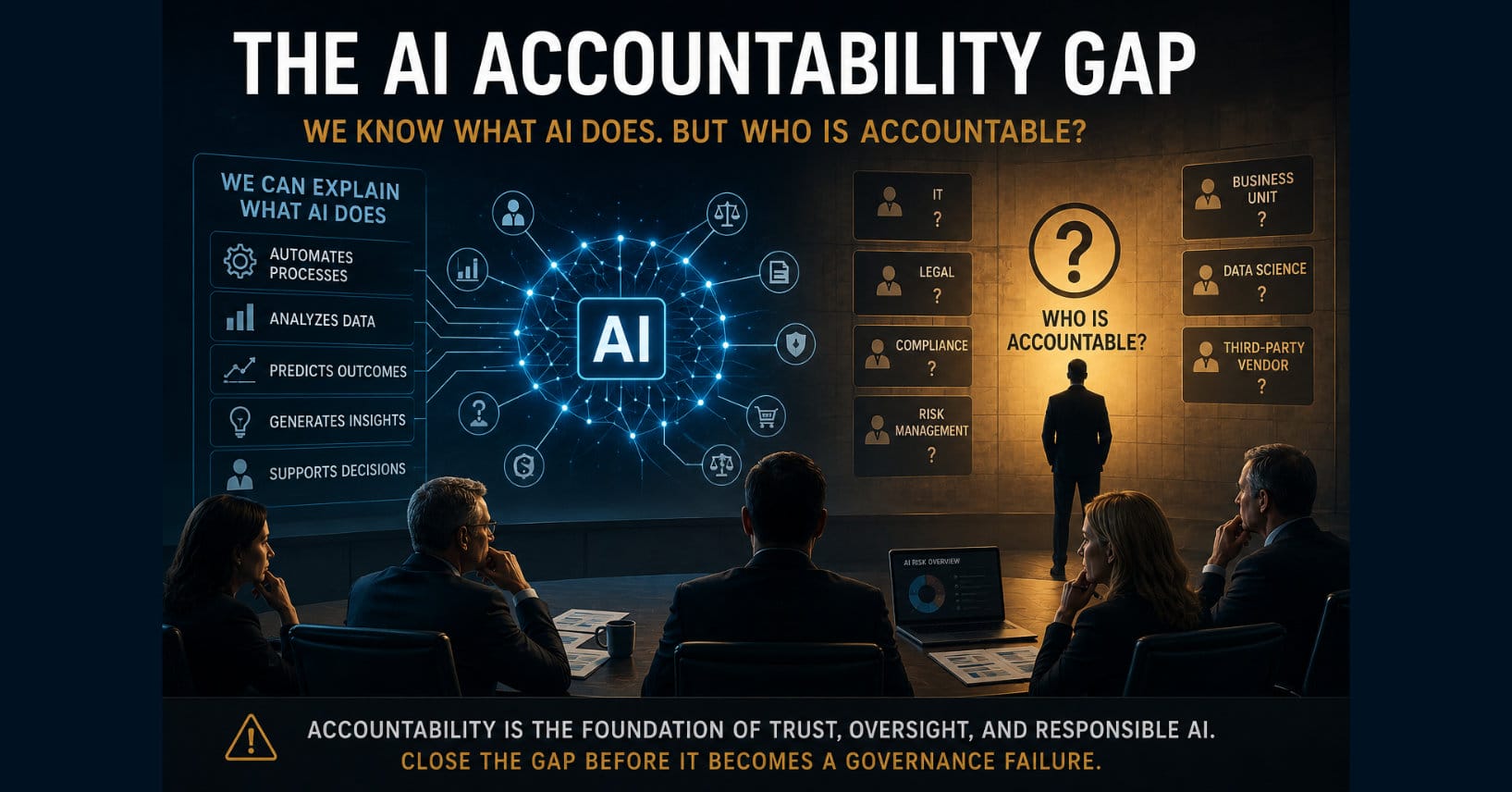
Why Organizations Can Explain What AI Does, but Not Who Is Accountable
Artificial intelligence has created a paradox inside many organizations.
Executives can describe what their AI systems do. They can explain how models improve customer service, automate workflows, detect fraud, generate software, summarize contracts, or assist decision-making. They can often identify which department deployed the technology and which vendor supplied it.
Ask a different question, however—Who is accountable if this AI system causes material harm?—and the answers quickly become less certain.
That uncertainty represents one of the greatest governance risks facing organizations today.
AI Has Ownership. Governance Requires Accountability.
Every AI initiative has owners.
Someone sponsors the project. Someone manages implementation. Someone approves funding. Someone configures the models. Someone monitors performance.
Ownership, however, is not the same as accountability.
A project manager owns delivery.
An engineering team owns deployment.
A data scientist owns model development.
An operations team owns day-to-day execution.
But when an AI system creates financial loss, regulatory exposure, reputational damage, or legal liability, none of those operational roles replaces organizational accountability.
Governance begins where operational ownership ends.
Accountability Cannot Be Delegated Away
Organizations frequently assume that accountability follows technical expertise.
If AI is implemented by Information Technology, then IT must be responsible.
If Legal reviewed the contracts, Legal must be responsible.
If Compliance approved the process, Compliance must be responsible.
If a vendor built the platform, the vendor must be responsible.
Governance doesn’t work that way.
Boards may delegate implementation.
Executives may delegate management.
Departments may delegate operational tasks.
They cannot delegate accountability for organizational outcomes.
Just as cybersecurity ultimately became a board responsibility because it affects enterprise risk, artificial intelligence is following the same path.
AI Decisions Cross Organizational Boundaries
One reason accountability becomes difficult is that AI rarely remains confined to one department.
A single AI system may simultaneously affect:
- Customer experience
- Human resources
- Finance
- Legal compliance
- Cybersecurity
- Privacy
- Marketing
- Operations
When responsibility is distributed across the enterprise, accountability often disappears into organizational gaps.
Each department assumes another group is evaluating the broader risks.
No one owns the entire decision.
Governance exists precisely to prevent those gaps from developing.
The Vendor Didn’t Make Your Decision
Many organizations assume that purchasing AI transfers responsibility to the technology provider.
It does not.
Cloud providers, software vendors, and AI platform companies supply capabilities.
Organizations decide:
- how those capabilities are used,
- what data they process,
- what decisions they influence,
- what level of autonomy they receive,
- and how much oversight they require.
The vendor provides the tool.
Leadership governs its use.
This distinction will become increasingly important as regulators examine not only whether AI failed, but whether leadership exercised reasonable oversight before it failed.
Accountability Requires Clear Authority
Every significant AI capability should have clearly defined governance questions.
Who approves its use?
Who determines acceptable risk?
Who validates outputs?
Who monitors ongoing performance?
Who authorizes material changes?
Who reports significant issues to executive leadership?
Who informs the Board when AI risk becomes material?
Without explicit answers, organizations create accountability vacuums.
And governance vacuums eventually become organizational risks.
The Board’s Role Is Different
Boards are not expected to validate algorithms or evaluate model architectures.
They are expected to ensure accountability exists.
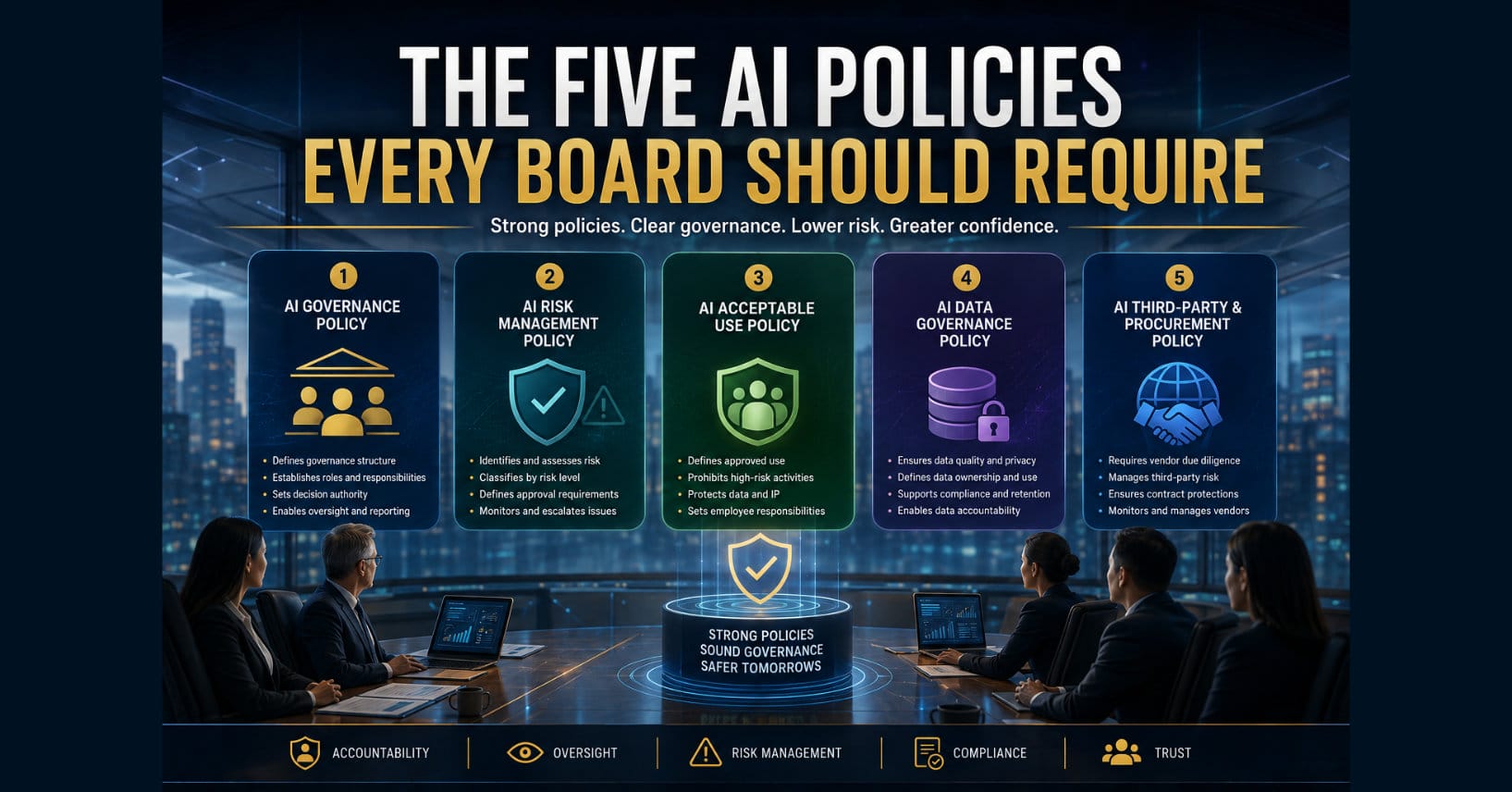
That means confirming the organization has:
- clearly assigned decision authority,
- documented oversight responsibilities,
- defined escalation paths,
- established monitoring and reporting,
- and integrated AI risk into enterprise governance.
Directors govern accountability.
Management governs execution.
Confusing those roles weakens both.
Accountability Creates Trust
Responsible AI discussions often emphasize fairness, transparency, explainability, and ethics.
Each of those principles ultimately depends upon accountability.
Transparency is meaningless if no one owns the disclosures.
Fairness is impossible if no one owns the outcomes.
Ethics become aspirations if no one owns enforcement.
Governance transforms principles into organizational responsibility by identifying who is accountable before problems occur—not afterward.
Organizations that establish accountability early build trust with regulators, customers, investors, employees, and their own Boards.
Those that do not often discover accountability only after an incident forces the question.
Boardroom Takeaway
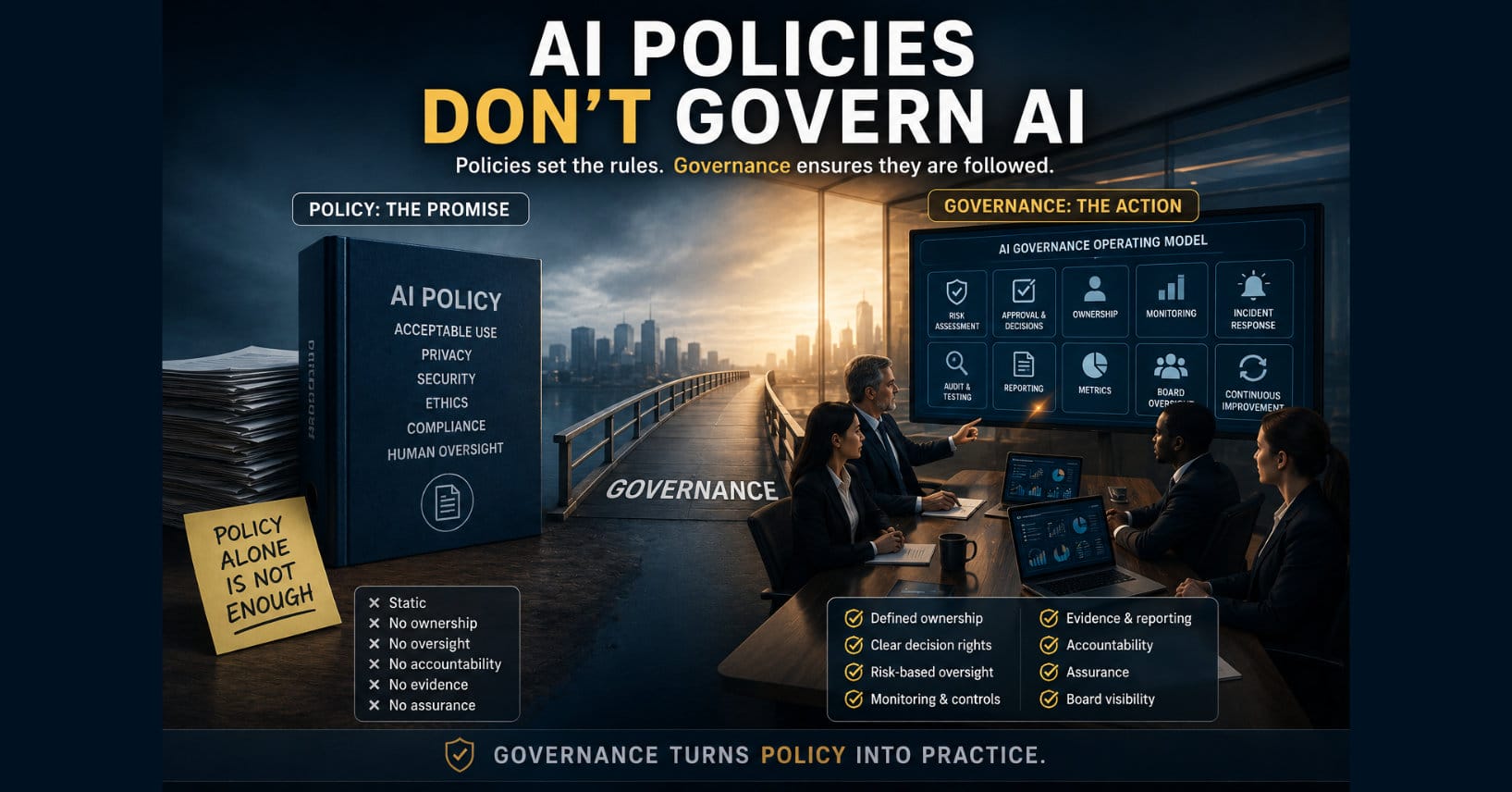
The greatest AI governance risk is not that artificial intelligence makes decisions. It is that organizations cannot identify who is accountable for those decisions. Governance closes that gap by assigning authority, clarifying responsibility, and ensuring that accountability remains visible from operational teams to executive leadership and ultimately to the Board.
Coming Next
Governing AI Is Not the Same as Managing AI
Why governance focuses on oversight, accountability, and strategic direction, while management focuses on implementation, operations, and execution. The distinction is essential for effective Board oversight.