
-
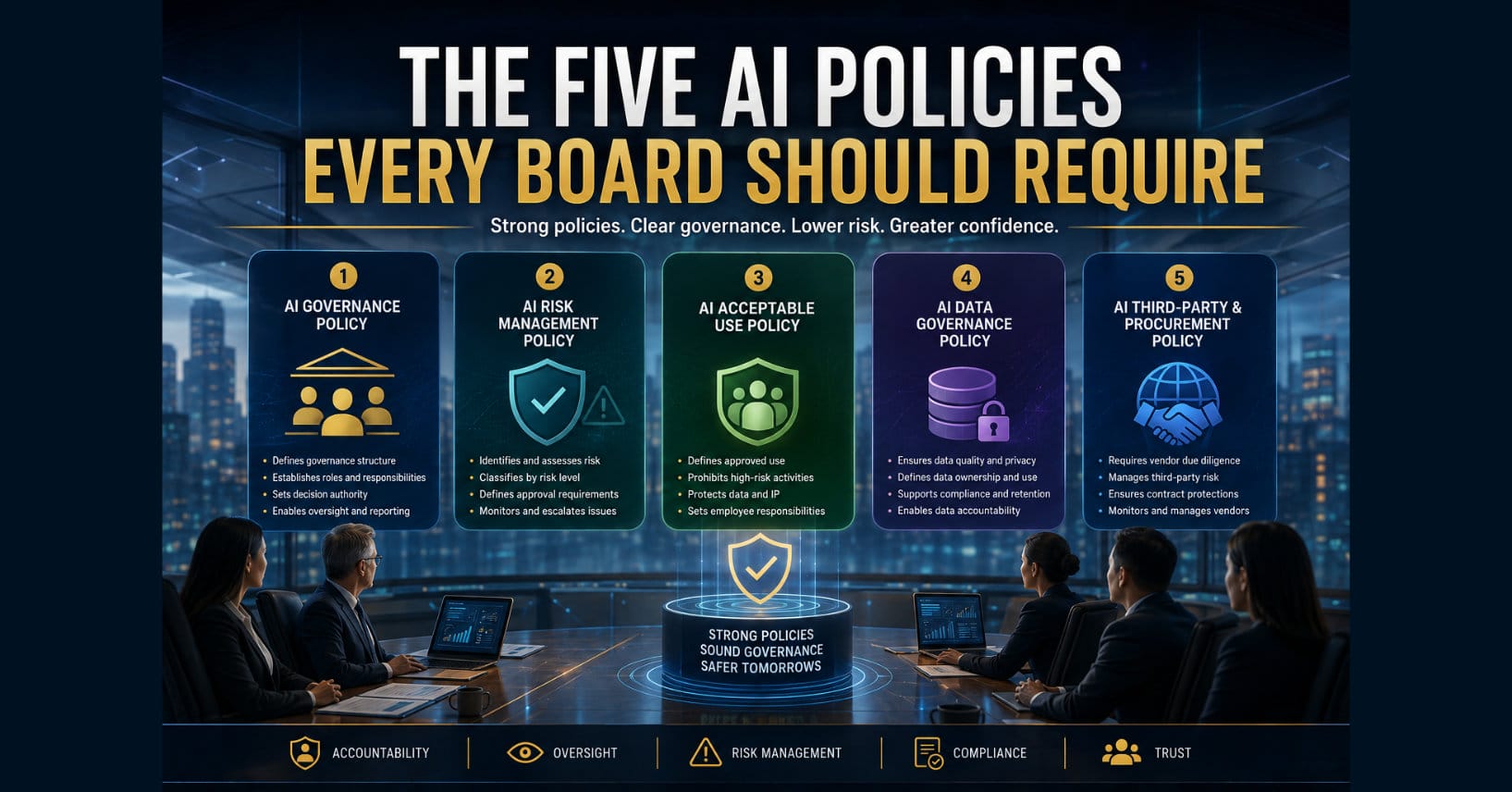
The Five AI Policies Every Board Should Require
Every board should require five core AI policies that establish accountability, manage risk, and create the foundation for effective AI governance.
-
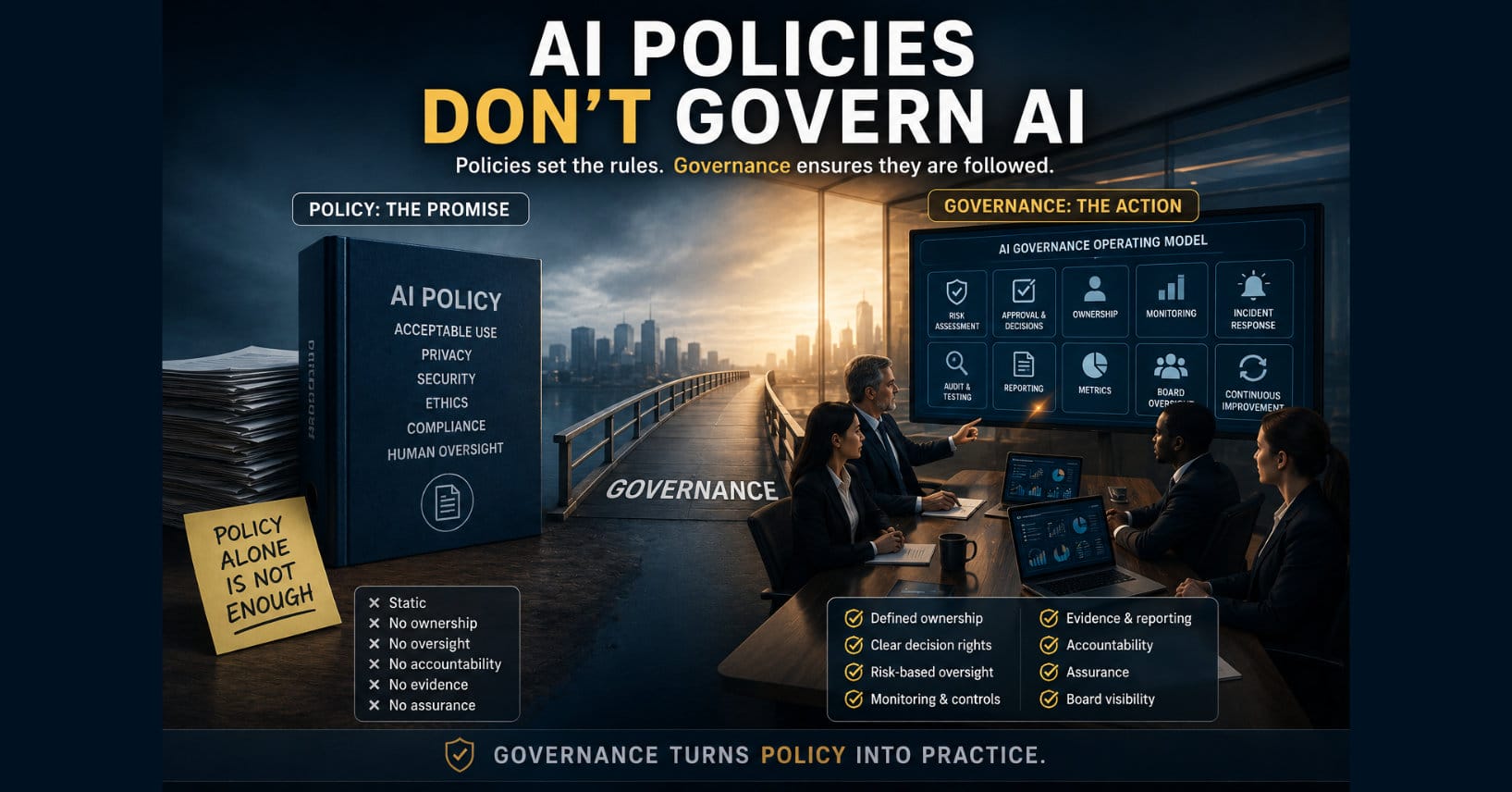
AI Policies Don’t Govern AI
AI policies set expectations, but governance creates accountability. Effective oversight requires more than documents—it requires action.
-
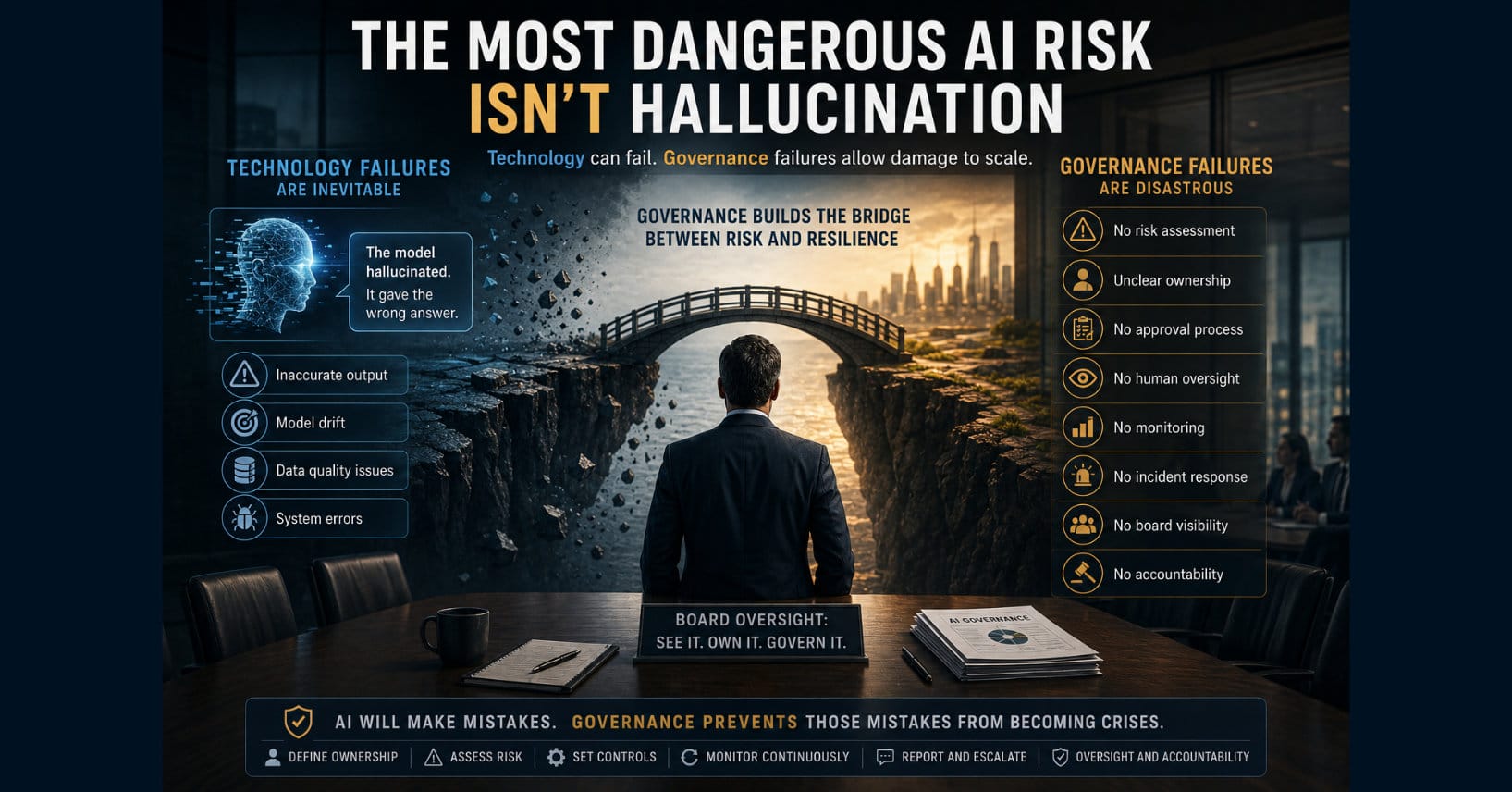
The Most Dangerous AI Risk Isn’t Hallucination
The greatest AI risk isn’t hallucination. It’s weak governance that allows technical failures to become enterprise-wide crises.
-
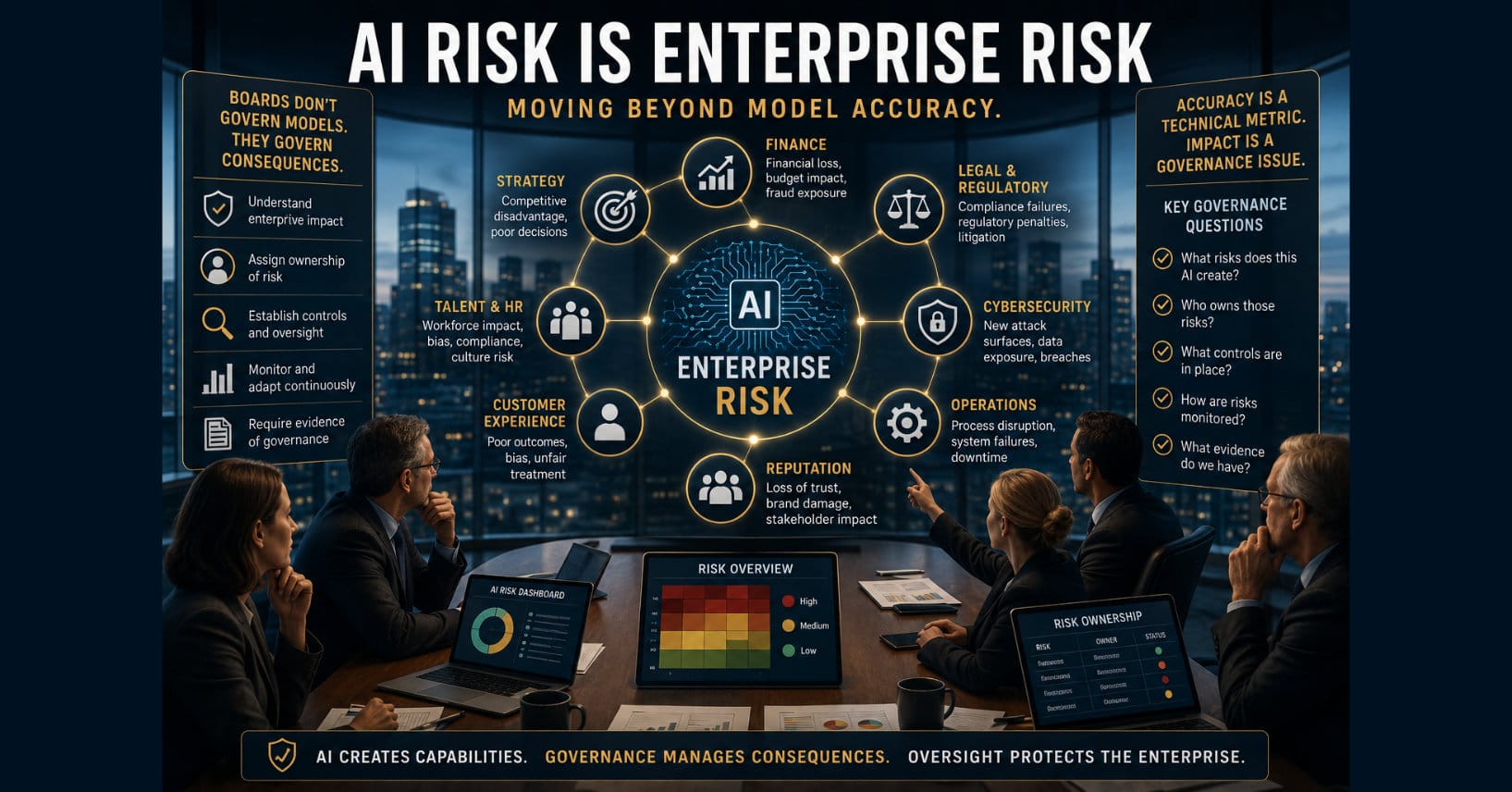
AI Risk Is Enterprise Risk
AI risk extends far beyond model accuracy. Effective governance treats AI as an enterprise risk affecting every business function.
-
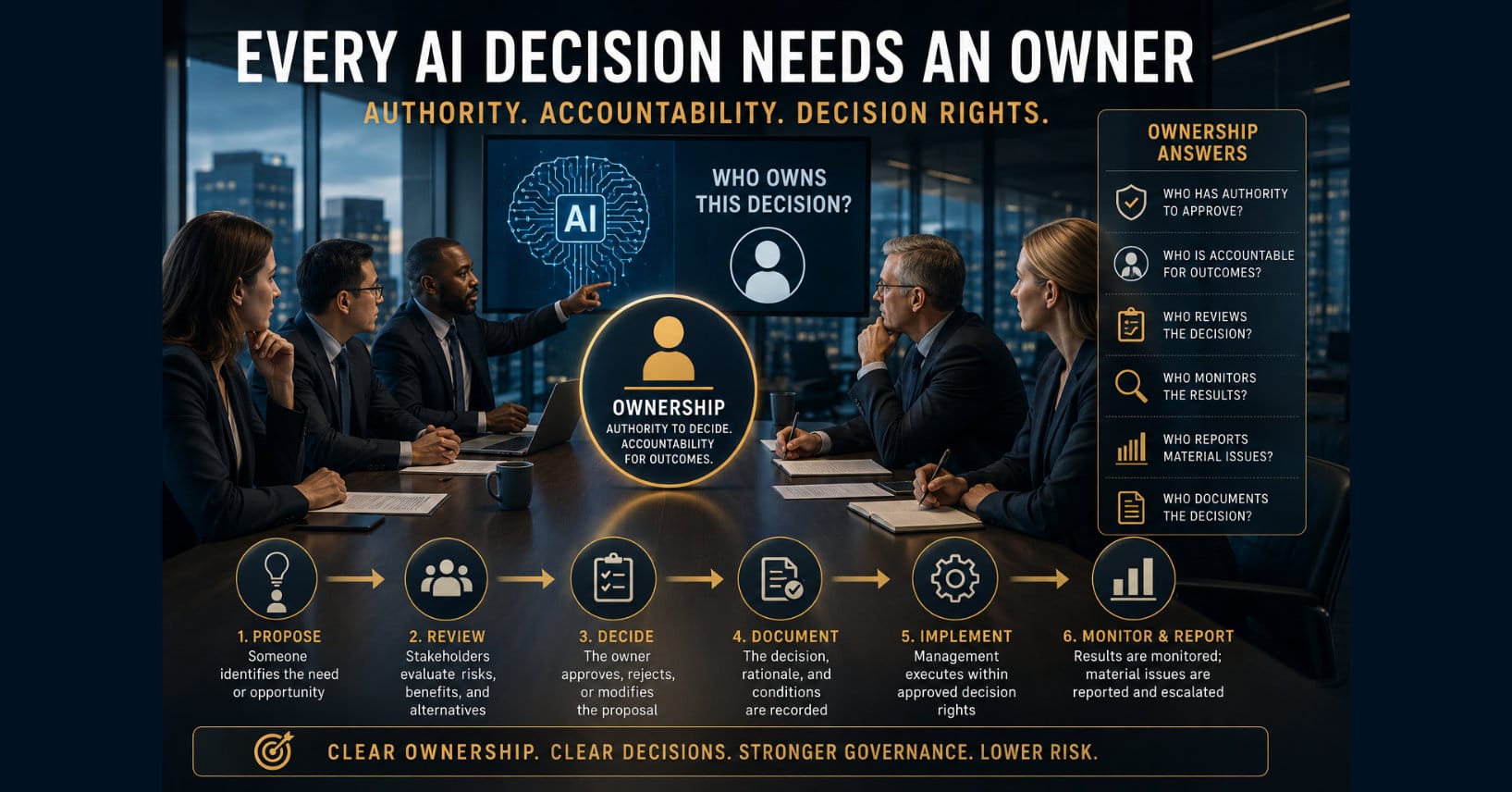
Every AI Decision Needs an Owner
Every significant AI decision needs a clearly defined owner. Authority, accountability, and decision rights are the foundation of effective AI governance.
-
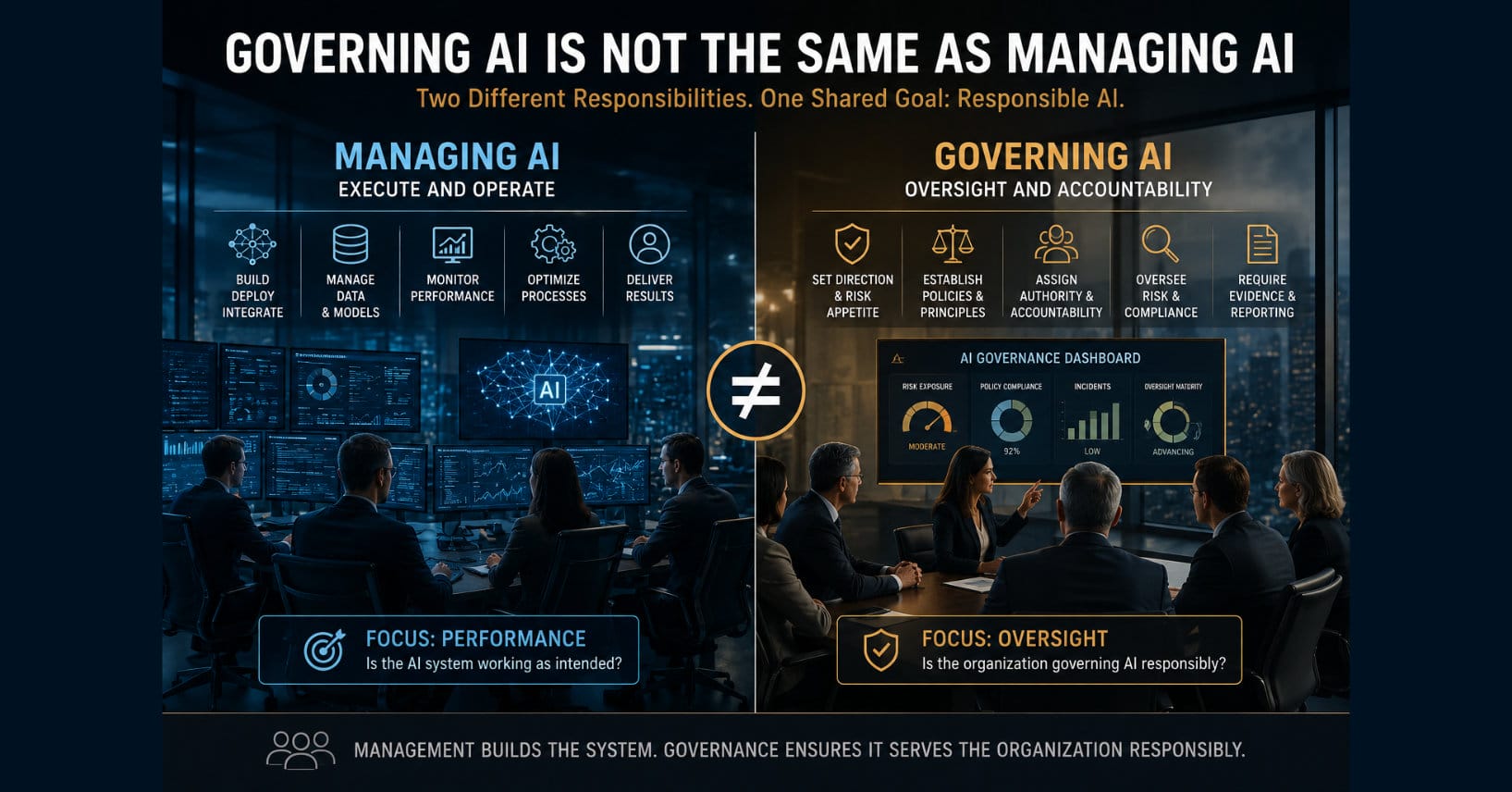
Governing AI Is Not the Same as Managing AI
Managing AI delivers results. Governing AI provides oversight, accountability, and strategic direction to ensure those results serve the enterprise.
-
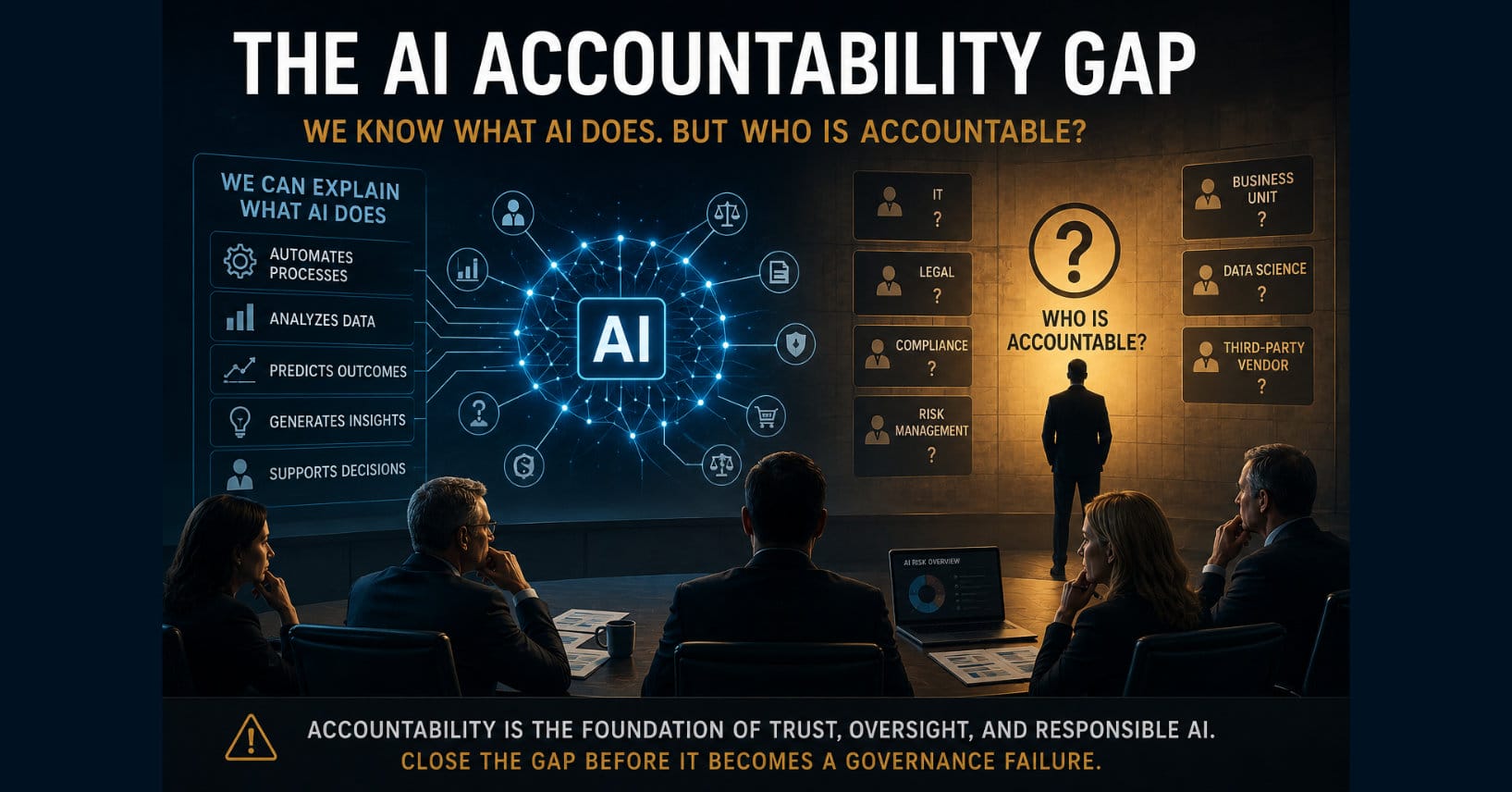
The AI Accountability Gap
Organizations can explain what AI does. Fewer can identify who is accountable when AI creates legal, financial, or reputational risk.
-

AI Is No Longer an IT Project. It’s a Board Responsibility.
AI has outgrown IT. Boards must now govern AI as an enterprise risk, fiduciary duty, and strategic business responsibility.
-
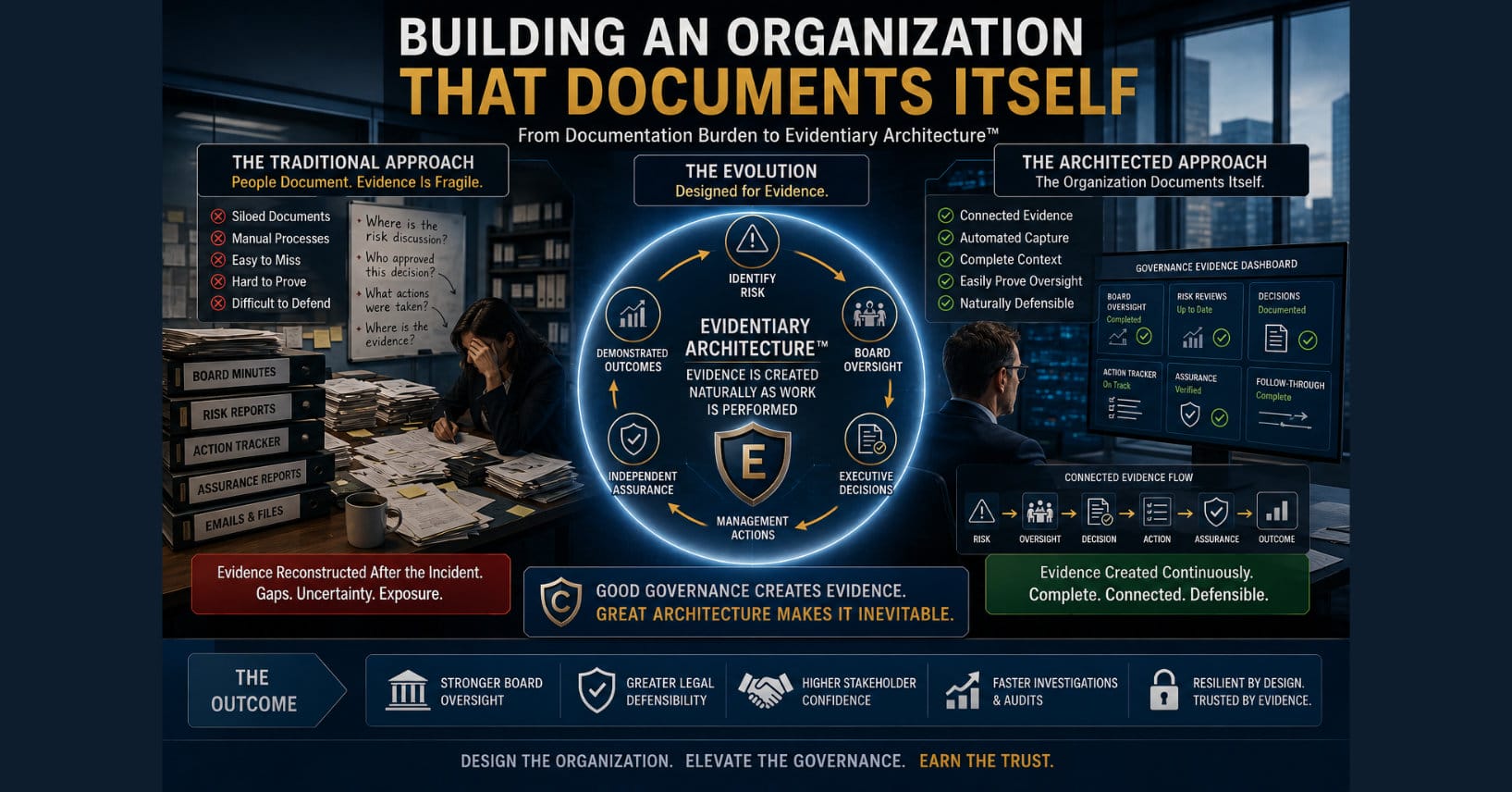
Building an Organization That Documents Itself
What if governance evidence were created automatically as work is performed? Discover how Evidentiary Architecture™ transforms evidence from an administrative task into an organizational capability.
-
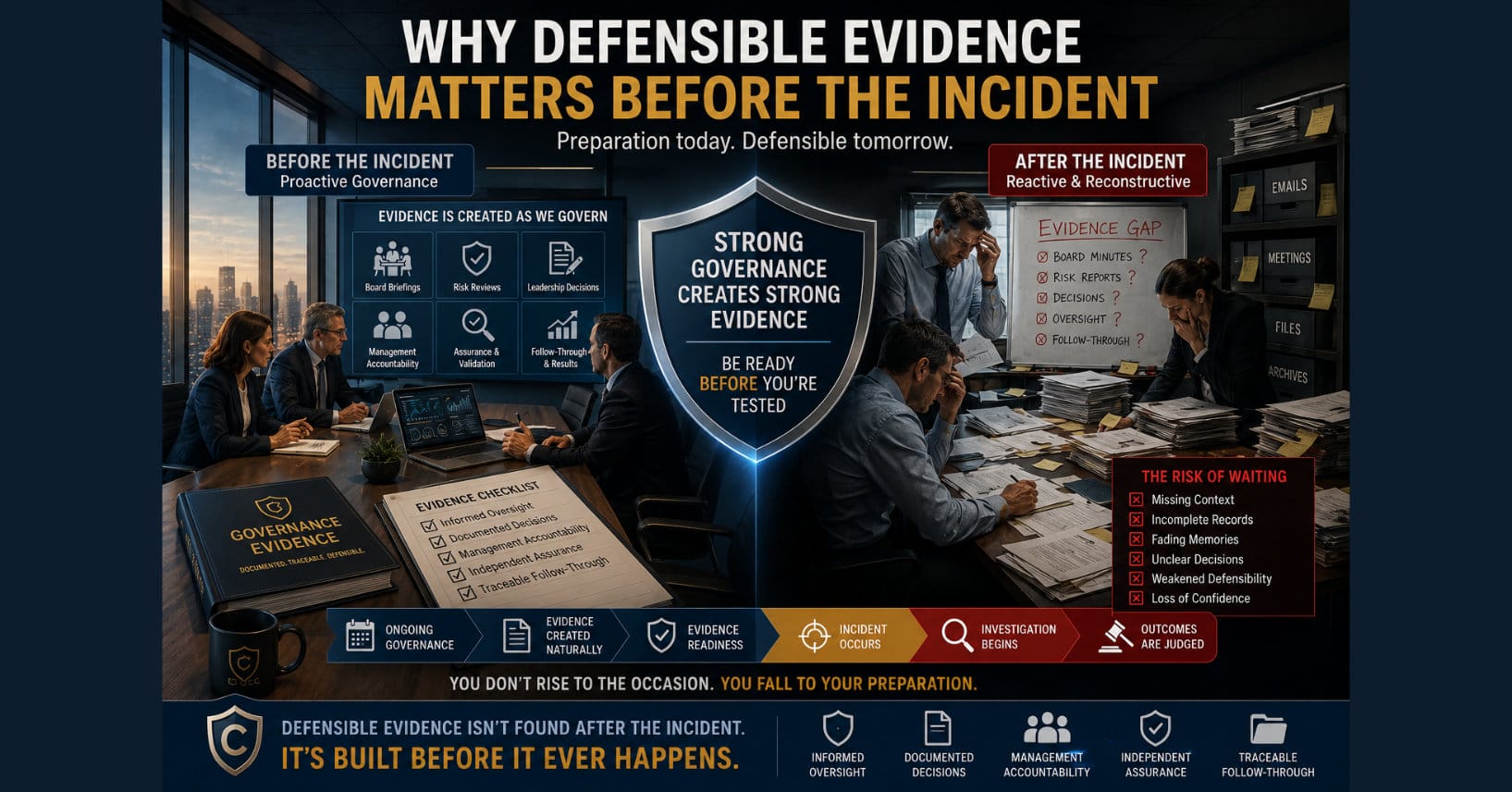
Why Defensible Evidence Matters Before the Incident
The strongest governance evidence is created before a cyber incident occurs. Learn why preparation—not reconstruction—is the foundation of defensible leadership.
-
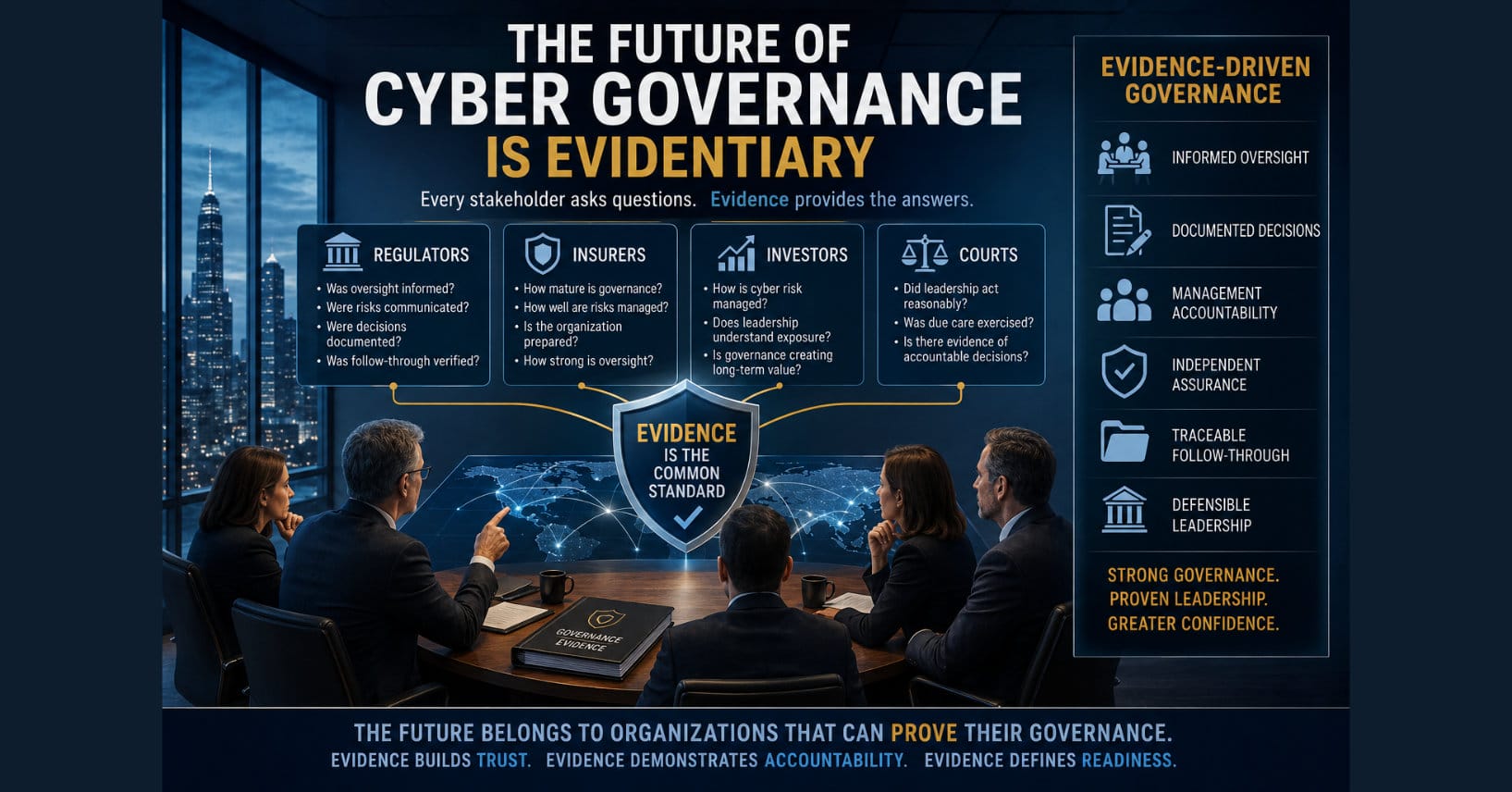
The Future of Cyber Governance Is Evidentiary
The future of cyber governance is evidence-driven. Regulators, insurers, investors, and courts increasingly expect organizations to prove—not simply claim—responsible oversight.
-
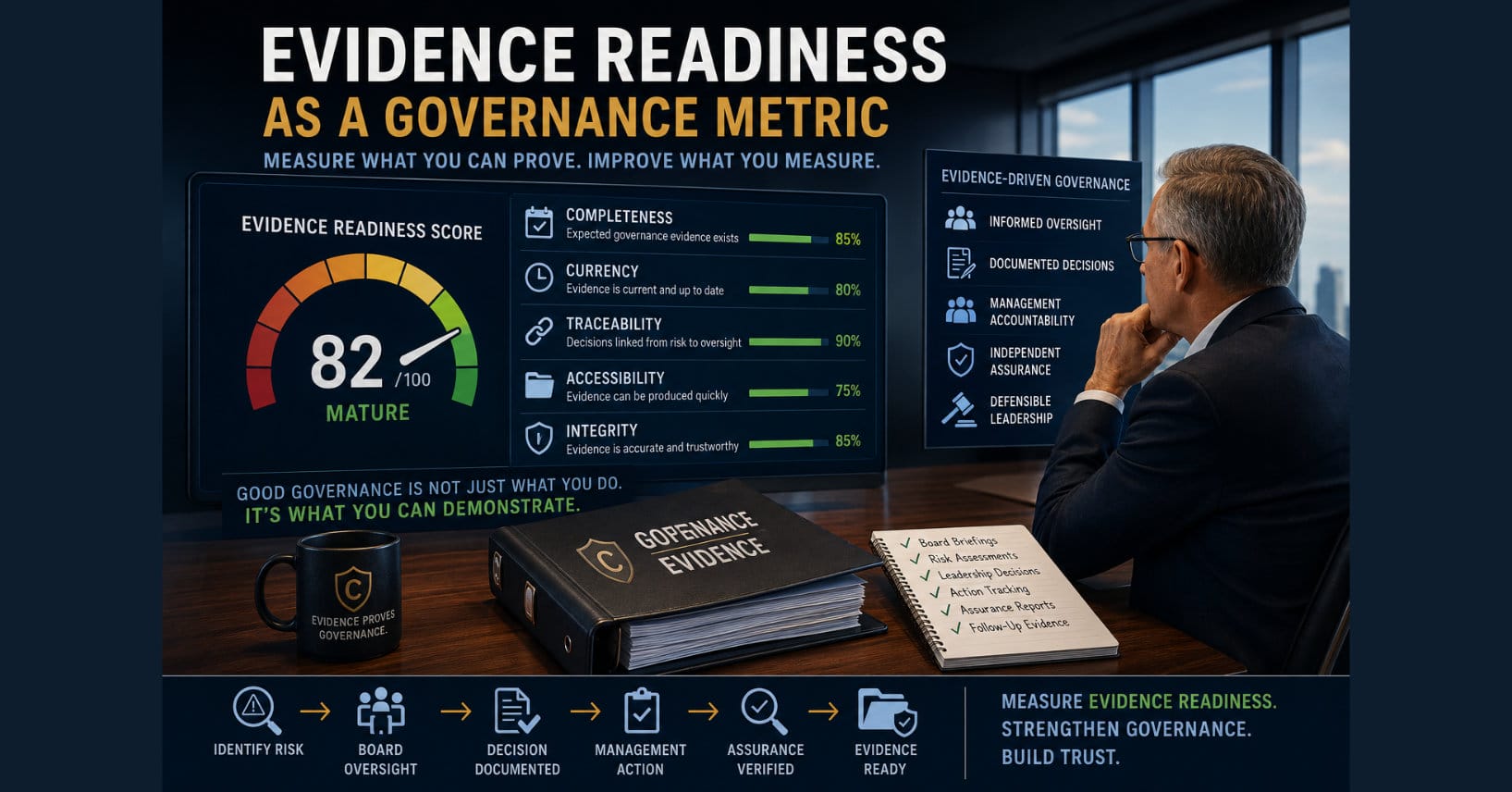
Evidence Readiness as a Governance Metric
What if governance maturity were measured by evidence readiness? Discover why the ability to produce credible governance evidence may become the next defining board metric.
-
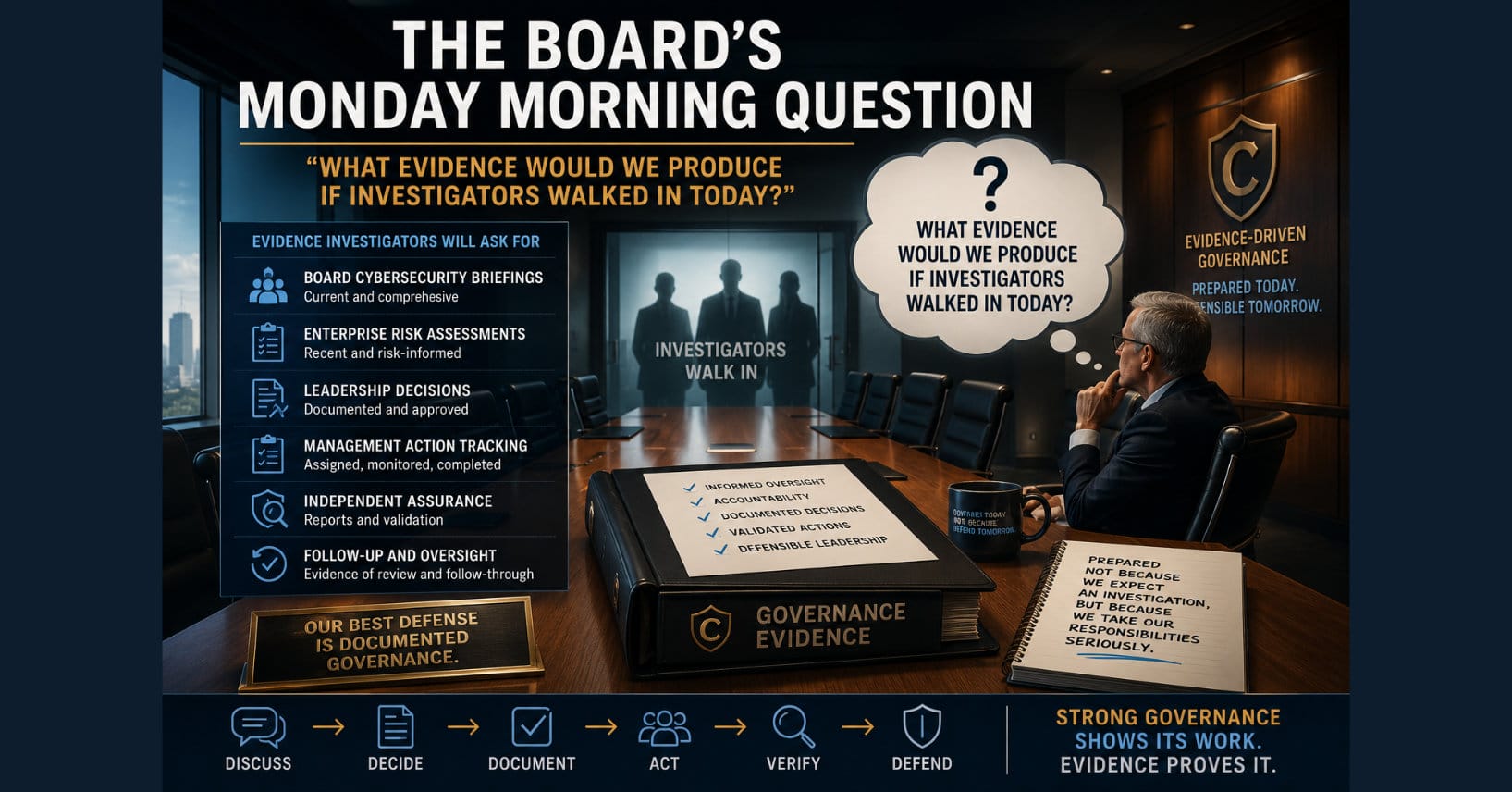
The Board’s Monday Morning Question
One question can transform cybersecurity governance: What evidence would we produce if investigators walked in today? Evidence readiness begins with asking it every Monday morning.
-
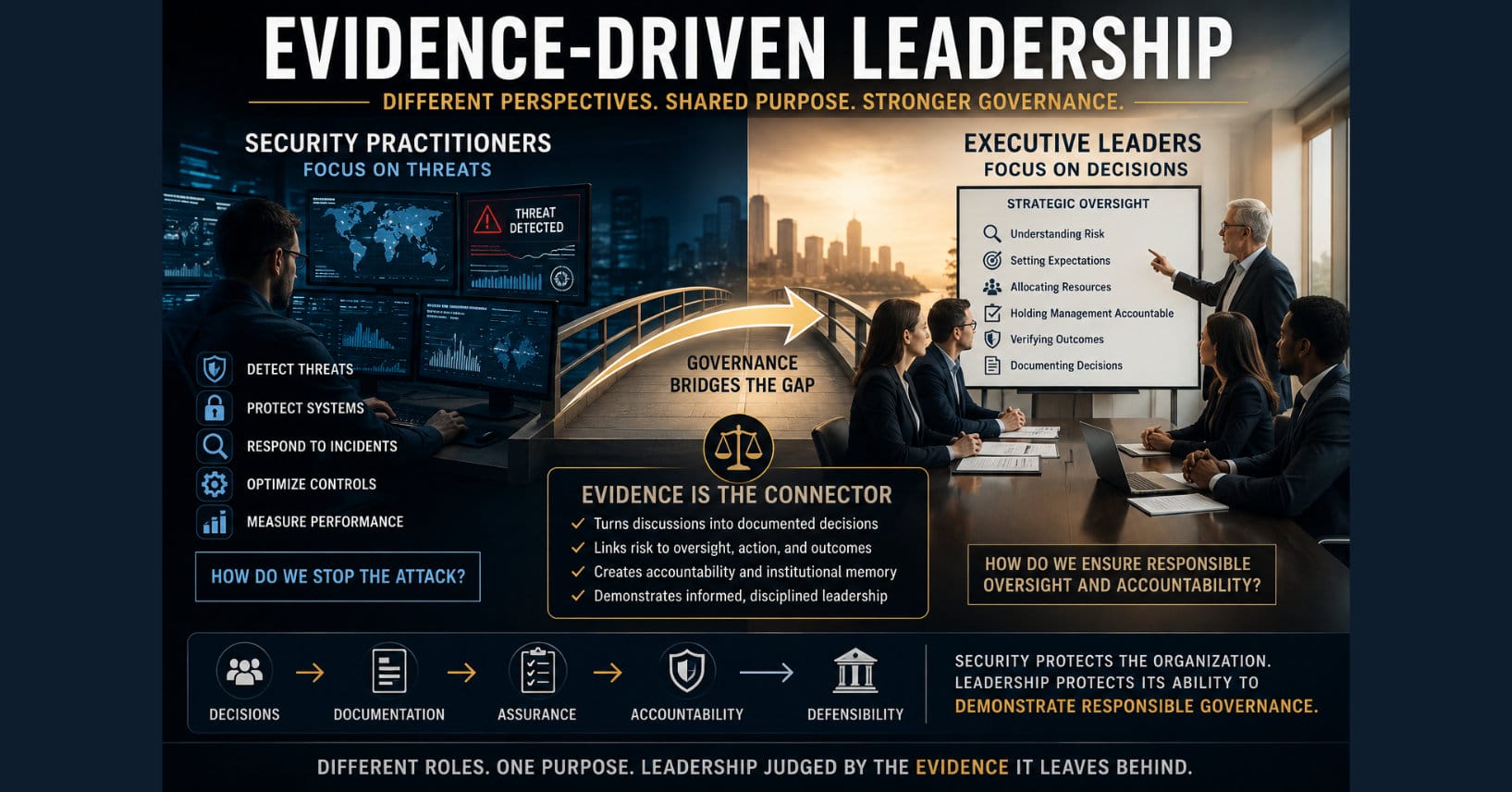
Evidence-Driven Leadership
Evidence-driven leaders think beyond technical controls. They focus on governance, accountability, and creating the evidence that demonstrates responsible executive oversight.
-
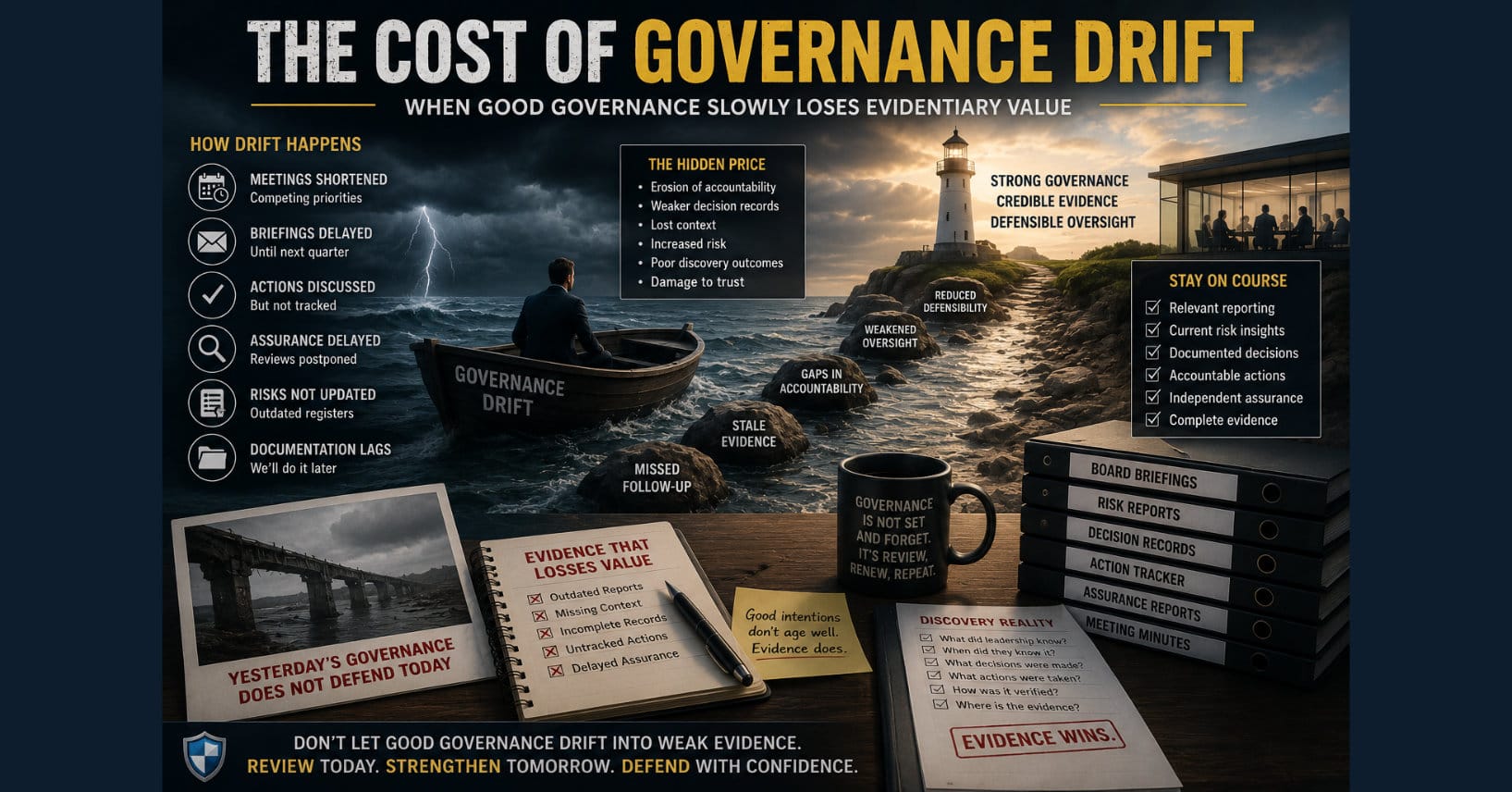
The Cost of Governance Drift
Evidence-Driven Cybersecurity Governance Series—Article 14 Governance drift is one of the most overlooked risks facing boards and executive leadership. It rarely begins with major failures.…
-
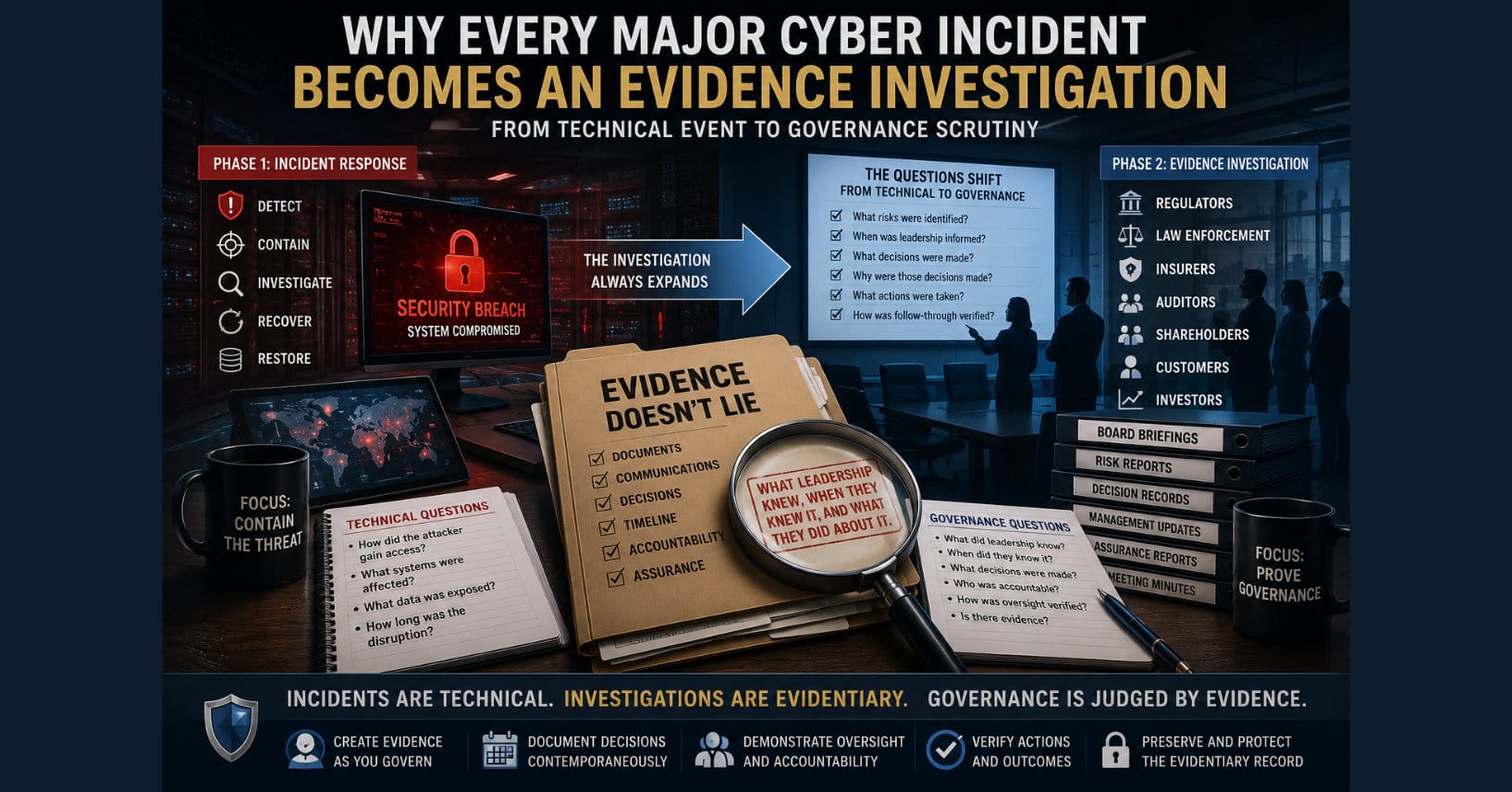
Why Every Major Cyber Incident Becomes an Evidence Investigation
Every major cyber incident begins as a technical event but evolves into an investigation of governance. Learn why evidence—not explanations—ultimately determines accountability.
-
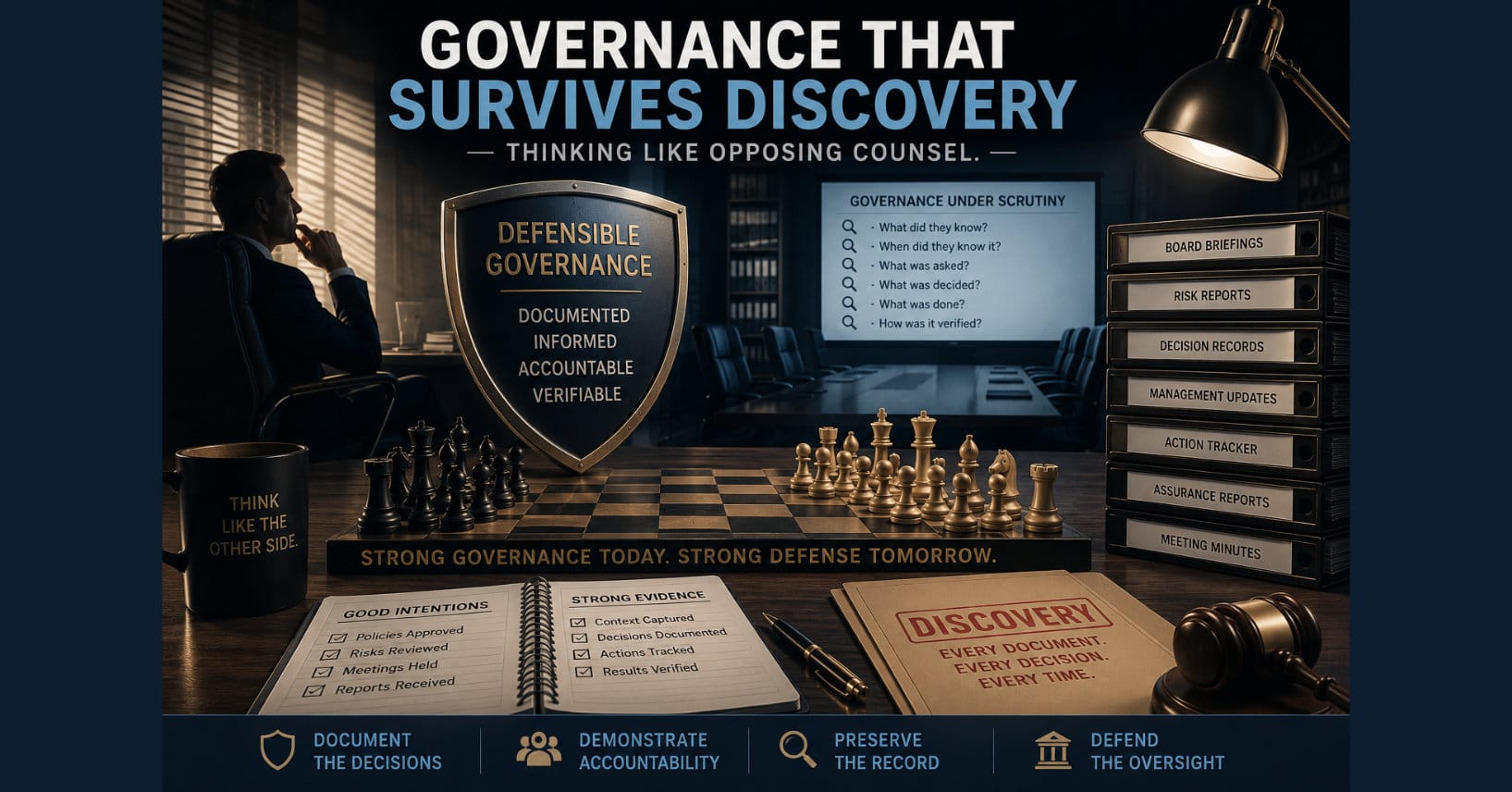
Governance That Survives Discovery
Discovery tests more than cybersecurity—it tests governance. Learn how boards can create evidence that withstands legal, regulatory, and investigative scrutiny.
-
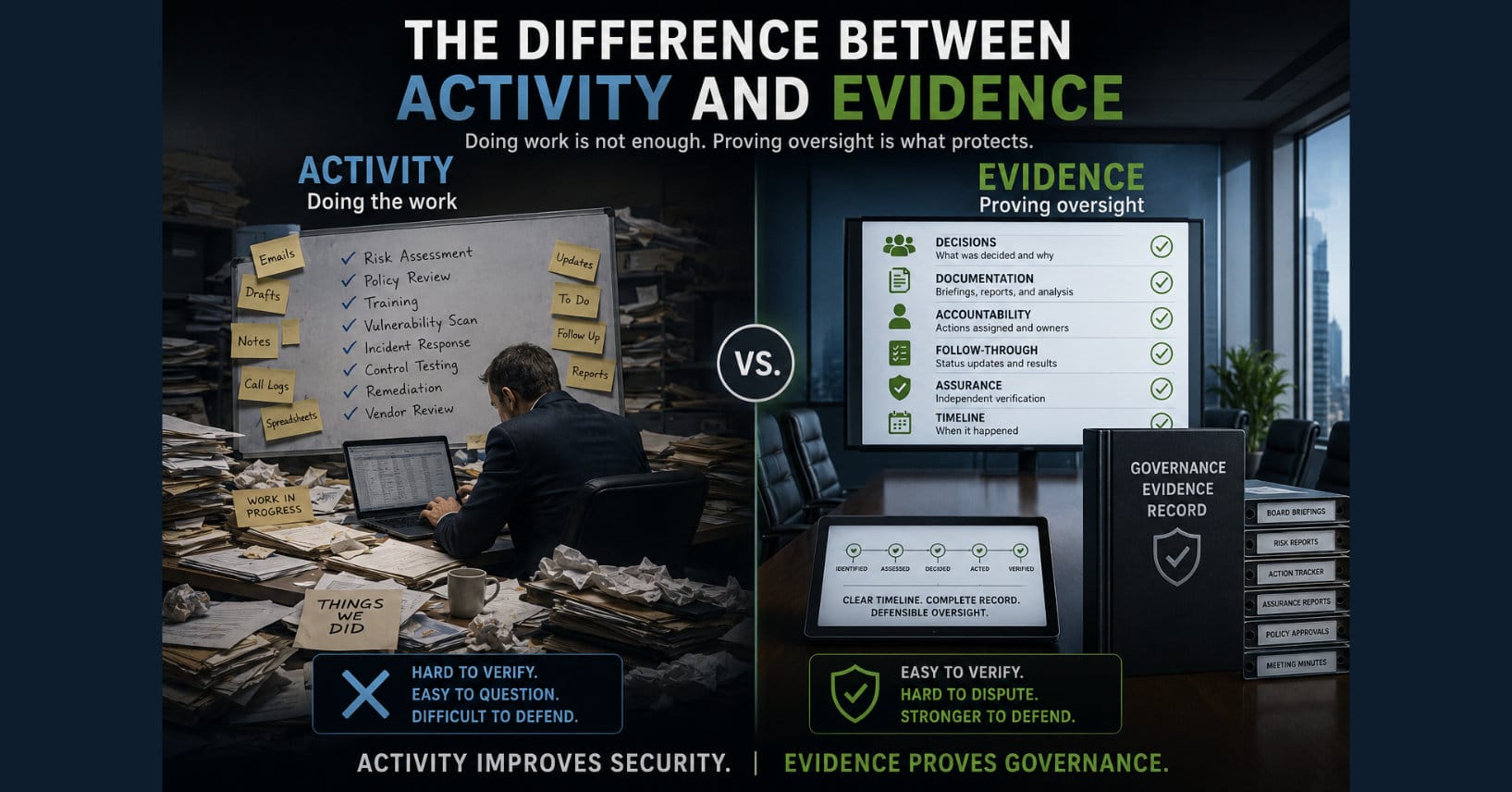
The Difference Between Activity and Evidence
Completing cybersecurity work isn’t enough. Organizations must also produce evidence that demonstrates informed oversight, accountability, and defensible governance.
-
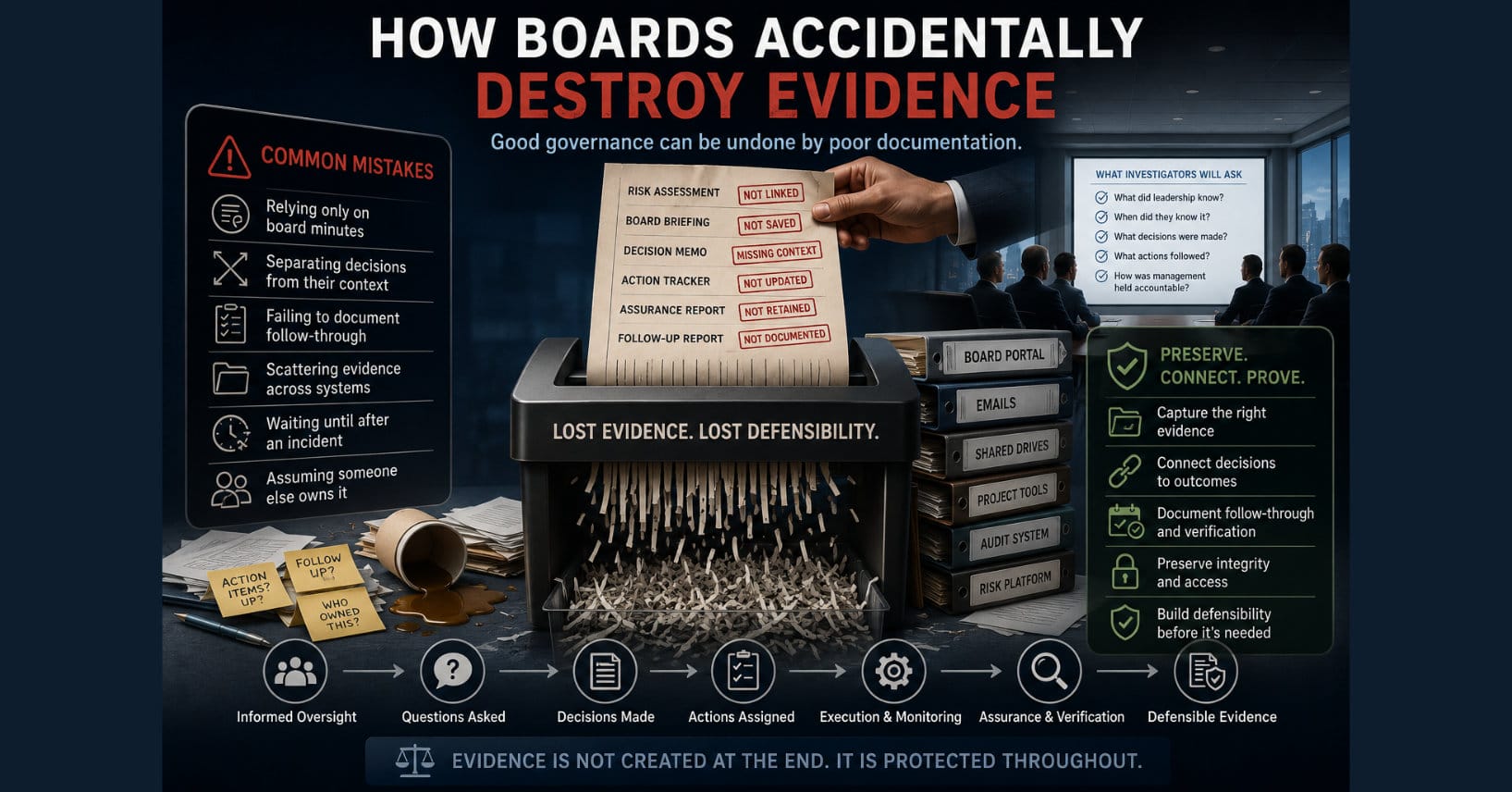
How Boards Accidentally Destroy Evidence
Many organizations lose their strongest governance evidence long before a cyber incident occurs. Learn the common board practices that unintentionally destroy documentation, weaken accountability, and…
-
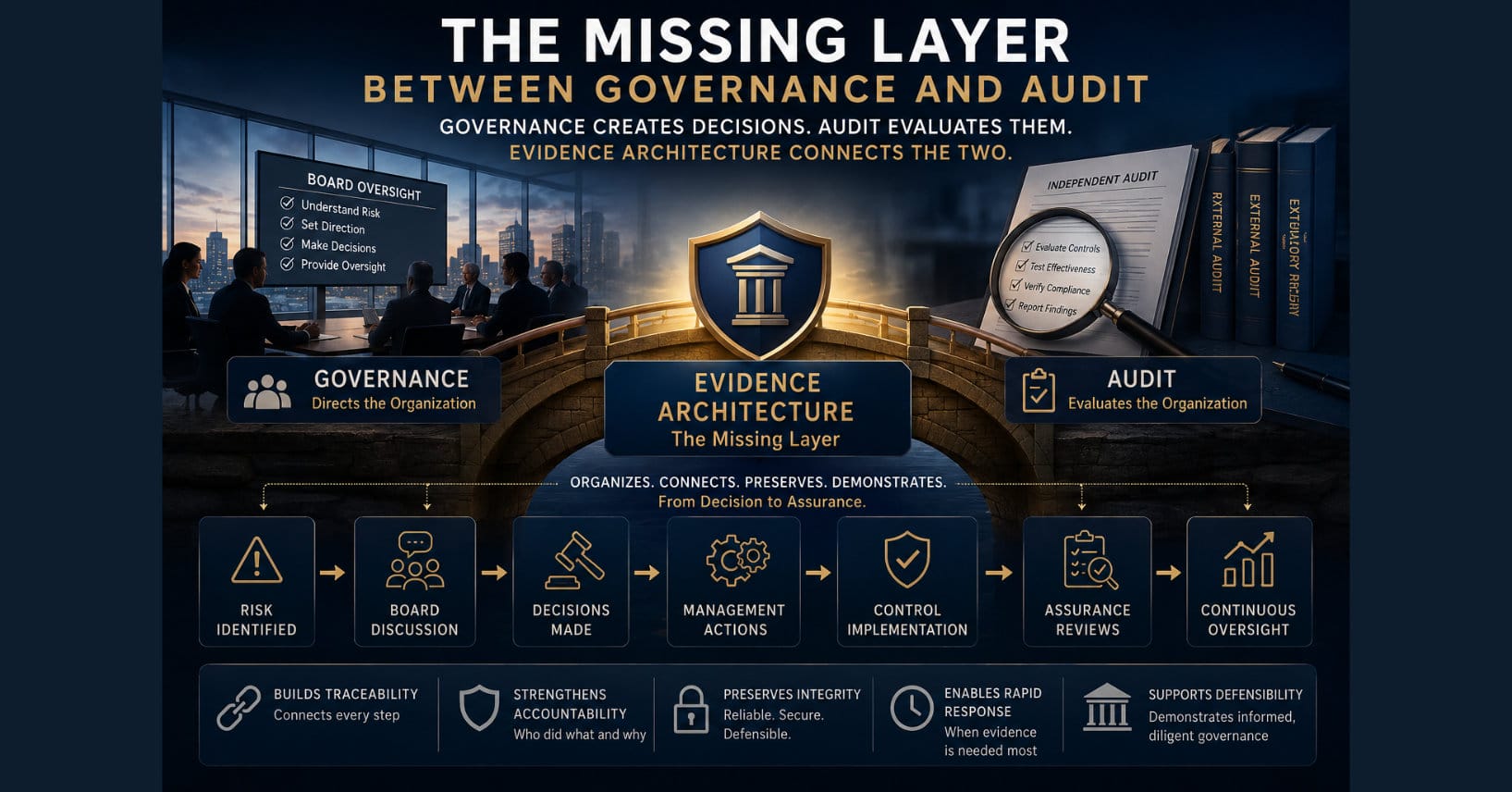
The Missing Layer Between Governance and Audit
Boards create governance. Auditors validate it. Between them lies assurance—the critical function that continuously verifies controls, exposes weaknesses, and generates the evidence that makes governance…