Cybersecurity did not begin in the boardroom.
It began as a technical problem.
- Systems needed protection.
- Networks needed monitoring.
- Threats needed containment.
For years, that is where it remained.
- Operational.
- Technical.
- Contained within IT.
The Shift Is Already Underway
That framing no longer holds.
Cyber risk now affects:
- Revenue
- Operations
- Legal exposure
- Reputation
- Investor confidence
It has moved from the data center to the board agenda.
Not gradually.
Decisively.
From Activity to Accountability
Organizations once focused on:
- Tools deployed
- Alerts monitored
- Vulnerabilities patched
Now they are evaluated on:
- What leadership knew
- How risk was governed
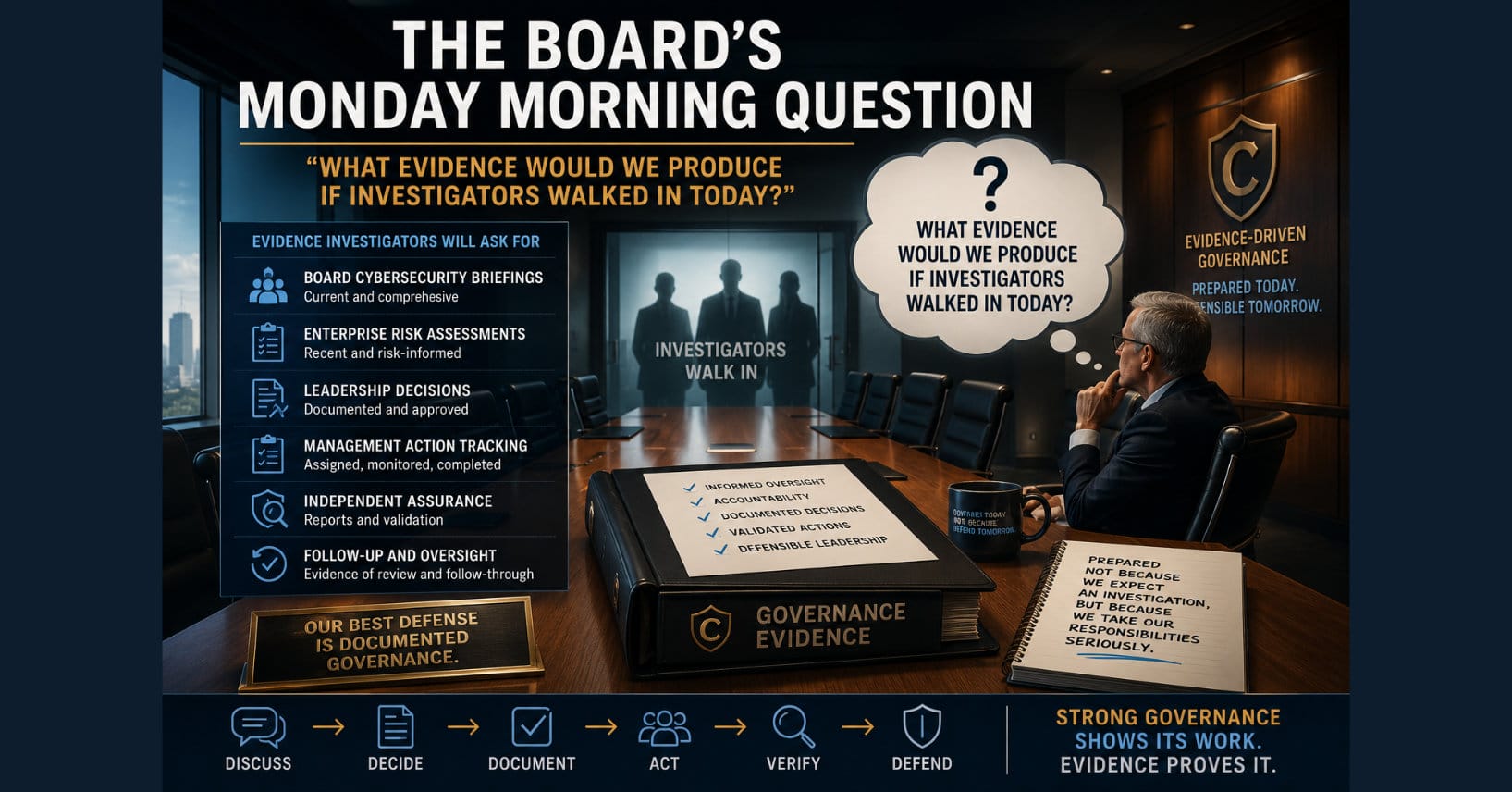
- Whether decisions were documented
- How incidents were managed
The standard has changed.
From activity…
to accountability.
From Technical Ownership to Board Responsibility
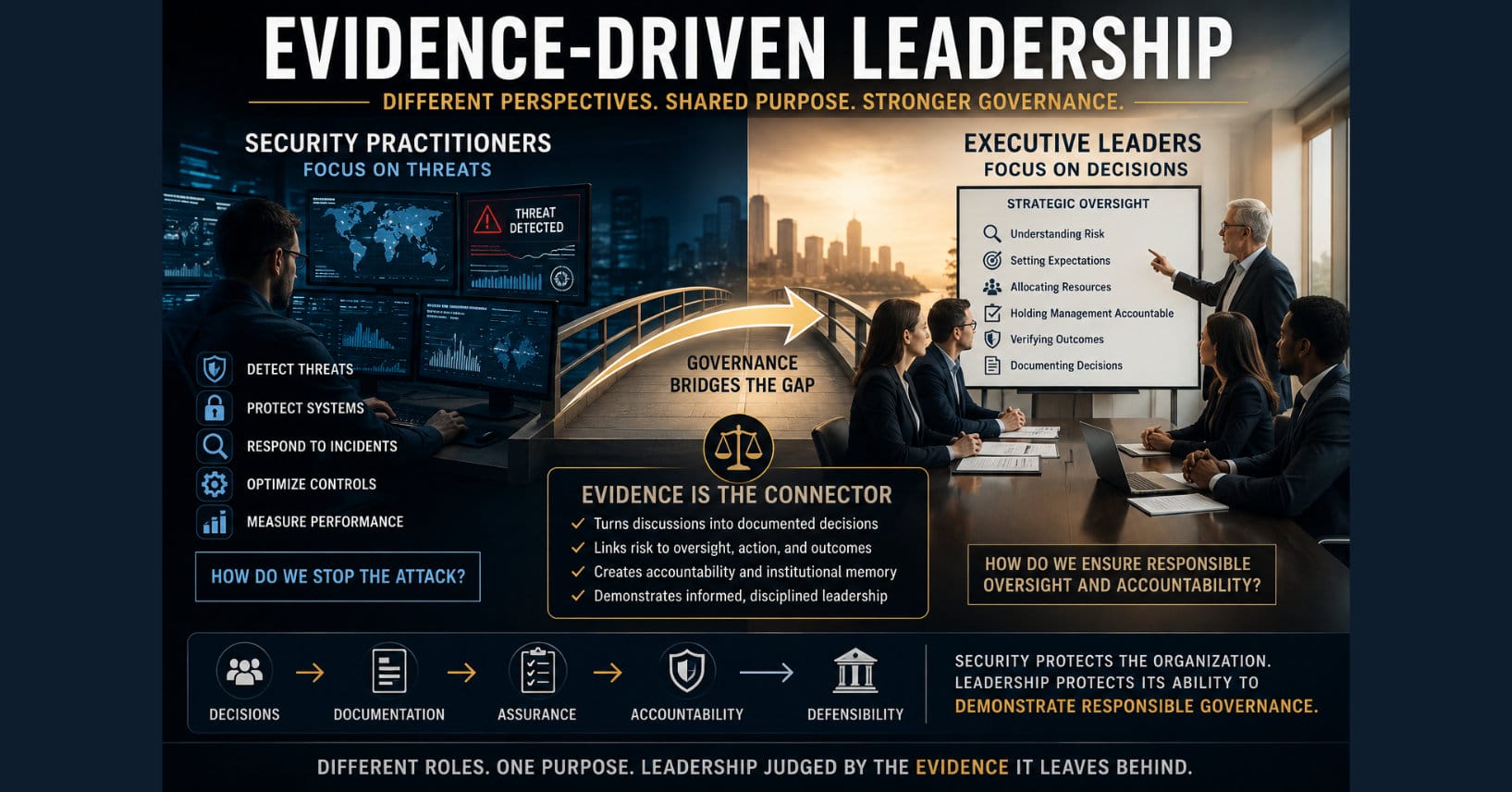
Cybersecurity is no longer owned solely by technical teams.
It is governed by leadership.
Boards are expected to:
- Understand enterprise exposure
- Ask consequence-oriented questions
- Align investment with risk
- Oversee response and disclosure
- Document their involvement
This is not a future expectation.
It is a current one.
From Compliance to Defensibility
Compliance remains necessary.
It is no longer sufficient.
Organizations are increasingly evaluated on:
- Whether oversight was structured
- Whether decisions were reasonable
- Whether actions were documented
Defensibility has become the standard.
What This Means for Boards
Boards that continue to treat cyber risk as:
A technical update
will fall behind.
Boards that treat it as:
A governance standard
will lead.
The Pattern Across This Series
Over the past 16 weeks, a consistent pattern has emerged:
- Cyber risk is enterprise risk
- Documentation defines oversight
- Culture shapes resilience
- Investment reflects priority
- Silence weakens governance
- Evidence determines defensibility
These are not isolated ideas.
They form a governance framework.
The Direction Forward
Cybersecurity governance is moving toward:
- Integration with enterprise risk
- Alignment with financial oversight
- Increased regulatory expectation
- Greater board accountability
- Stronger emphasis on documentation
This is not a temporary shift.
It is structural.
The Core Principle
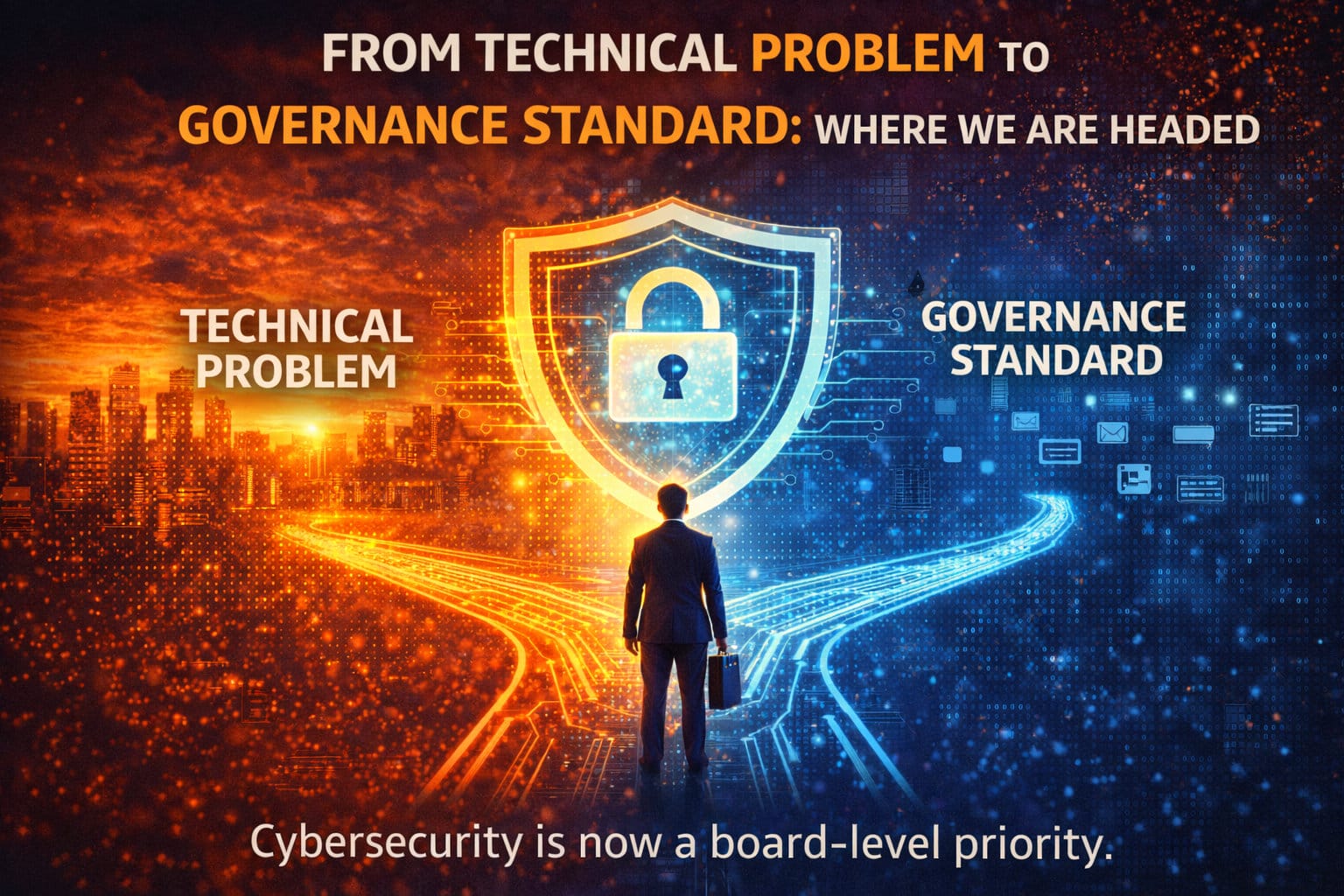
Cybersecurity is no longer a technical problem to be managed.
It is a governance standard to be met.
Boards that recognize this will not only reduce risk.
They will strengthen trust.

#BoardGovernance #CyberRisk #EnterpriseRisk #FiduciaryDuty #Leadership