
-
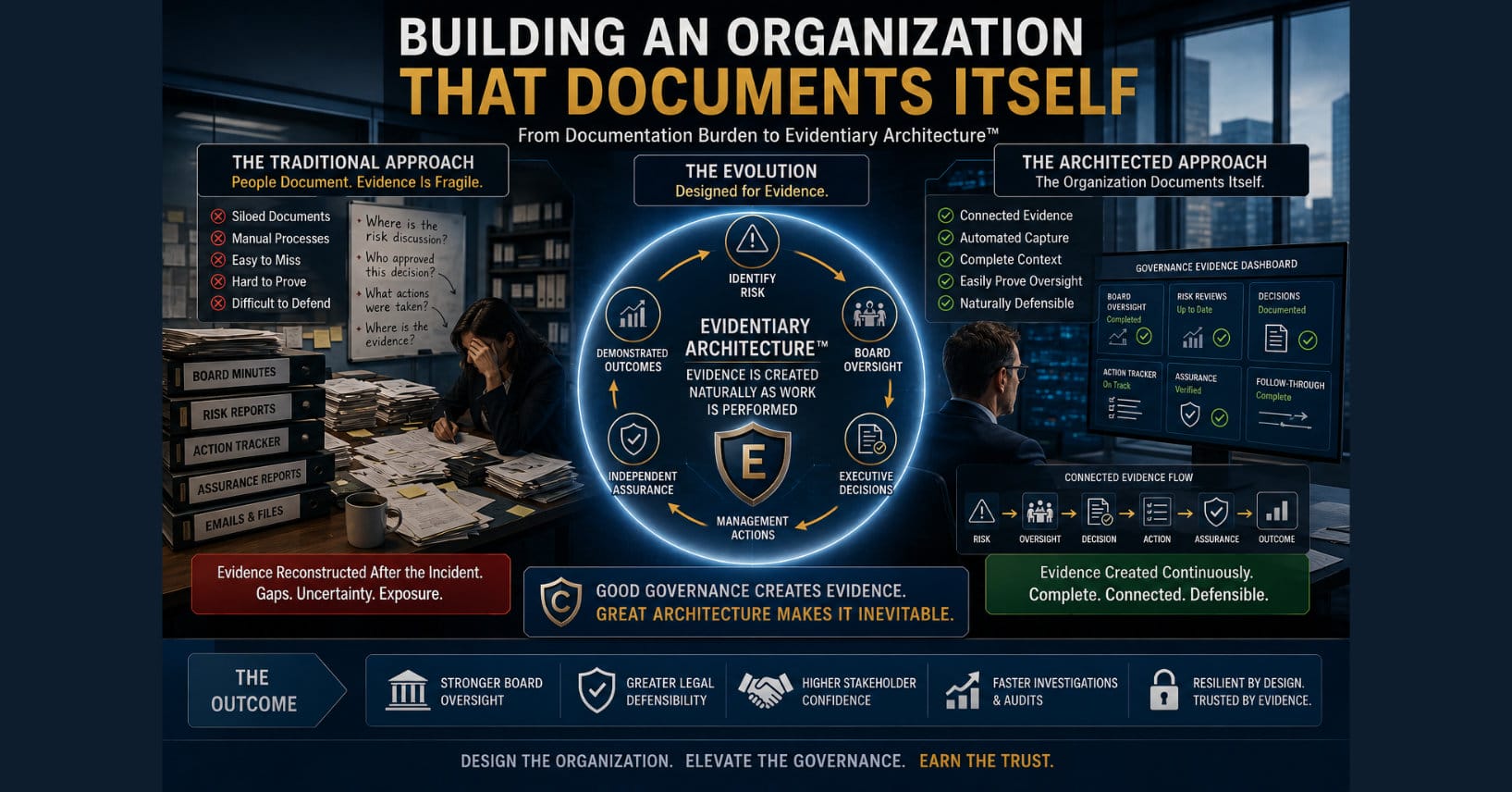
Building an Organization That Documents Itself
What if governance evidence were created automatically as work is performed? Discover how Evidentiary Architecture™ transforms evidence from an administrative task into an organizational capability.
-
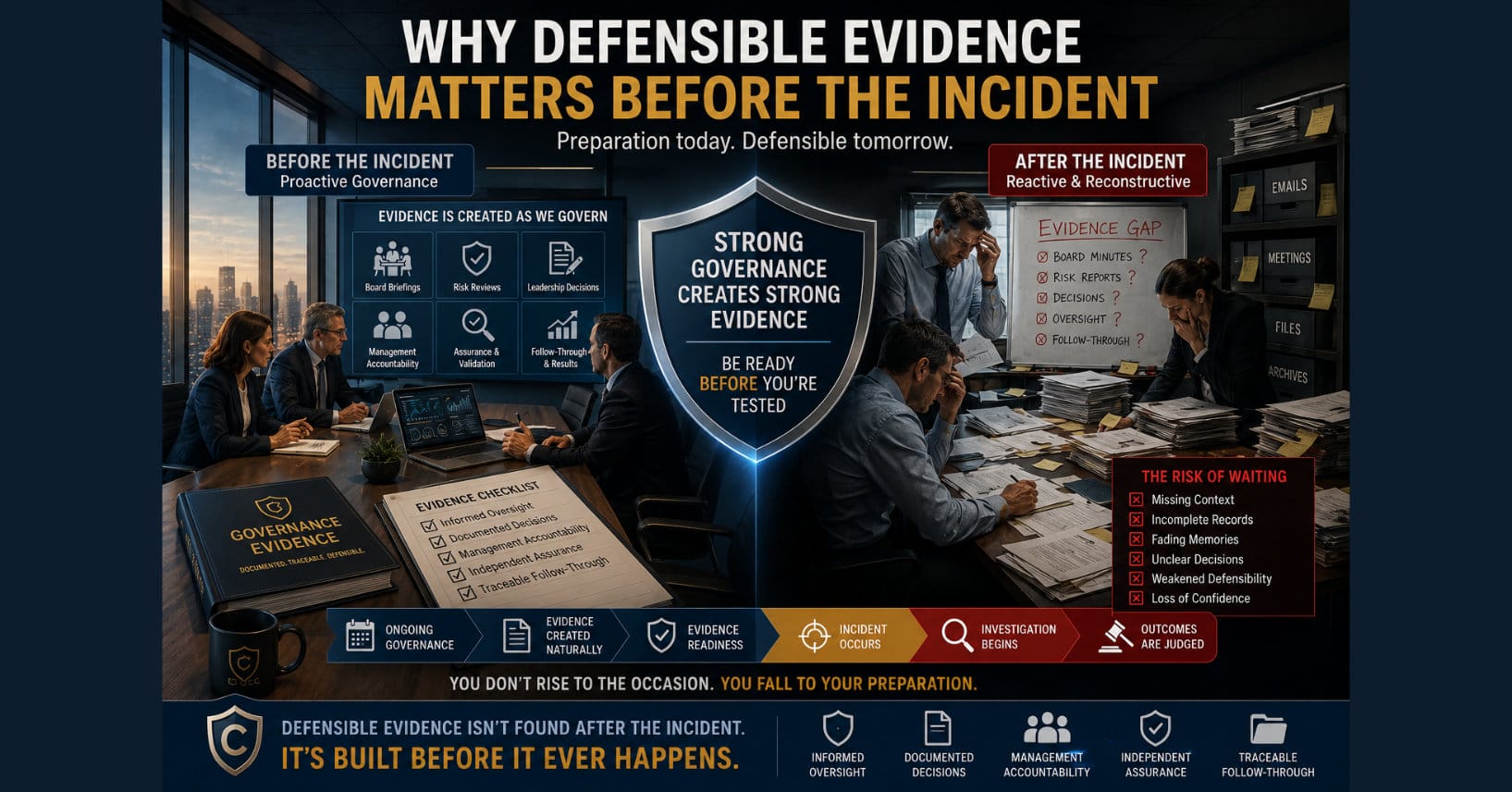
Why Defensible Evidence Matters Before the Incident
The strongest governance evidence is created before a cyber incident occurs. Learn why preparation—not reconstruction—is the foundation of defensible leadership.
-
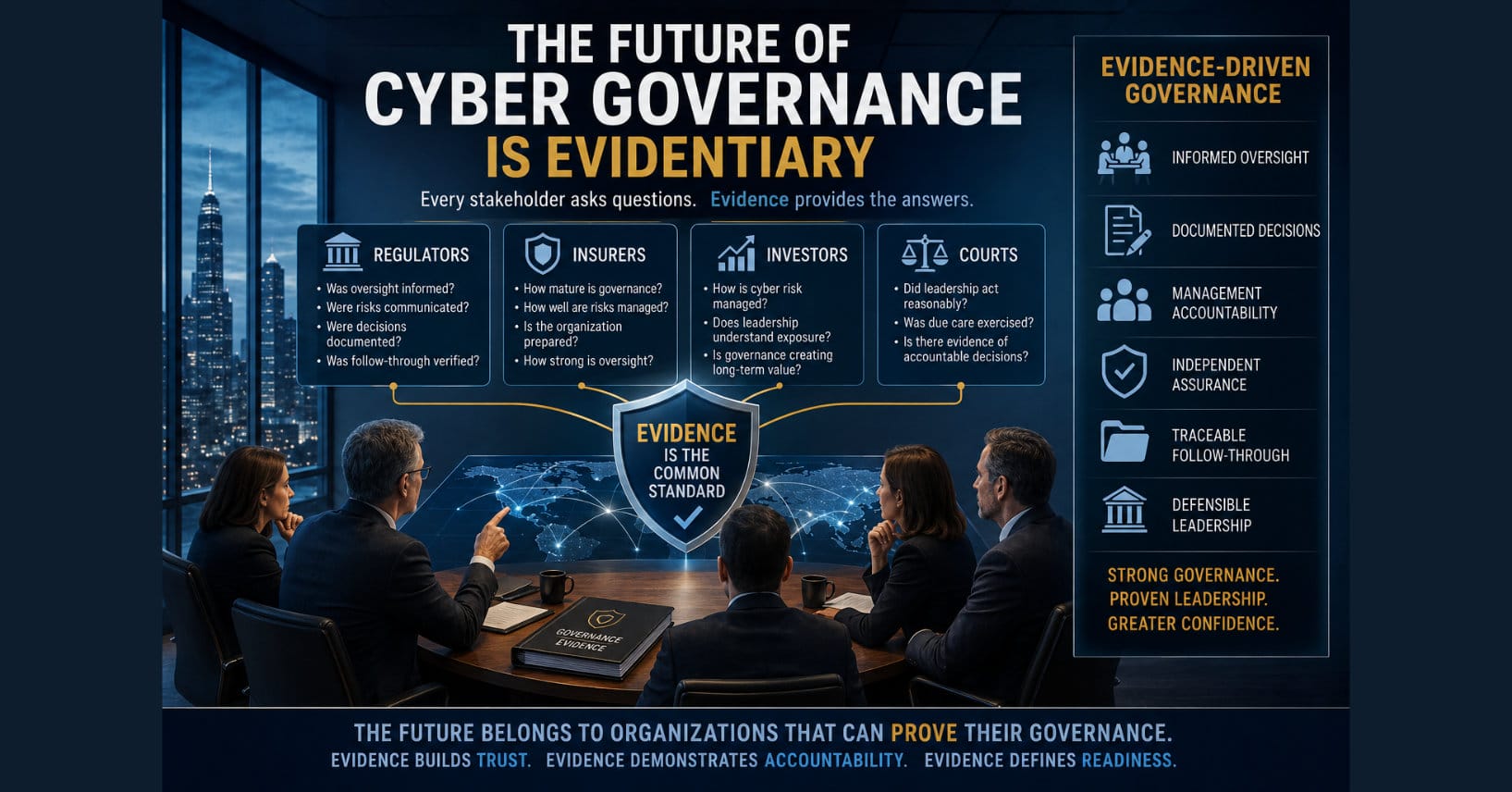
The Future of Cyber Governance Is Evidentiary
The future of cyber governance is evidence-driven. Regulators, insurers, investors, and courts increasingly expect organizations to prove—not simply claim—responsible oversight.
-

Evidence Readiness as a Governance Metric
What if governance maturity were measured by evidence readiness? Discover why the ability to produce credible governance evidence may become the next defining board metric.
-
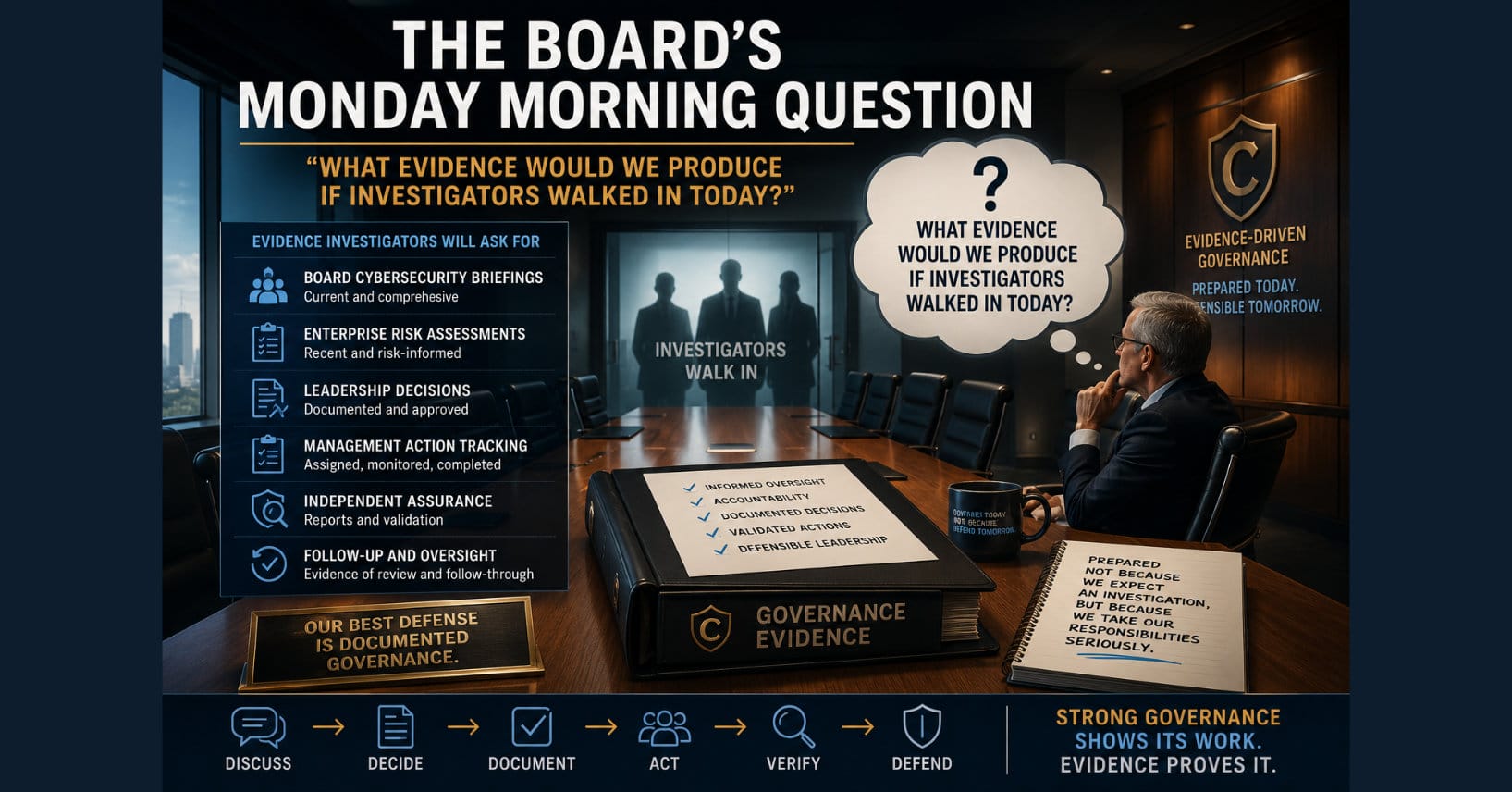
The Board’s Monday Morning Question
One question can transform cybersecurity governance: What evidence would we produce if investigators walked in today? Evidence readiness begins with asking it every Monday morning.
-
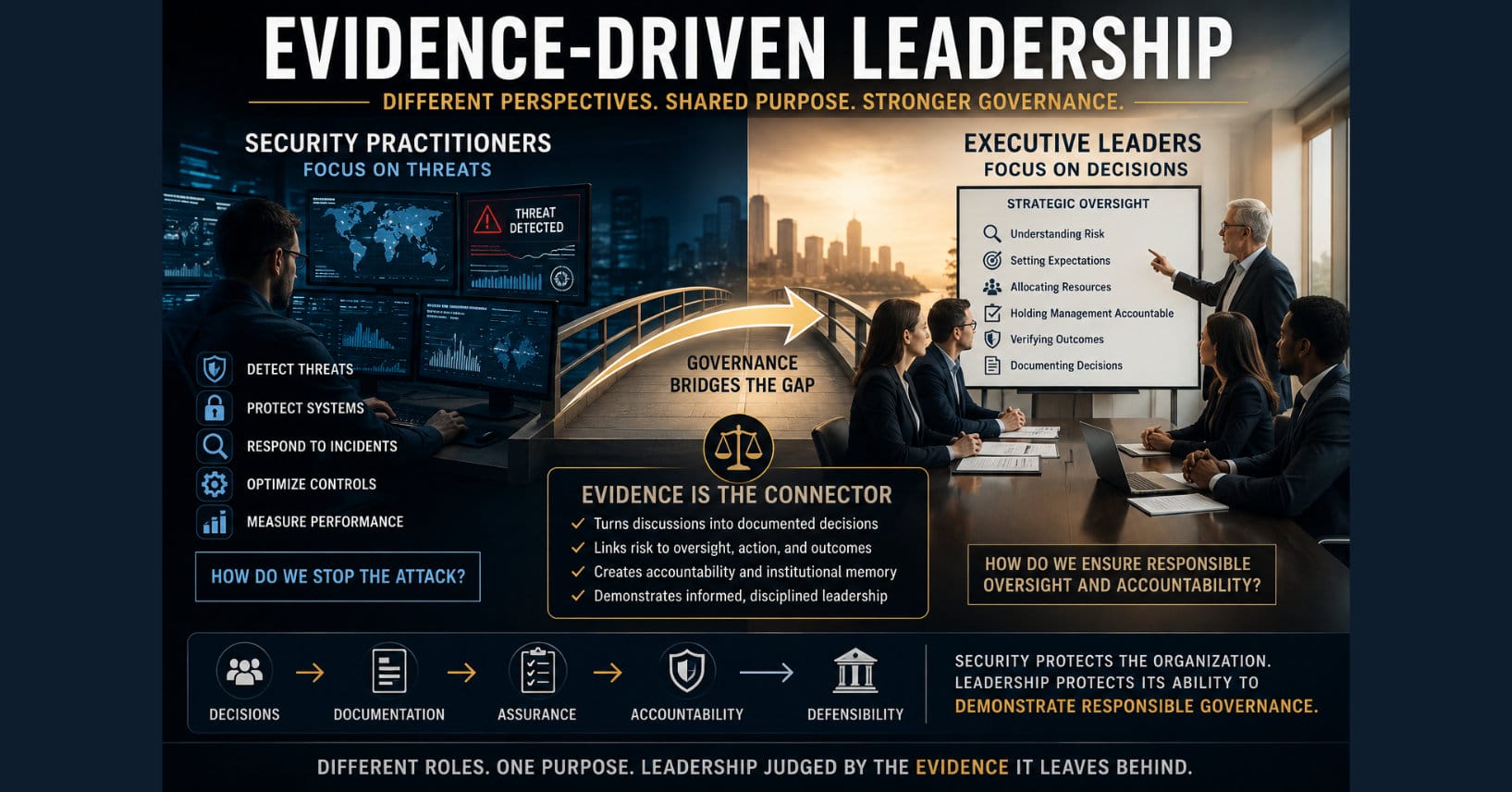
Evidence-Driven Leadership
Evidence-driven leaders think beyond technical controls. They focus on governance, accountability, and creating the evidence that demonstrates responsible executive oversight.
-

The Cost of Governance Drift
Evidence-Driven Cybersecurity Governance Series—Article 14 Governance drift is one of the most overlooked risks facing boards and executive leadership. It rarely begins with major failures.…
-
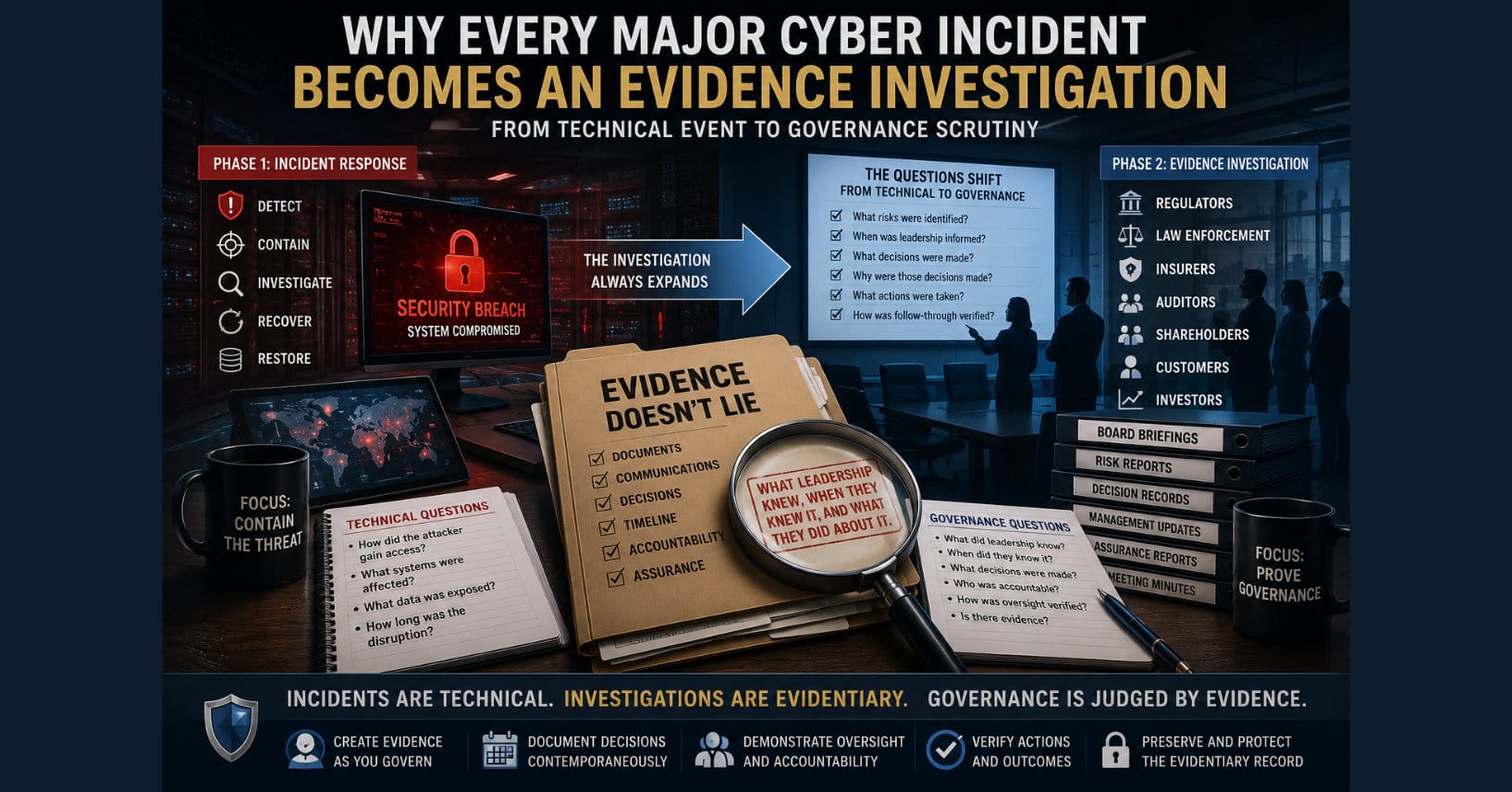
Why Every Major Cyber Incident Becomes an Evidence Investigation
Every major cyber incident begins as a technical event but evolves into an investigation of governance. Learn why evidence—not explanations—ultimately determines accountability.
-
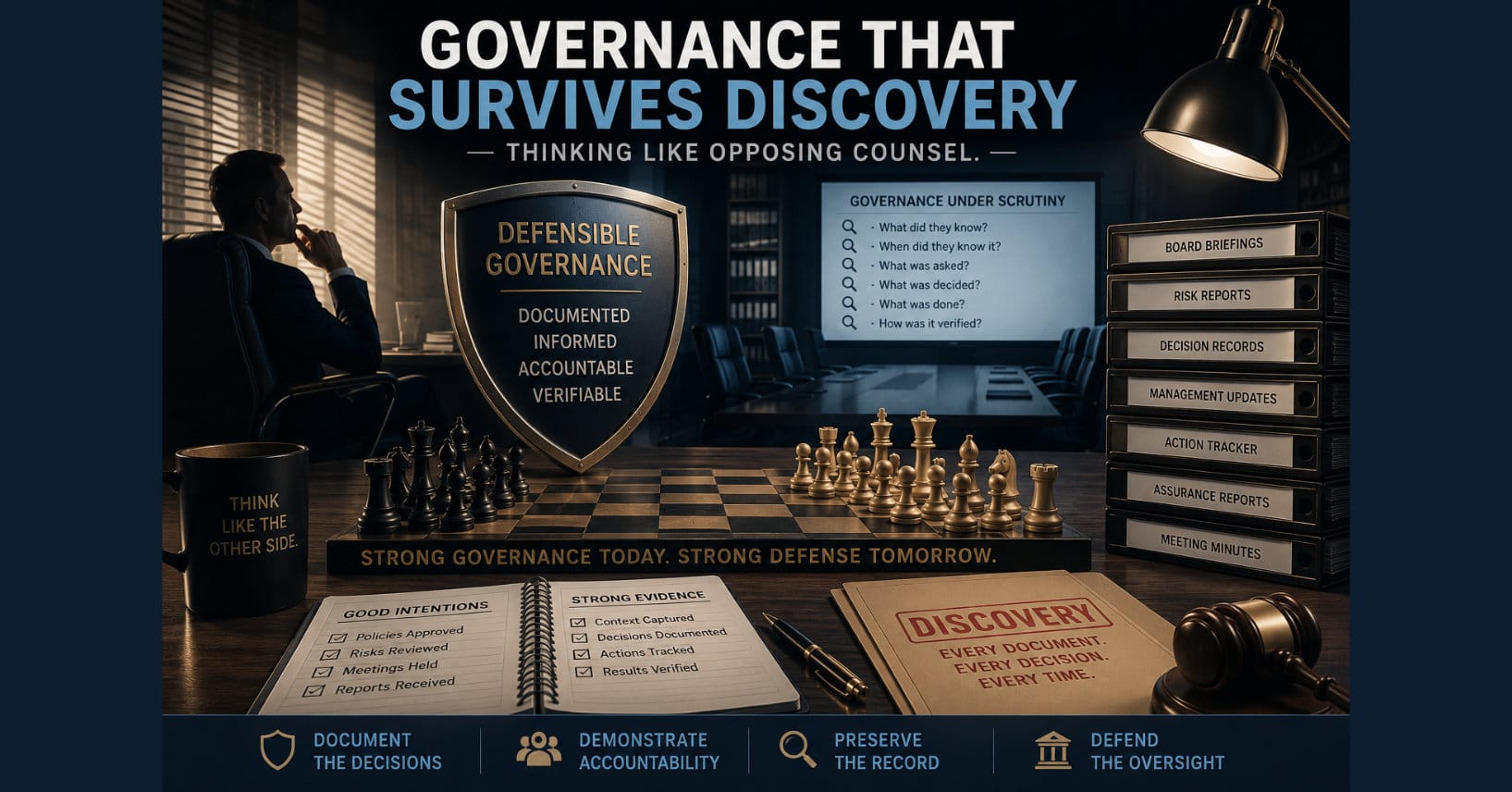
Governance That Survives Discovery
Discovery tests more than cybersecurity—it tests governance. Learn how boards can create evidence that withstands legal, regulatory, and investigative scrutiny.
-
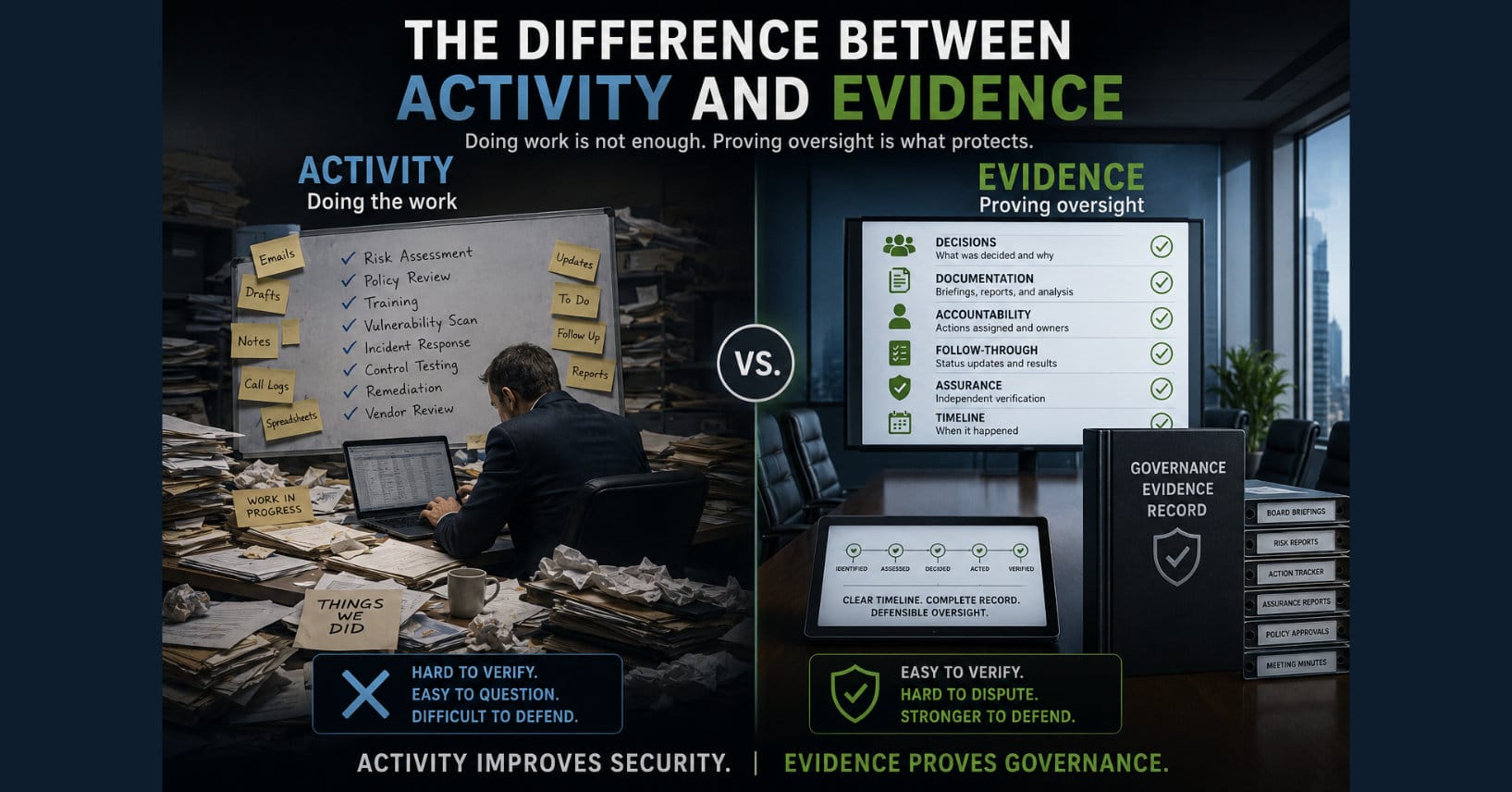
The Difference Between Activity and Evidence
Completing cybersecurity work isn’t enough. Organizations must also produce evidence that demonstrates informed oversight, accountability, and defensible governance.
-
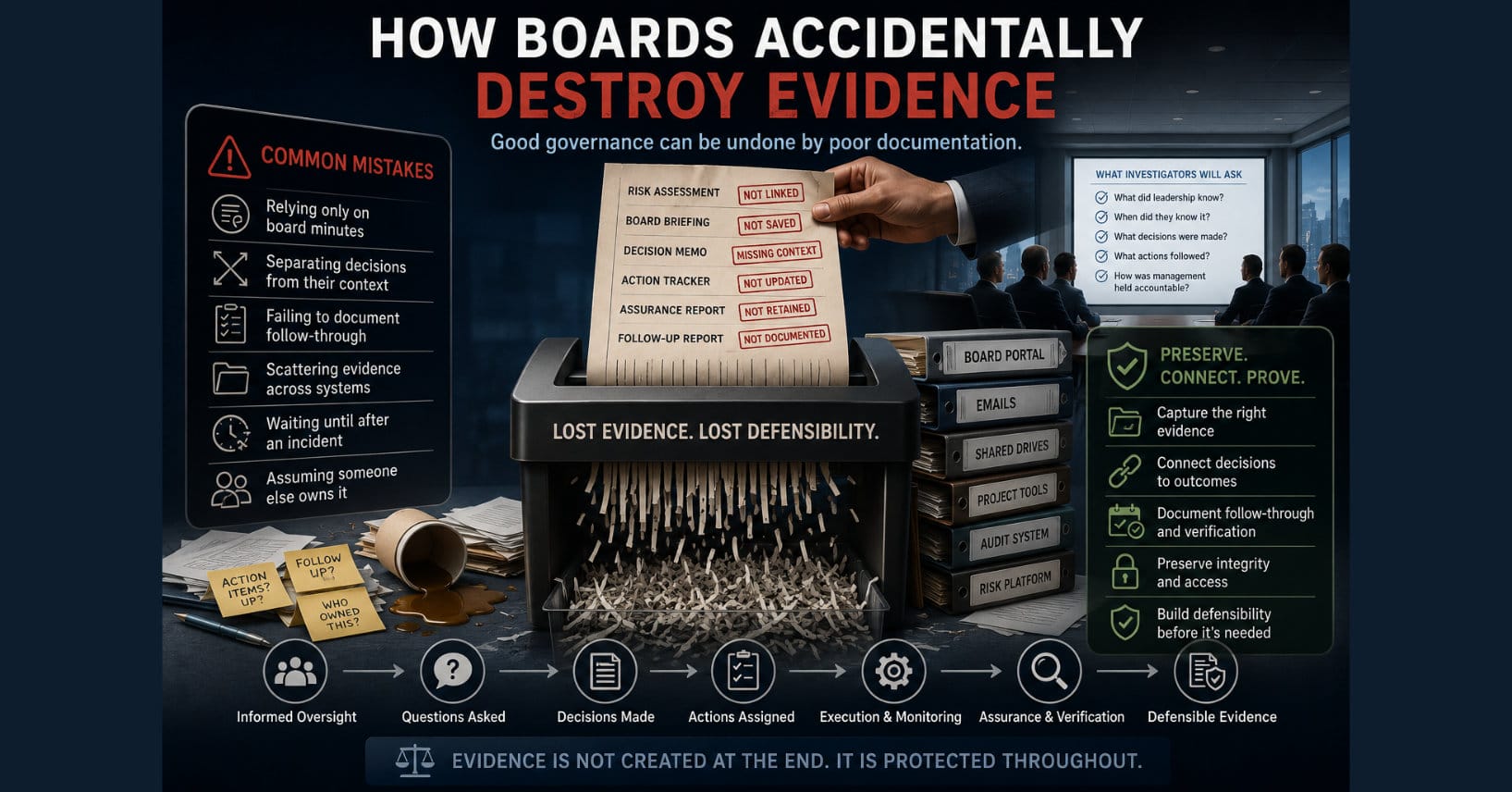
How Boards Accidentally Destroy Evidence
Many organizations lose their strongest governance evidence long before a cyber incident occurs. Learn the common board practices that unintentionally destroy documentation, weaken accountability, and…
-
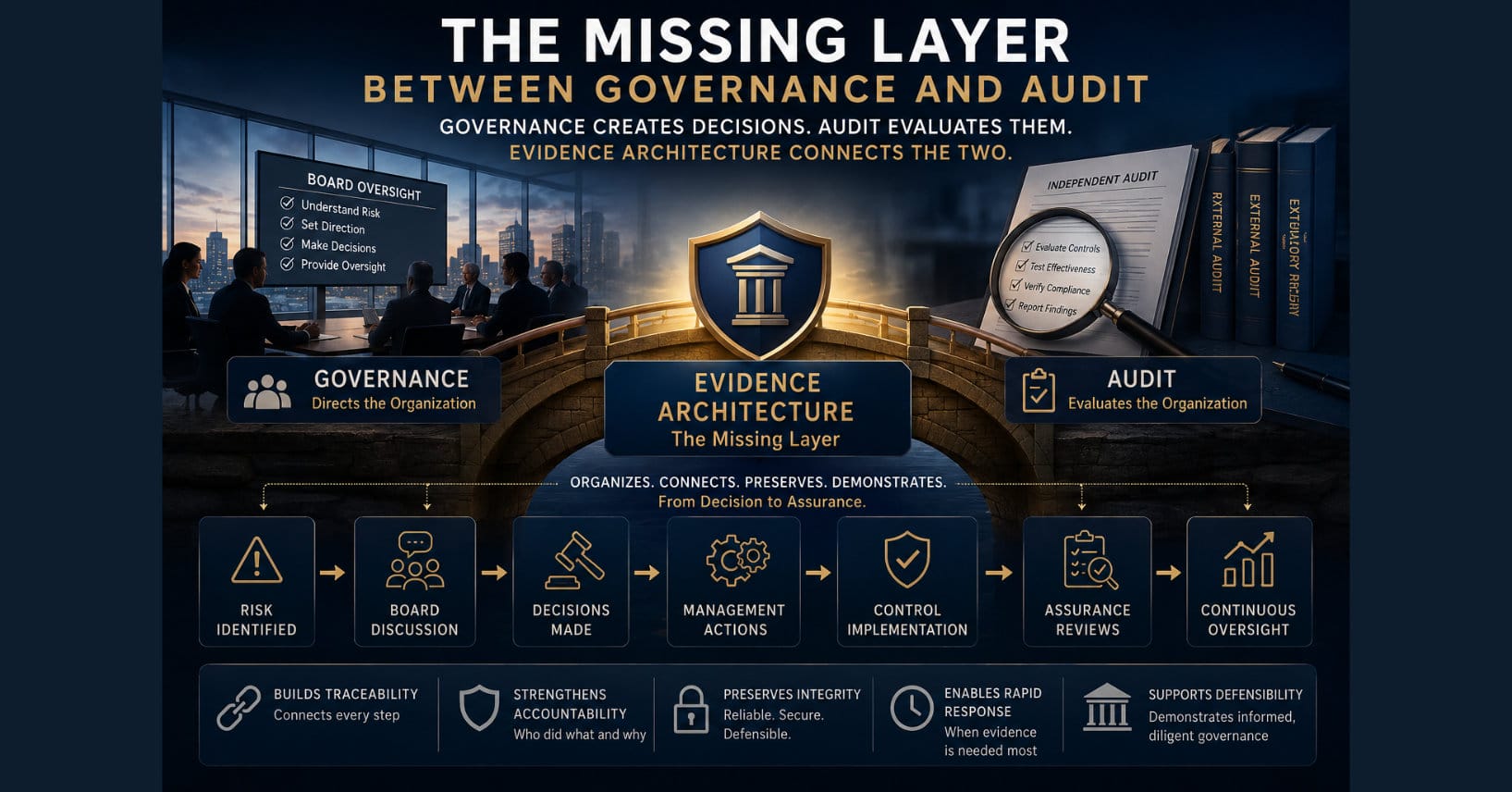
The Missing Layer Between Governance and Audit
Boards create governance. Auditors validate it. Between them lies assurance—the critical function that continuously verifies controls, exposes weaknesses, and generates the evidence that makes governance…
-
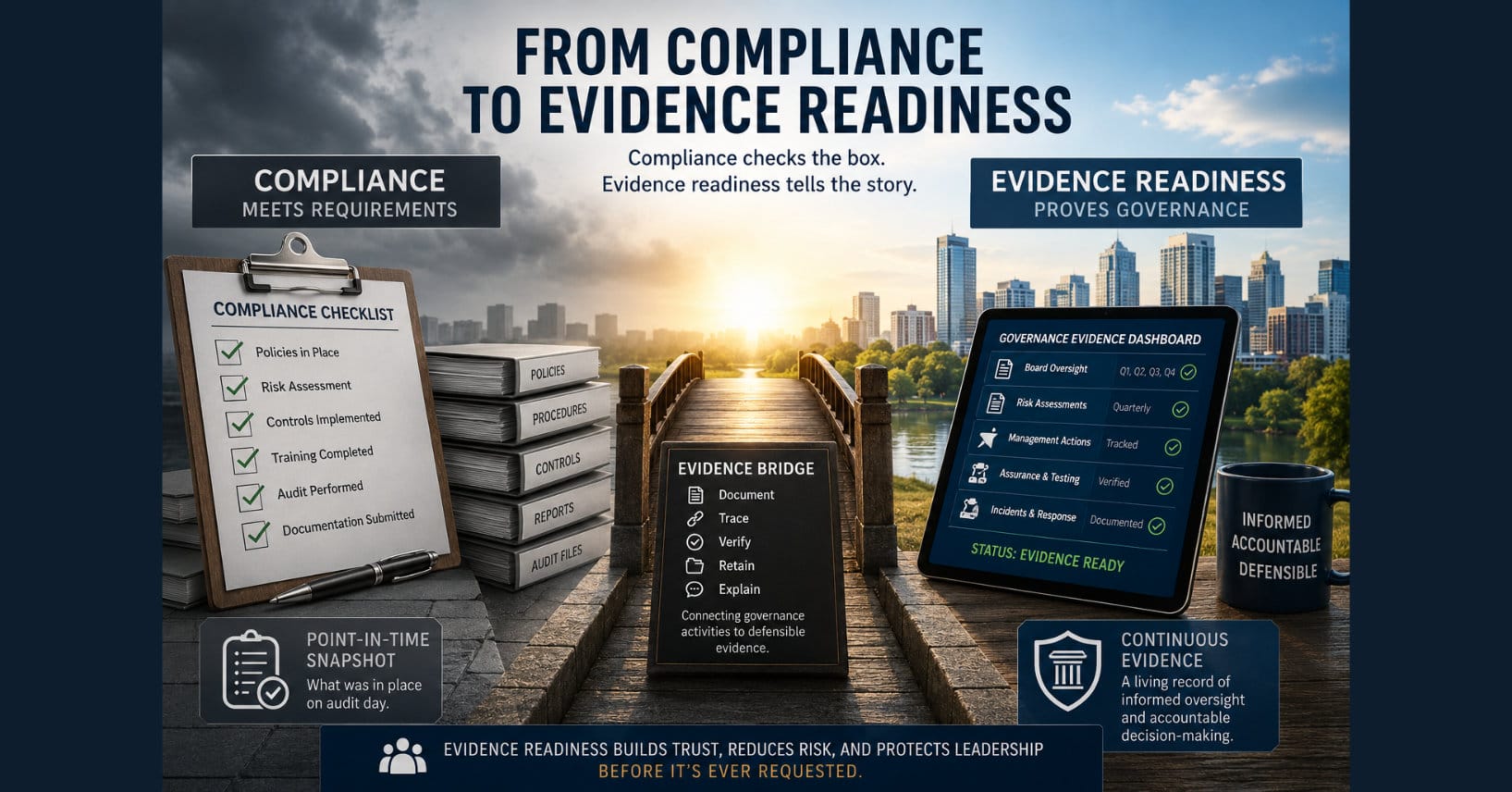
From Compliance to Evidence Readiness
Compliance confirms that requirements are met. Evidence readiness proves that leadership exercised informed oversight before regulators, auditors, or investigators ask. Organizations that build governance evidence…
-
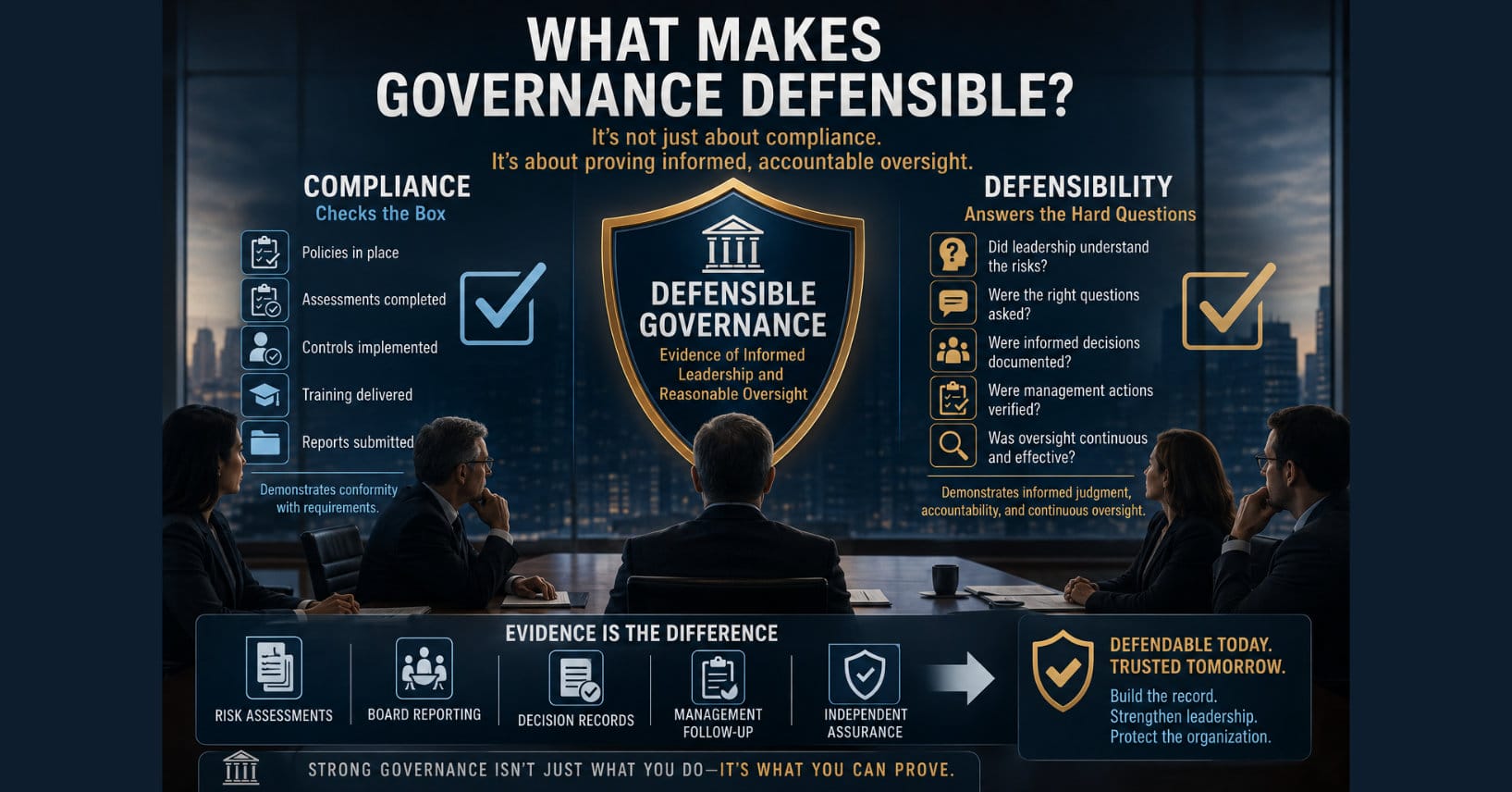
What Makes Governance Defensible?
What separates organizations that survive cyber scrutiny from those that don’t? Defensible governance is built on evidence, accountability, and disciplined oversight.
-

Evidence Is a Governance Product
Cybersecurity governance is often judged after an incident, but the strongest evidence is created long before a crisis occurs. This article explains why governance itself…
-
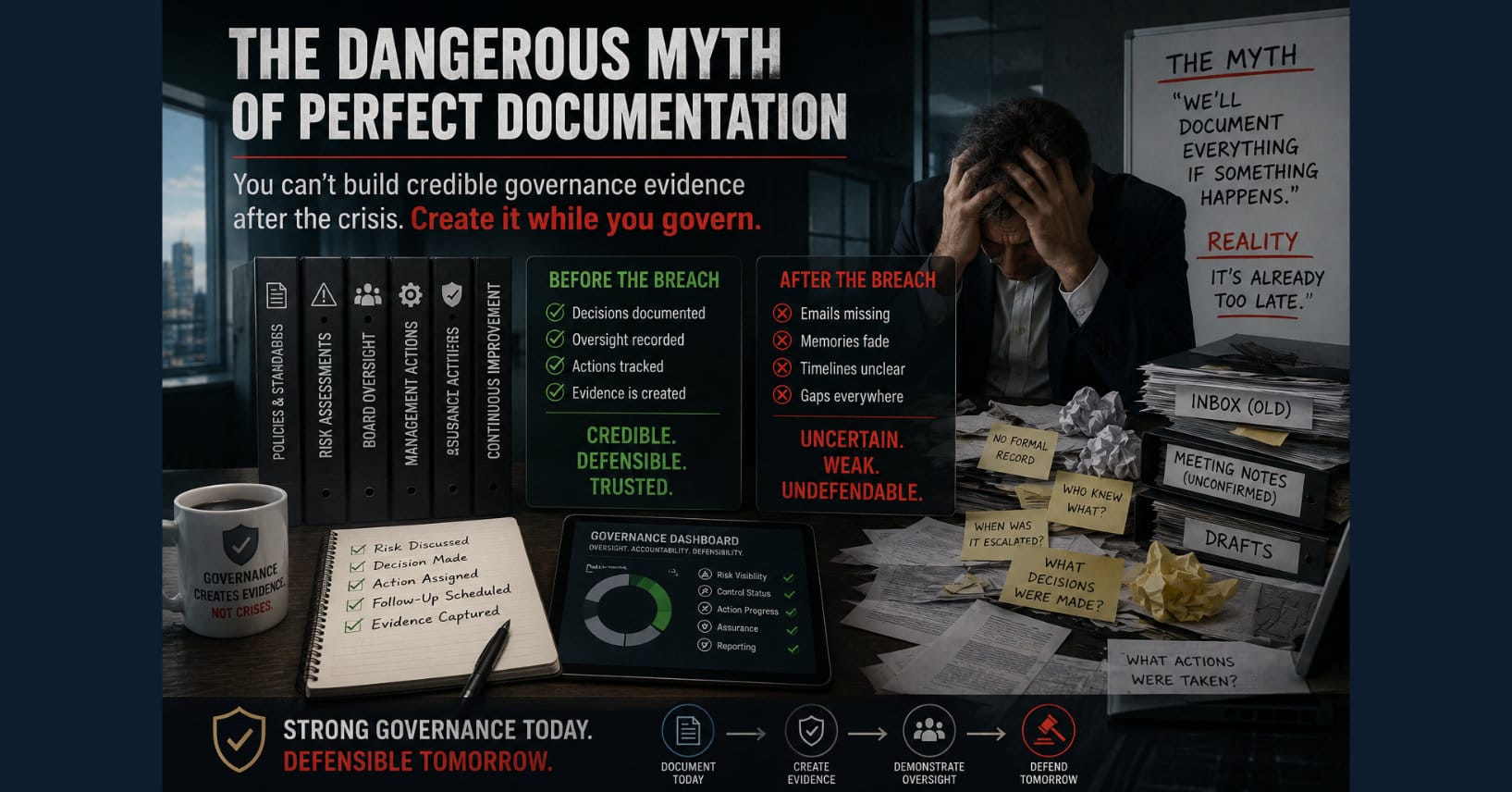
The Dangerous Myth of Perfect Documentation
Many organizations believe they can reconstruct governance evidence after a cyber incident. They can’t. Discover why contemporaneous documentation is far more credible than records assembled…
-
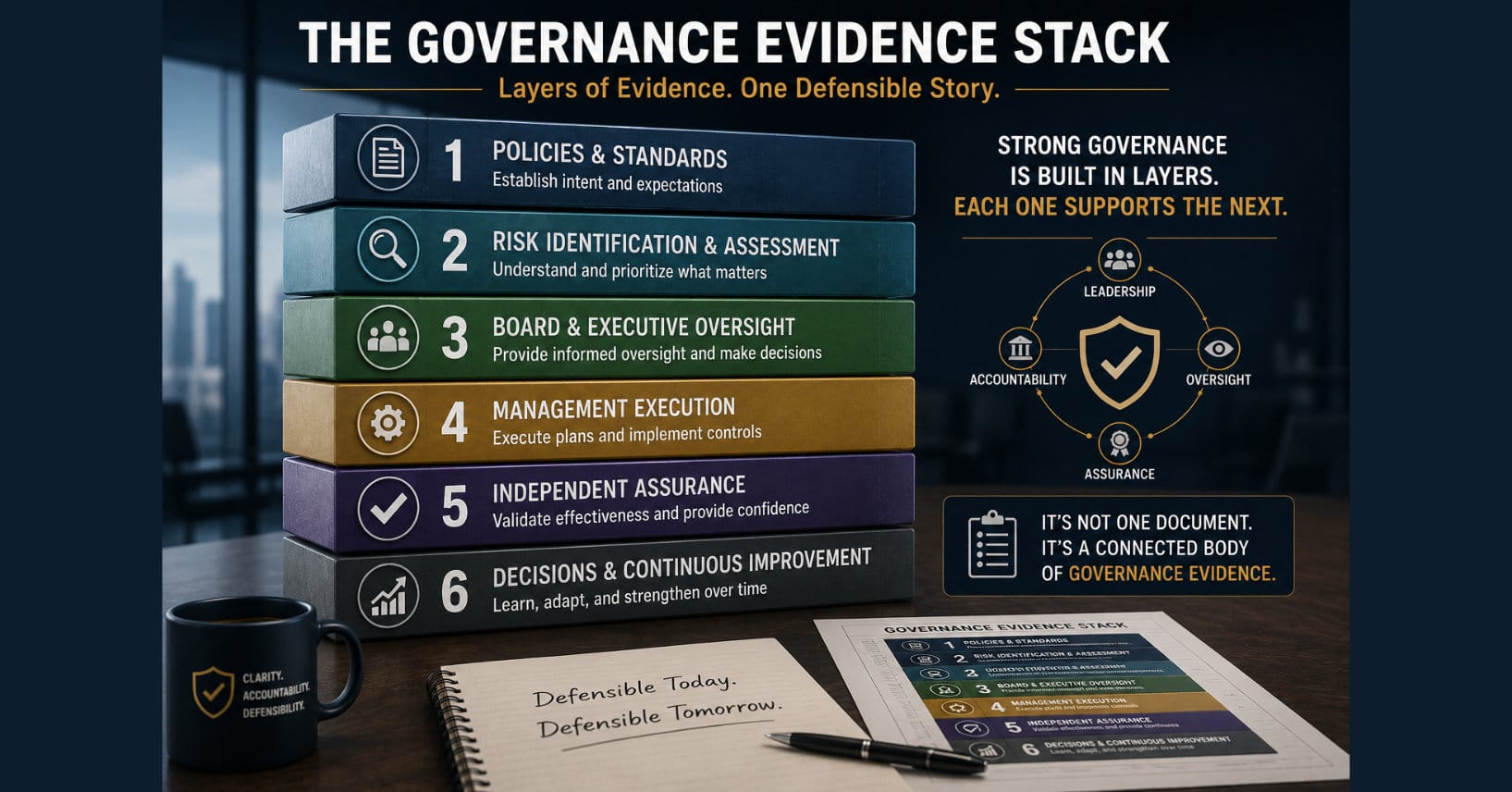
The Governance Evidence Stack
Good governance is not proven by a single document. It is demonstrated through a connected body of evidence spanning policy, risk, oversight, execution, assurance, and…
-
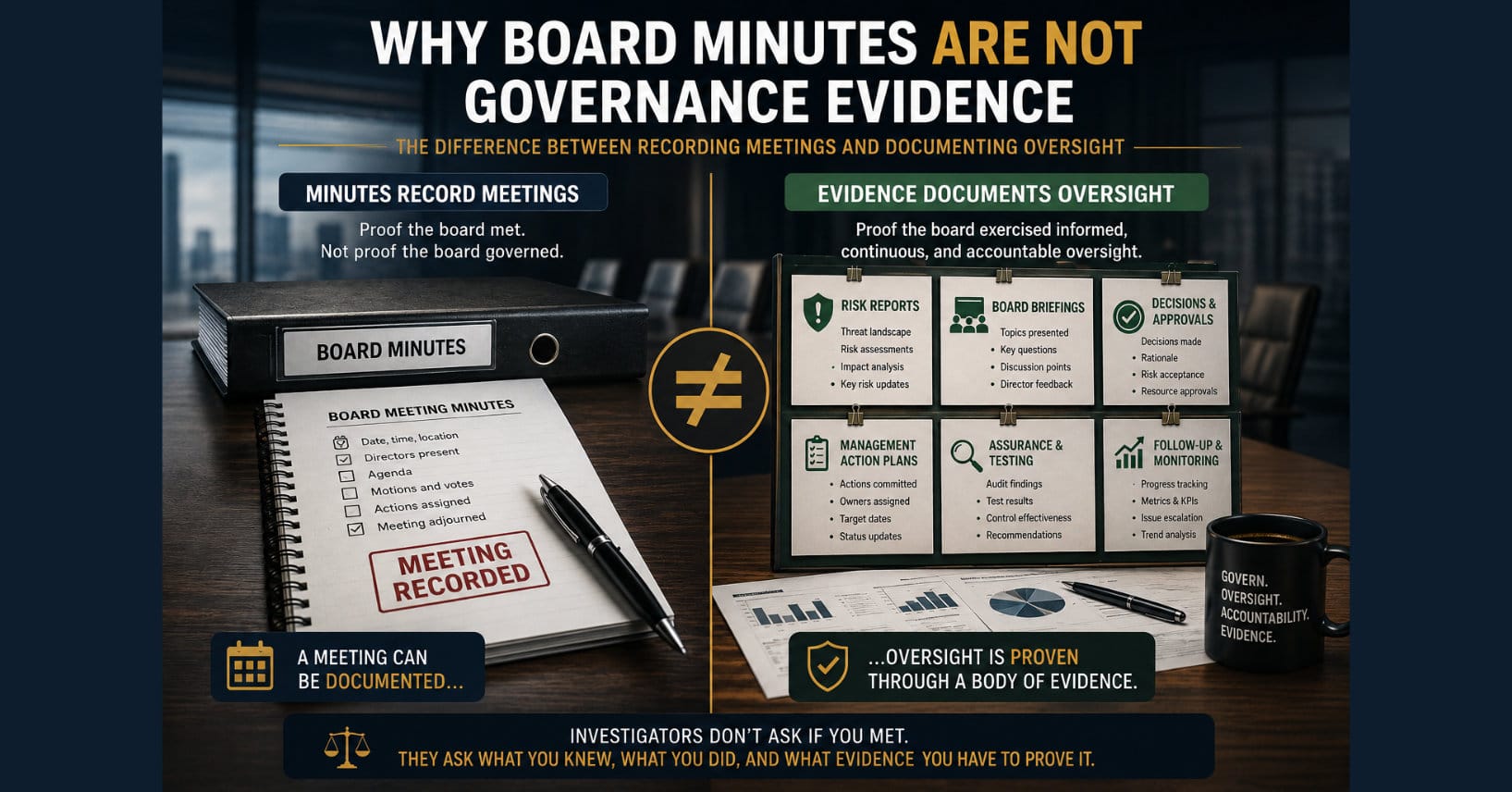
Why Board Minutes Are Not Governance Evidence
Board minutes document discussions, but they rarely prove effective oversight. Learn why defensible governance requires evidence beyond meeting records.
-
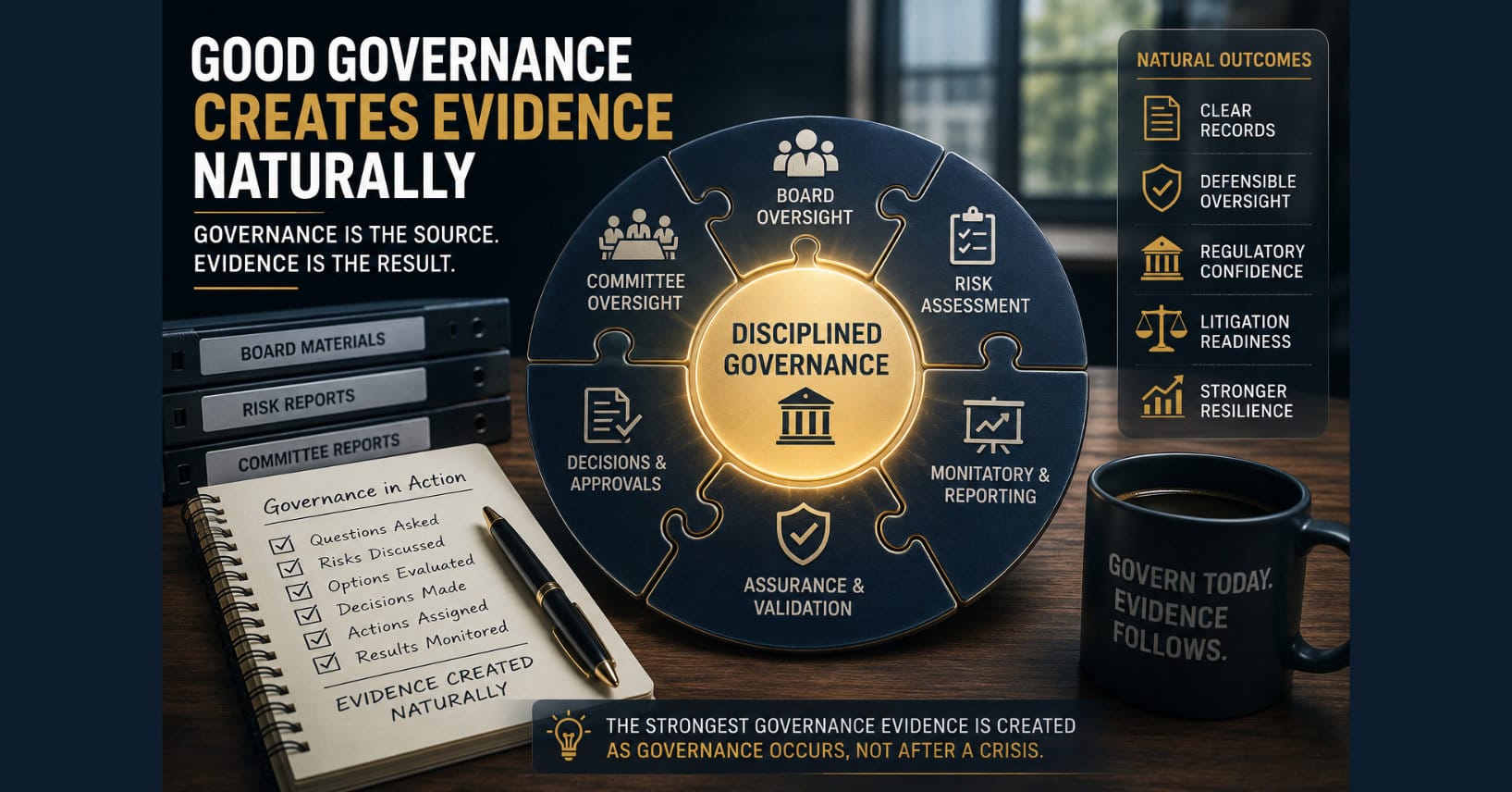
Good Governance Creates Evidence Naturally
The strongest governance evidence isn’t assembled after a cyber incident—it is created as governance occurs. Discover the central principle behind the Defensible Evidence Framework™ and…
-
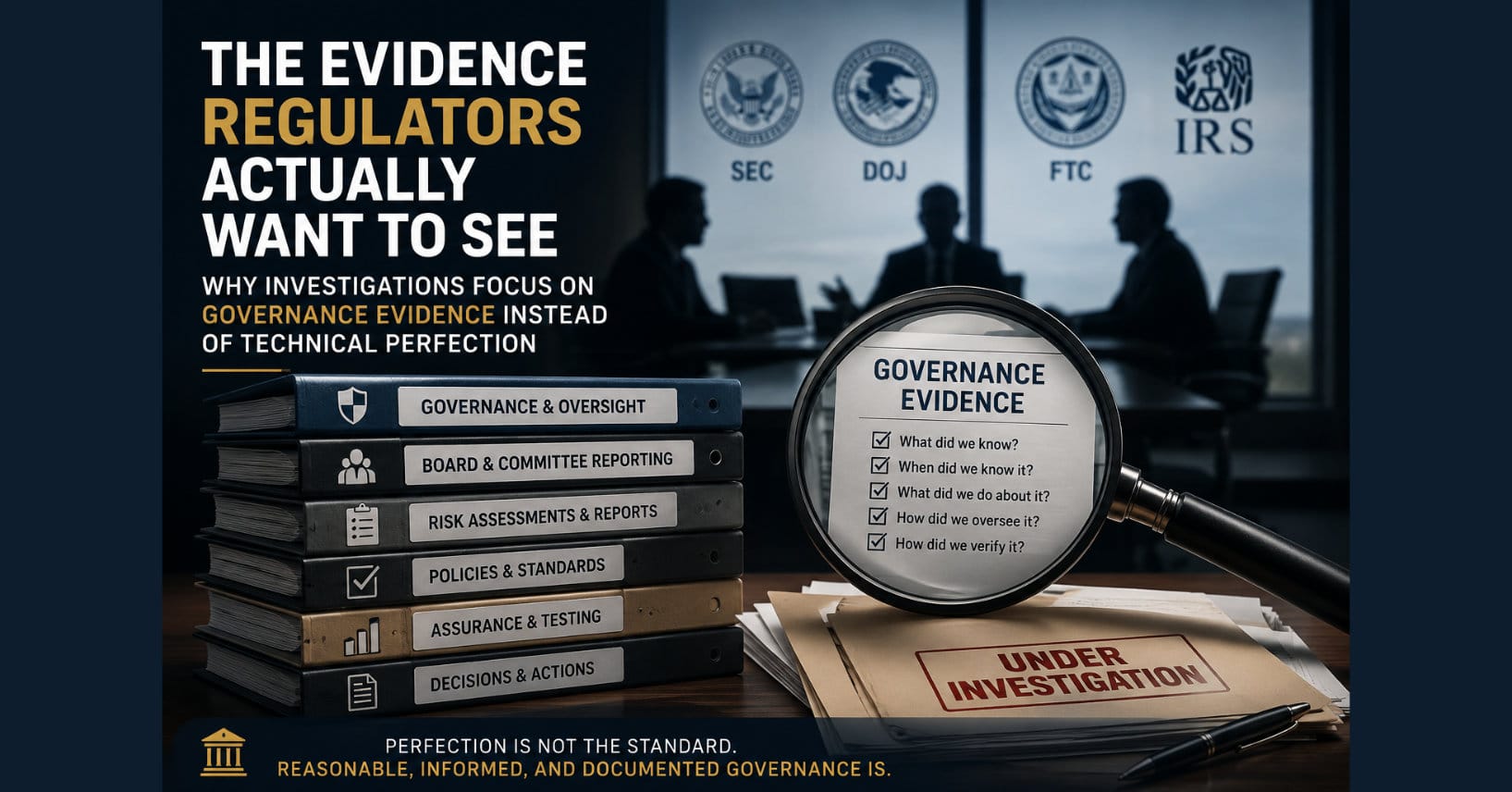
The Evidence Regulators Actually Want to See
After a cyber incident, investigators rarely begin by asking what security tools an organization deployed. They ask what leadership knew, when they knew it, and…
Category: Defensible Evidence
Defensible Evidence is the foundation of modern cybersecurity governance. It is no longer sufficient for organizations to demonstrate activity, deploy tools, or report on completed tasks. Boards, regulators, auditors, and stakeholders now expect proof—clear, documented, and defensible evidence that cybersecurity risk is understood, governed, and continuously validated.
This category explores what it means to move from activity to assurance. It examines how organizations can demonstrate that controls are not only implemented, but effective; that risks are not only identified, but deliberately governed; and that oversight is not assumed, but documented. In an environment where cyber incidents are inevitable, the standard of evaluation has shifted. The critical question is no longer simply what happened, but whether leadership exercised reasonable, informed, and accountable oversight before and during the event.
Articles in this series focus on the structures, practices, and artifacts that make cybersecurity governance defensible. This includes governance-level reporting, independent assurance, audit alignment, policy enforcement, escalation discipline, and the evidentiary record required to withstand regulatory, legal, and fiduciary scrutiny. The emphasis is not on technical implementation, but on governance credibility—how organizations prove that their decisions, oversight, and risk management practices meet the standard of responsible leadership.
Defensible evidence is where cybersecurity, fiduciary duty, and enterprise risk converge. It is the difference between appearing prepared and being able to prove it.