
-

The White House Just Reframed AI as a Cybersecurity Governance Issue
The White House’s June 2026 Executive Order signals a major shift in how advanced AI is viewed: not just as an innovation tool, but as…
-

The Future of Cyber Governance: Evidence-Driven Oversight
Cybersecurity governance is undergoing a structural shift. For years, organizations have focused on building capabilities—deploying tools, implementing controls, aligning to frameworks, and producing reports. These…
-
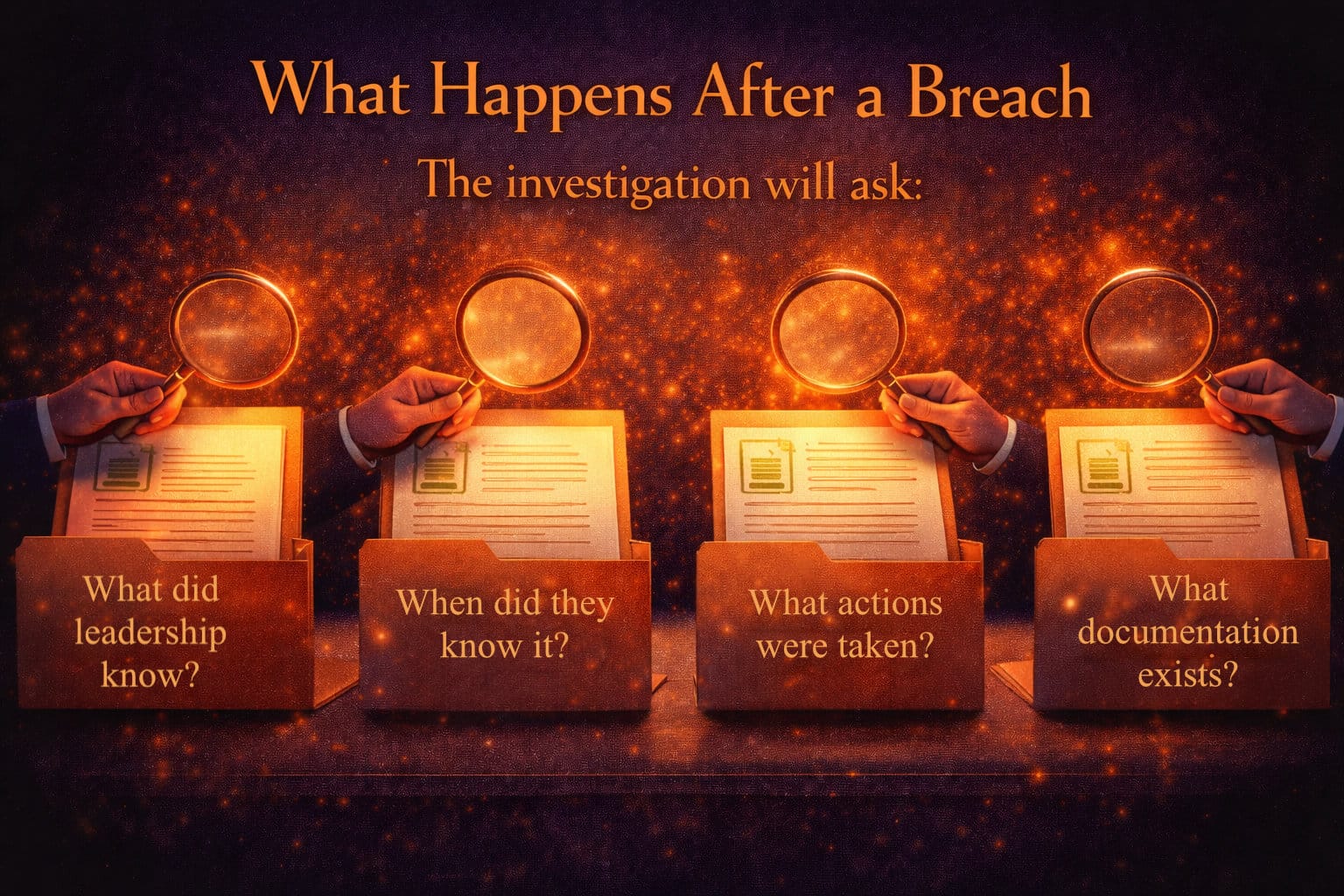
What Happens After a Breach
When a cybersecurity incident occurs, the immediate focus is operational: Contain the threat.Restore systems.Communicate impact. But as the situation stabilizes, a second process begins. It…
-
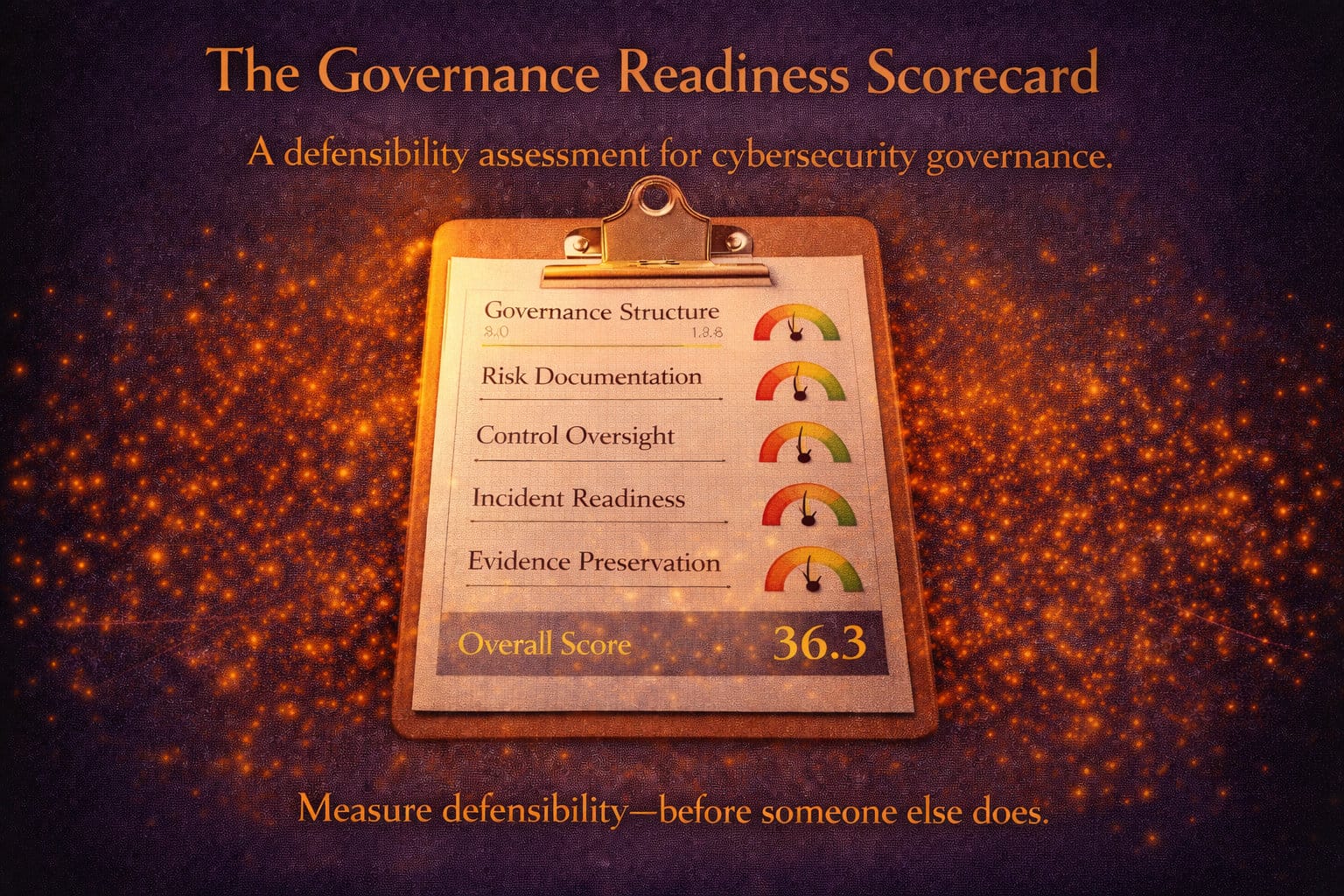
The Governance Readiness Scorecard
Up to this point, the Cyber Governance Evidence Series has defined a model. We established that governance produces evidence.We built the Governance Evidence Stack.We examined…
-
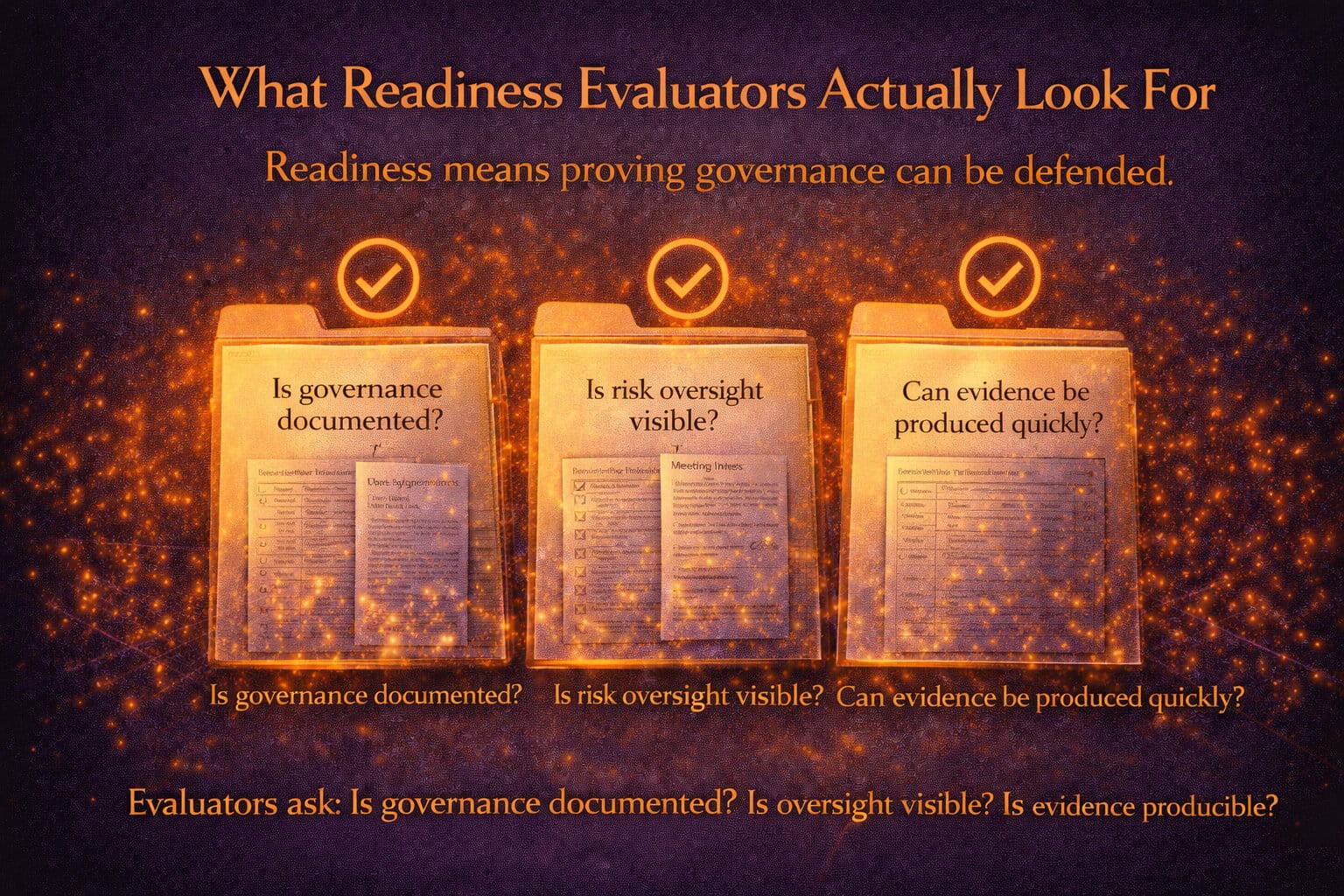
What Readiness Evaluators Actually Look For
Cybersecurity readiness is often described in terms of maturity models, control frameworks, and compliance checklists. Those have value. But they are not how readiness is…
-
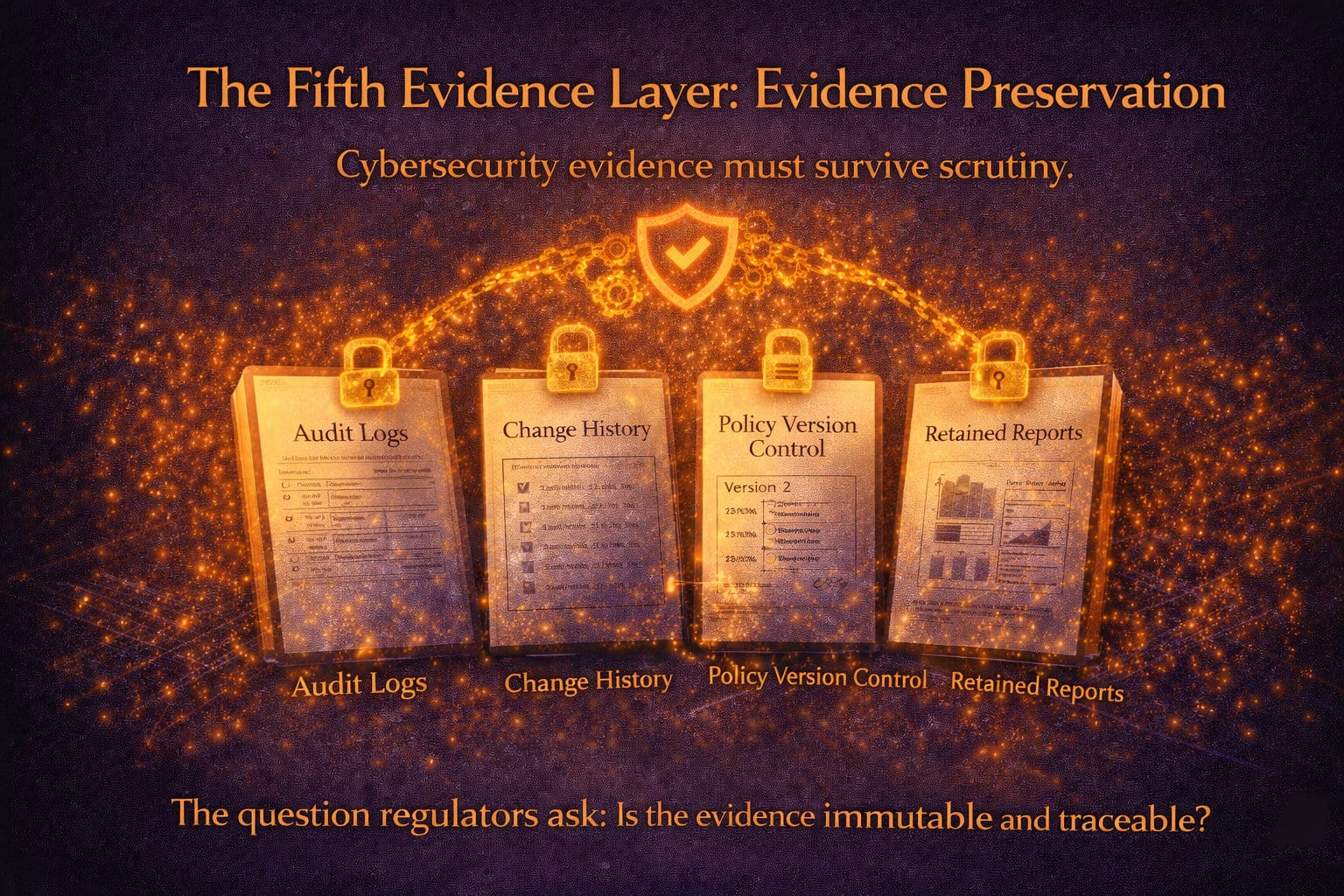
The Fifth Evidence Layer: Evidence Preservation
If risk recognition establishes what leadership knew, control decisions establish how leadership responded, board oversight establishes engagement, and operational execution establishes follow-through—this final layer answers…
-
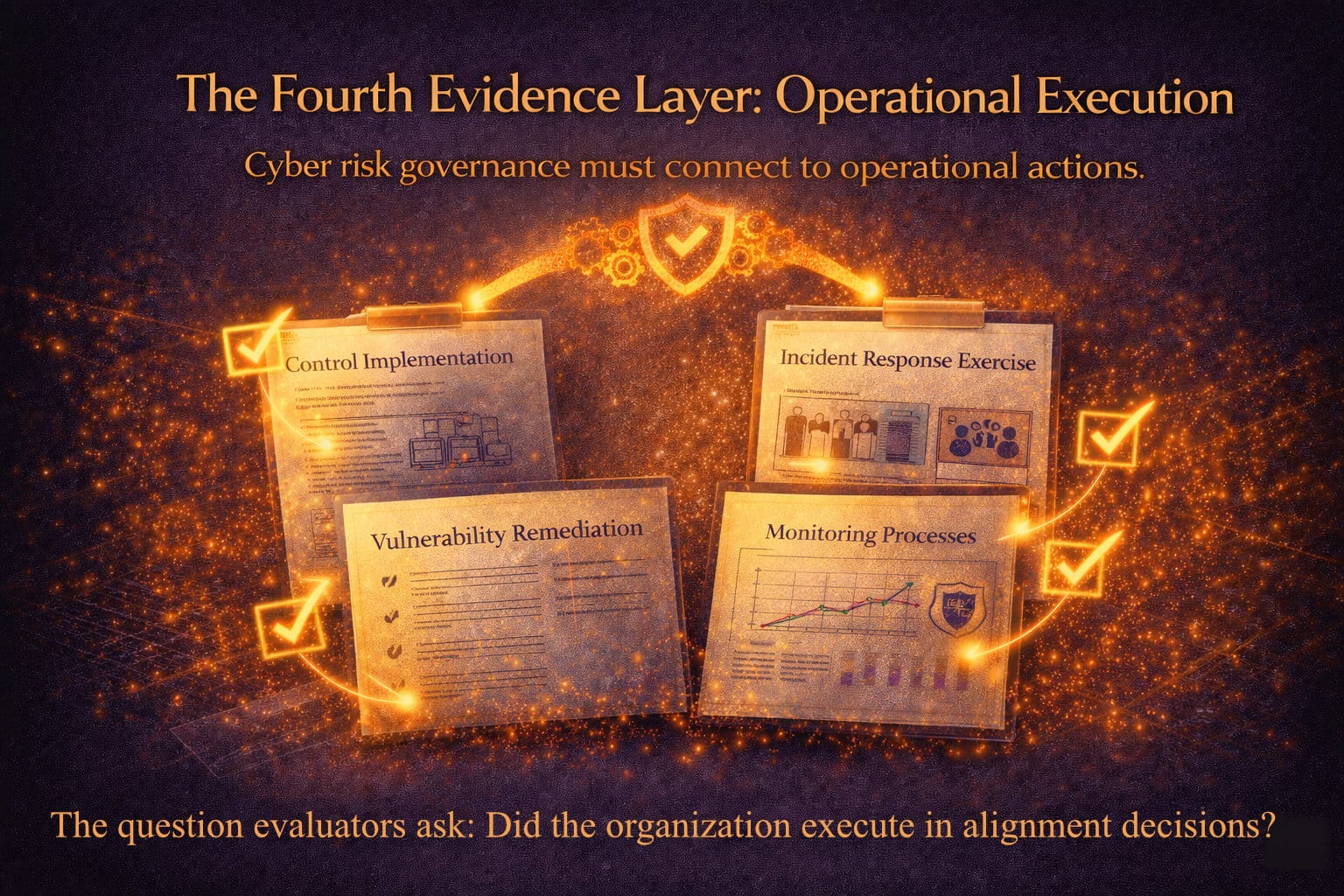
The Fourth Evidence Layer: Operational Execution
If risk recognition establishes what leadership knew, control decisions establish how leadership responded, and board oversight establishes that leadership engaged—this fourth layer answers a critical…
-
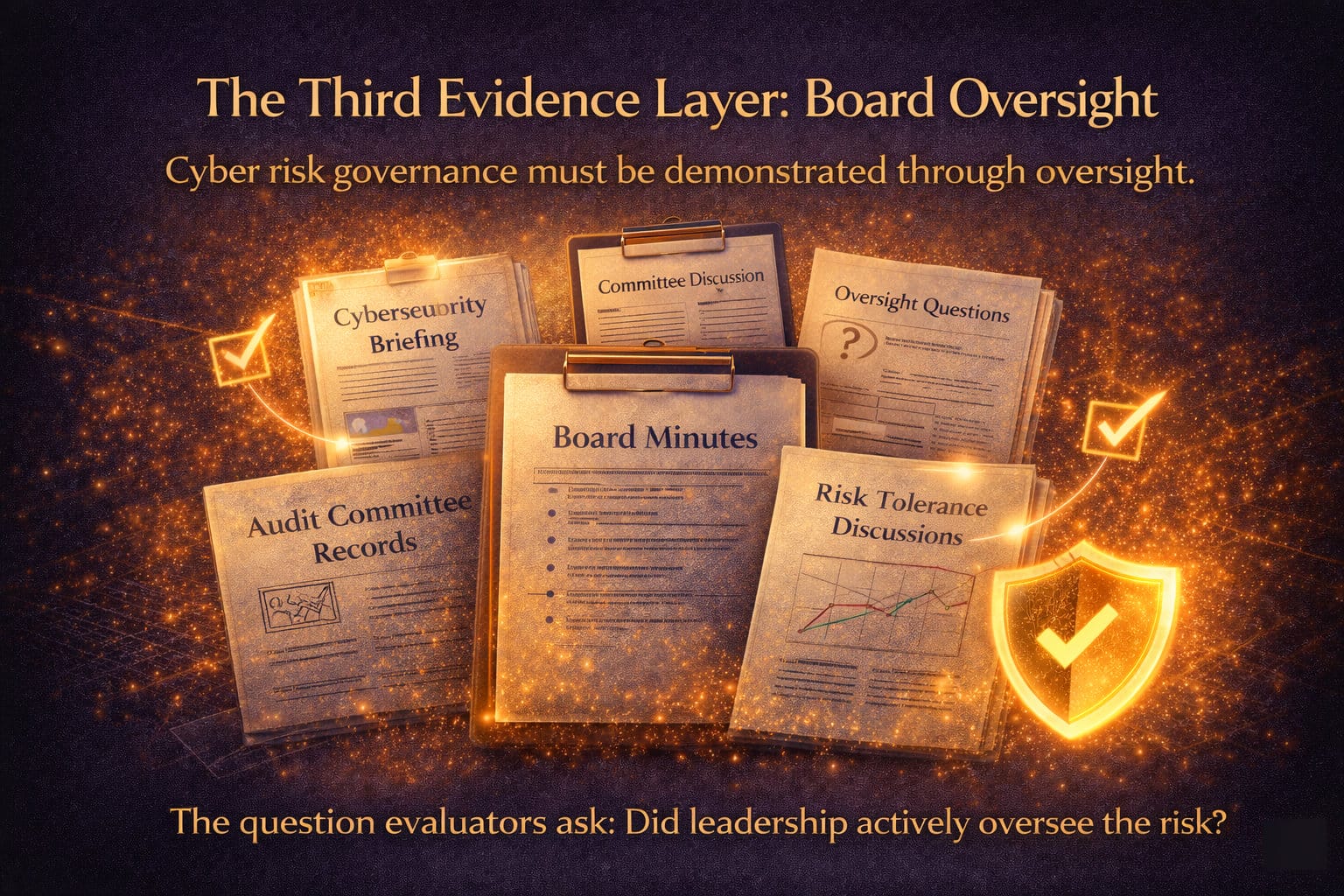
The Third Evidence Layer: Board Oversight
If risk recognition establishes what leadership knew, and control decisions establish how leadership responded, the third layer answers a more consequential question: Did leadership actively…
-
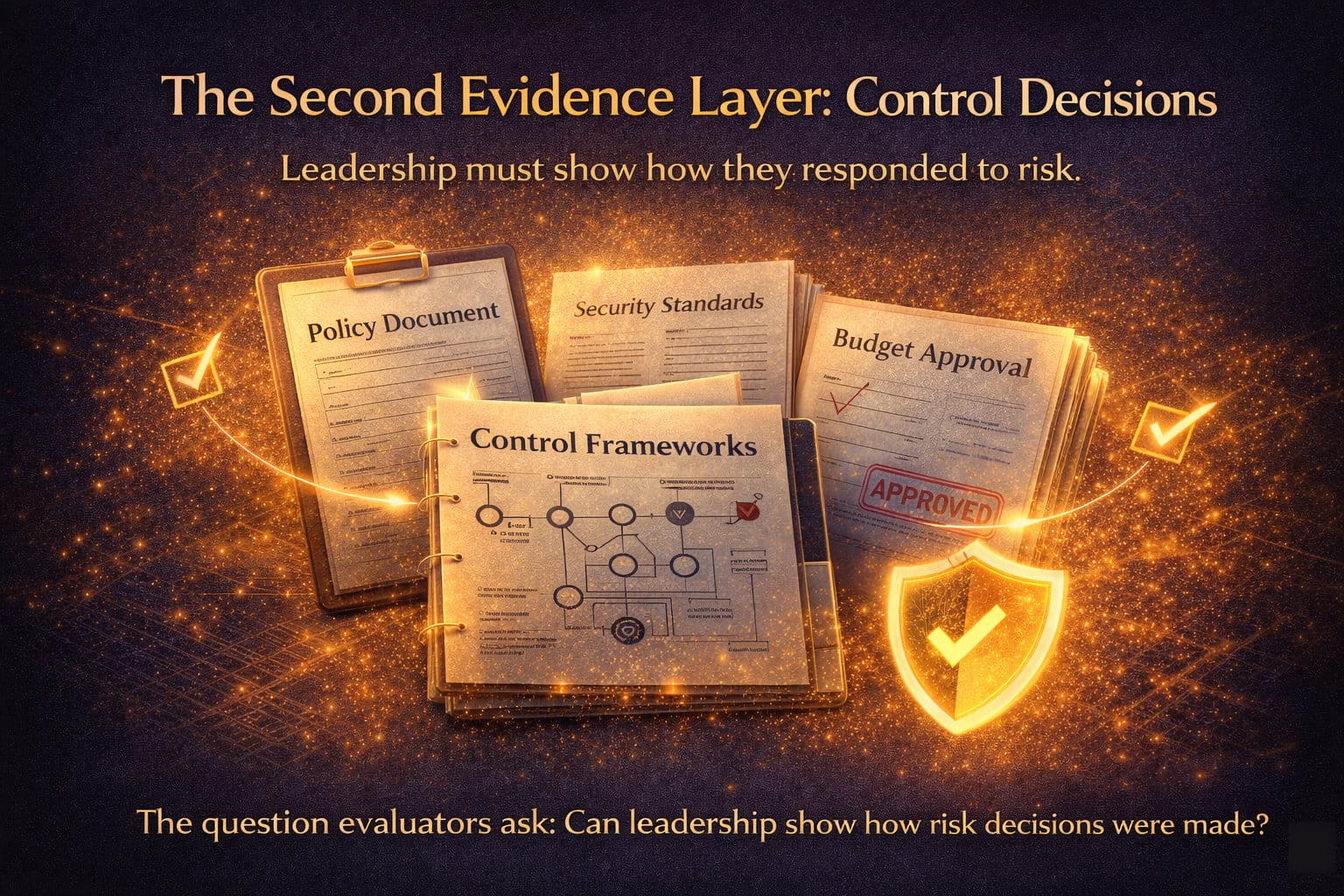
The Second Evidence Layer: Control Decisions
If risk recognition establishes what leadership knew, control decisions establish how leadership responded. This is the second layer of the Governance Evidence Stack. It is…
-
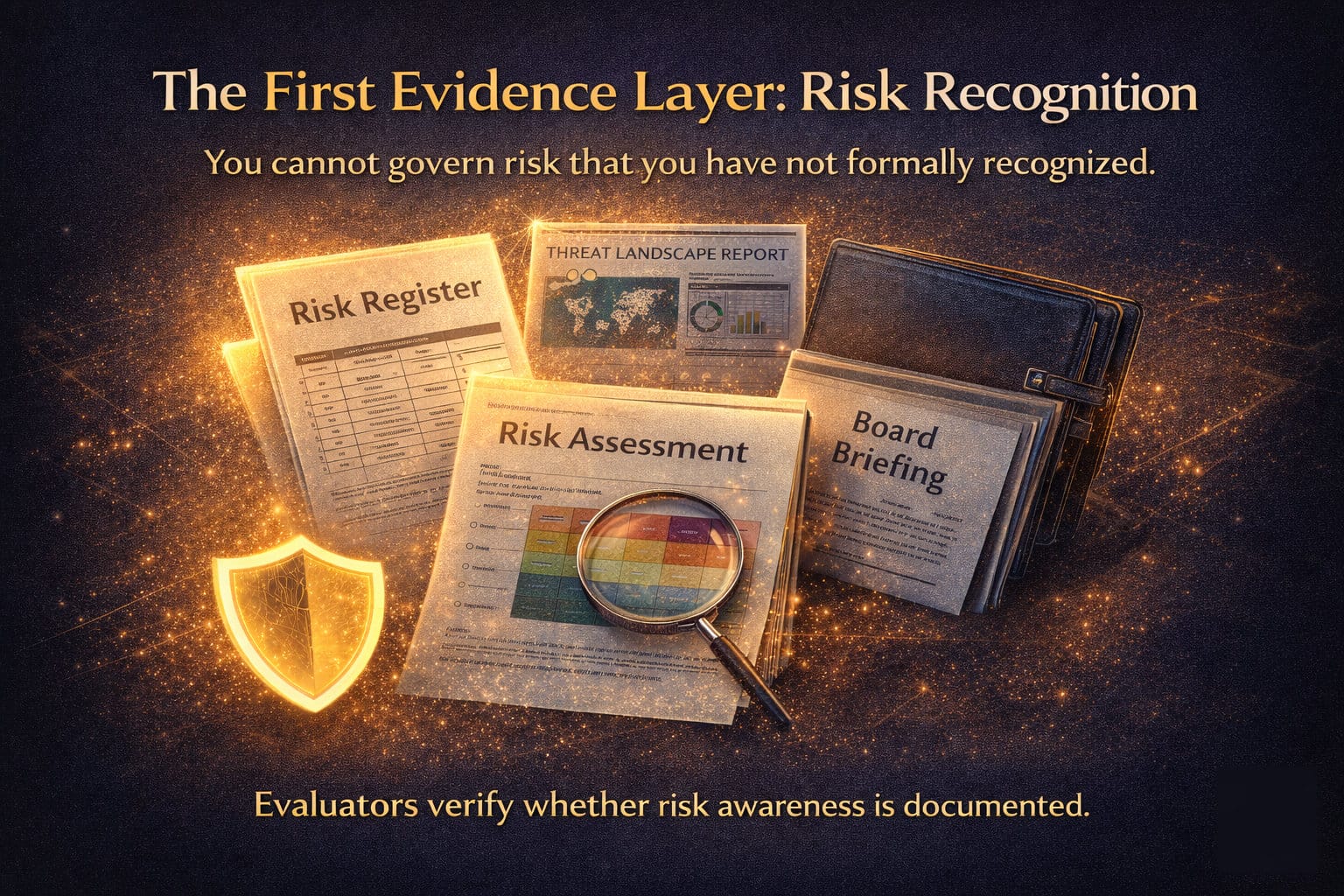
The First Evidence Layer: Risk Recognition
Cybersecurity governance begins at a point many organizations assume has already been achieved: Risk is known. In practice, that assumption is often untested. Organizations operate…
-
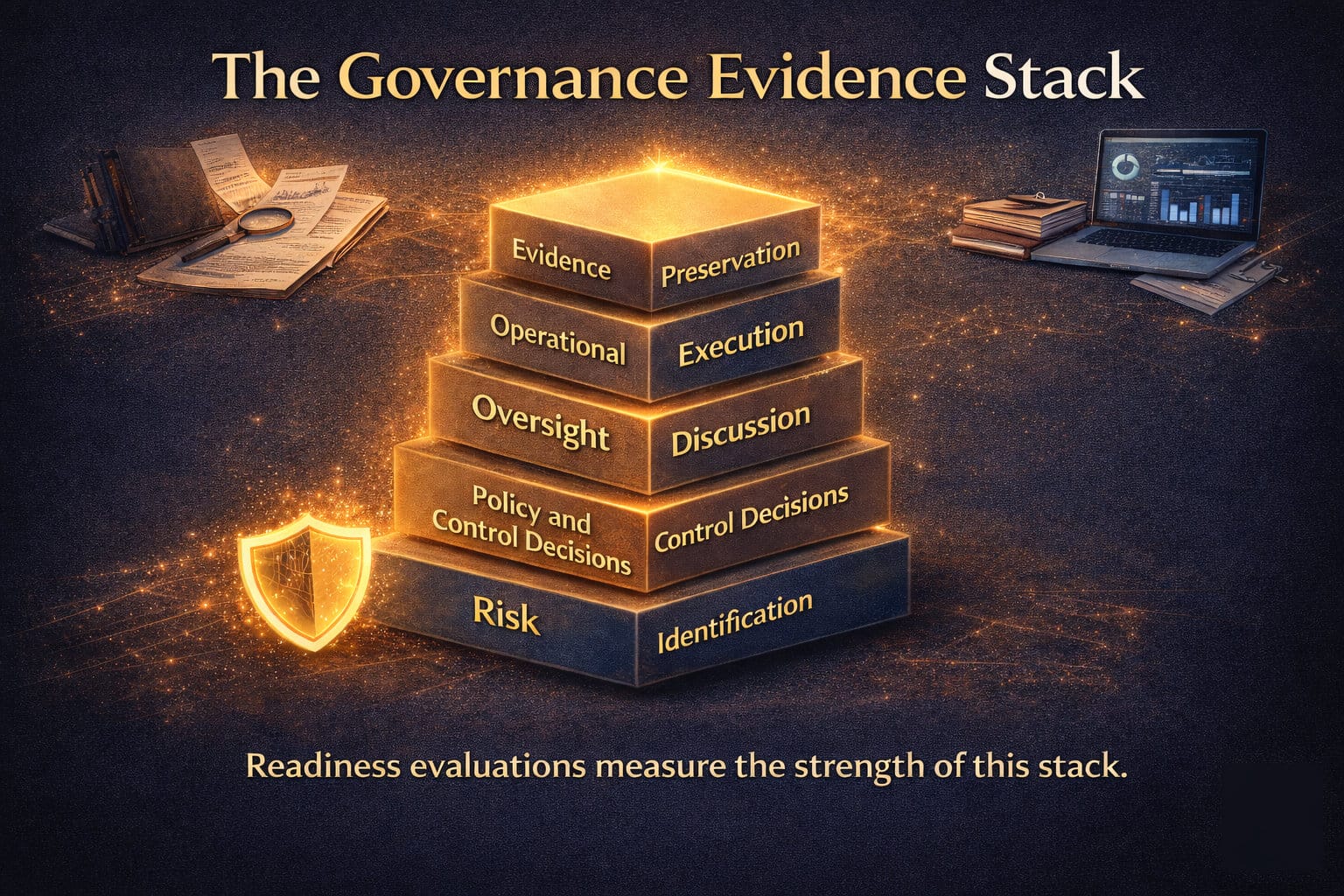
The Governance Evidence Stack
Cybersecurity governance is often assessed as a collection of activities—risk assessments, policies, controls, and reports. But under scrutiny, those activities are not evaluated in isolation.…
-
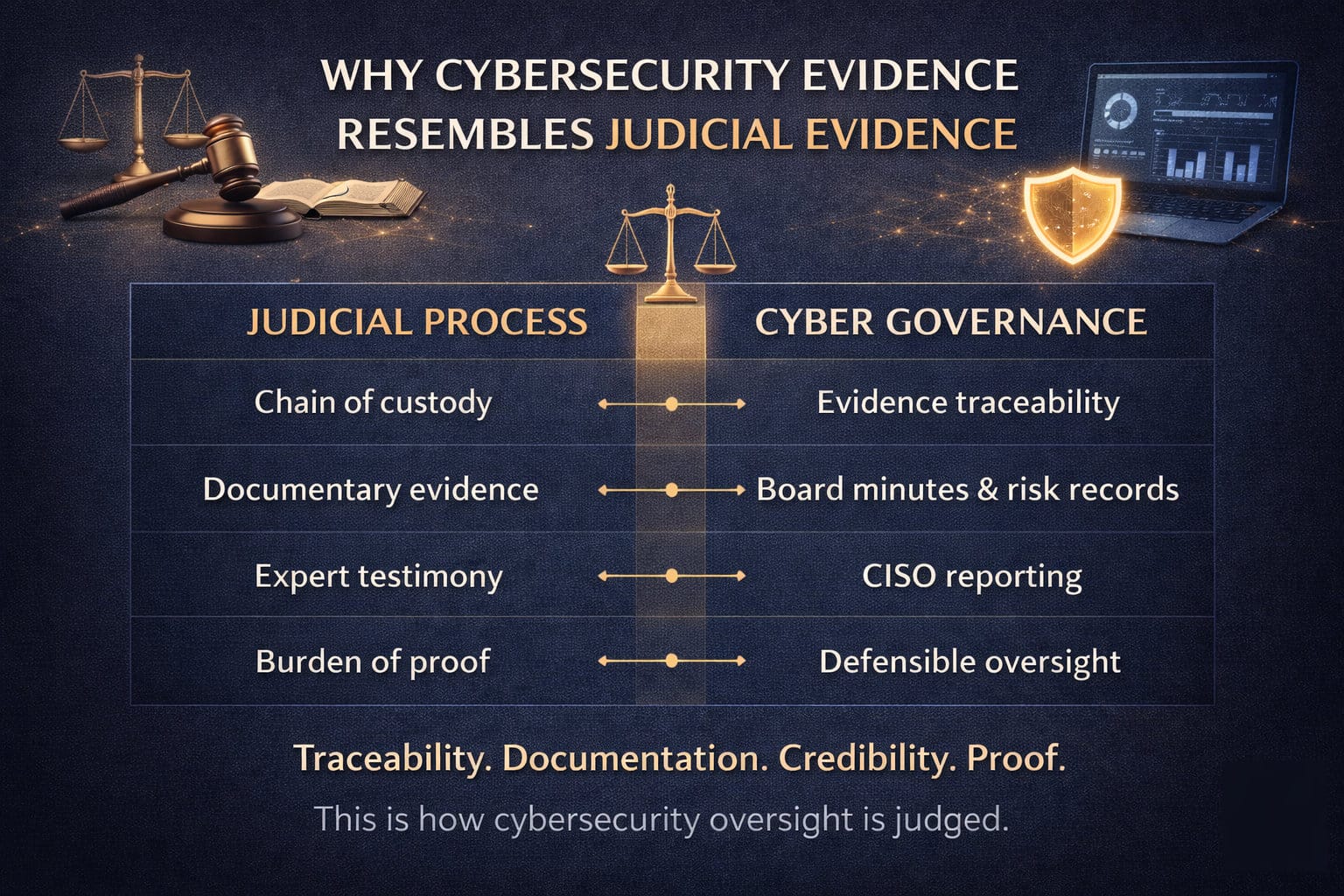
Why Cybersecurity Evidence Resembles Judicial Evidence
Cybersecurity governance is increasingly evaluated in environments that look less like technical reviews and more like legal proceedings. After a material incident, organizations are not…
-

Cybersecurity Governance as Evidence Management
Cybersecurity governance is often framed as a defensive discipline—preventing attacks, reducing vulnerabilities, and responding to incidents. That framing is incomplete. It reflects an operational view…
Category: Defensible Evidence
Defensible Evidence is the foundation of modern cybersecurity governance. It is no longer sufficient for organizations to demonstrate activity, deploy tools, or report on completed tasks. Boards, regulators, auditors, and stakeholders now expect proof—clear, documented, and defensible evidence that cybersecurity risk is understood, governed, and continuously validated.
This category explores what it means to move from activity to assurance. It examines how organizations can demonstrate that controls are not only implemented, but effective; that risks are not only identified, but deliberately governed; and that oversight is not assumed, but documented. In an environment where cyber incidents are inevitable, the standard of evaluation has shifted. The critical question is no longer simply what happened, but whether leadership exercised reasonable, informed, and accountable oversight before and during the event.
Articles in this series focus on the structures, practices, and artifacts that make cybersecurity governance defensible. This includes governance-level reporting, independent assurance, audit alignment, policy enforcement, escalation discipline, and the evidentiary record required to withstand regulatory, legal, and fiduciary scrutiny. The emphasis is not on technical implementation, but on governance credibility—how organizations prove that their decisions, oversight, and risk management practices meet the standard of responsible leadership.
Defensible evidence is where cybersecurity, fiduciary duty, and enterprise risk converge. It is the difference between appearing prepared and being able to prove it.